




















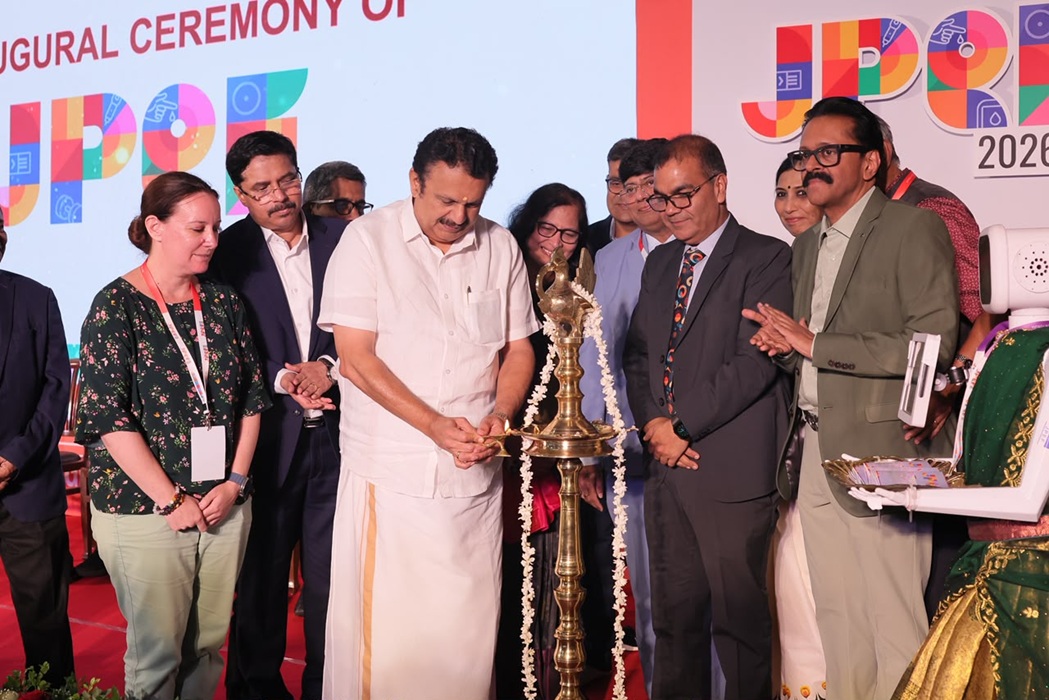
Kerala’s strong focus on preventive and community-based healthcare remains central to tackling the growing burden of diabetes, State Health Minister K. Muraleedharan said while inaugurating the 14th Annual Global Diabetes Convention. He also called for stronger public-private partnerships and wider adoption of Artificial Intelligence (AI) in healthcare.
The three-day convention, organised by Jothidev’s Professional Education Forum (JPEF), has brought together around 2,500 delegates, including leading diabetes specialists, researchers and healthcare professionals from India and abroad.
Focus on Prevention and Early Detection
Highlighting Kerala’s public health strategy, Muraleedharan said the state has consistently prioritised preventive care through its Ayushman Arogya Mandir network and Non-Communicable Disease (NCD) clinics. These initiatives help ensure early detection of diabetes and continuous patient follow-up.
“Kerala has always believed in preventive and community-based healthcare through our Ayushman Arogya Mandir network and NCD clinics. We are working to ensure early detection and follow-up, but technology and evidence-based practice must go hand in hand,” he said.
AI and Partnerships Can Transform Diabetes Care
Describing diabetes as one of India’s biggest public health challenges, the Minister said the disease affects millions of families but also presents an opportunity to transform healthcare through innovation and collaboration.
As per a press release, he said the convention demonstrates how Kerala and India are embracing emerging technologies and scientific advances to improve diabetes care. He also stressed the need for stronger collaboration between the government and the private sector, particularly in AI-enabled healthcare solutions.
“We need to encourage public-private partnerships in every possible way, especially in AI and technology-based patient care, to provide better services to the general public,” he said.
Muraleedharan added that his office has introduced an AI-powered system to monitor and resolve public grievances.
“To my knowledge, mine is the first minister’s office in Kerala to implement an AI tool for grievance redressal. I believe this is the way forward for healthcare and governments alike,” he said.
“As we deliberate on choosing the best in care, let us also remember those who cannot afford the best. Our mission must be to make advanced diabetes care affordable, accessible and equitable for all,” he added.
Convention Highlights
In his welcome address, Convention Organising Secretary Dr. Jothydev Kesavadev said JPEF 2026 is one of India’s premier academic gatherings dedicated to advancing diabetes care through cutting-edge science, hands-on workshops and collaborative learning to improve patient outcomes.
The Minister presented the JPEF Young Researcher Award to Dr. Masuma Yasmin, the JPEF Stalwart Physician Award to Dr. Shashank Joshi, and the JPEF Scientific Excellence Award to Dr. Anuj Maheshwari.
The inaugural session featured addresses by Dr. Julia Mader of the Medical University of Graz, Austria; Dr. Smita Joshi, Executive Committee Member, Ministry of Health and Family Welfare; Dr. K.K. Manojan, Vice Chairman, Gokulam Group of Health Institutions; Dr. Shashank Joshi, Chief Advisor, JPEF; Dr. Banshi Saboo, Chair, IDF South-East Asia; Dr. Anuj Maheshwari, President, RSSDI; and Dr. Rakesh Parikh, Secretary, RSSDI.
Among those present were Dr. Ashok Kumar Das, Dr. Georgi Abraham, Dr. A.V. Ravindran, Dr. Anita Nambiar, Dr. Ajith Kumar S. and Sunita Jothydev, Conference Director. Dr. Arun Shankar, Organising Chairman, proposed the vote of thanks.