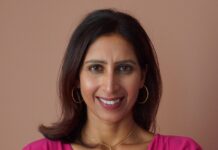














When Dr. Sangeeta Ravat walks through the corridors of King Edward Memorial (KEM) Hospital in Mumbai, there’s a sense of familiarity that comes from decades of association. She first entered the institute as a medical student in 1979 and has remained part of it ever since — moving through roles as a neurologist, teacher, department head and today, its Dean. Over the years, she has seen KEM change in scale, structure, and challenges, and her own career has evolved alongside it. Her story reflects the steady journey of a doctor who grew within the system she continues to serve. Let’s look into her journey through her own words.
Early Influences and the Call to Medicine
Medicine, as Dr. Ravat recalls, was less a choice and more a continuation of family tradition. “Both my parents were doctors,” she says. “Even though we were Jains, my father followed Swami Vivekananda and believed deeply in ‘Serve Jeeva as Shiva.’
While her aptitude gave her the option between engineering and medicine, “I was good at academics,” she admits, “but mathematics was never my favourite. Medicine felt more natural — it was already part of my life.”
Building India’s Epilepsy Care Program
Among her many achievements, Dr. Ravat is best known for her pioneering work in epilepsy care. After completing her neurology training, she joined KEM’s Neurology Department, which at the time ran two special epilepsy outpatient clinics each week. “We had a large number of patients and epilepsy surgery was just beginning to take shape in India,” she recalls.
Encouraged by her senior, Dr. Praveena Shah, she went to Australia for advanced training in Video-EEG presurgical evaluation — a critical technology that identifies which part of the brain triggers seizures. When she returned in 2001, she co-founded the Comprehensive Epilepsy Care Centre at KEM.
The first challenge was funding. The cost of a Video-EEG machine — ₹35 lakhs at the time was far beyond the municipal corporation’s budget. Dr. Ravat approached the Tata Trust, and with their support, KEM acquired its first machine. “It was a turning point,” she says. “Video-EEG tells us exactly where in the brain the seizure starts. Once we know that, and confirm it with MRI and neuropsychological testing, we can plan curative surgery safely.”
Building the program required a multidisciplinary team. She encouraged a neuropsychologist, Dr. Shah, then working in dementia, to train in epilepsy at a U.S. centre. “Each part of the brain has specific cognitive functions,” Dr. Ravat explains. “Before surgery, we need to know what’s working and what isn’t. That determines whether we can safely remove the affected area.”
Two decades later, the centre remains one of India’s most comprehensive public-sector epilepsy programs, offering surgical options that transform lives. “Seeing patients who were once housebound return years later, married, working, or raising children — that’s the real reward,” she says.
Reimagining KEM’s Next Generation
When Dr. Ravat became Dean, she brought to the post an unusual mix of clinical rigour and personal empathy. One of her earliest initiatives was the Student Dosti Program, aimed at supporting medical students facing academic and emotional pressures.
“Today, almost 80% of our students come from outside Mumbai,” she says. “They arrive from smaller towns, face language barriers, and live away from their families for the first time. Many struggles with anxiety or depression but hesitate to go to psychiatry OPD because of stigma.”
Her solution was pragmatic — counsellors available round-the-clock, with complete confidentiality. “They don’t have to involve parents unless absolutely necessary,” she notes. The program has saved lives. “There were cases where students had suicidal thoughts or went missing — our team found and helped them in time.”
She also introduced a Mentor System, pairing first-year students with mentors outside their examining departments. “That separation is key,” she explains. “It lets students speak freely — even about academic or personal issues.”
From Clinician to Administrator
Transitioning from neurologist to dean was, by her own admission, “a steep learning curve.” “I had never imagined managing tenders, engineering projects, or infrastructure,” she laughs. “I was a hardcore clinician.”
To bridge her knowledge gap, she formed a committee of senior professors to study the municipal tender process and guide major purchases. Her early lessons in sourcing donations for medical equipment — from Tata Trusts to Ram Jethmalani Trust etc., proved invaluable.
Under her leadership, KEM has secured substantial CSR funding, enabling the acquisition of high-end medical technology without burdening patients. “We got ₹5.5 crore in our first year, and nearly ₹10 crore the next,” she says. “That allowed us to buy the best machines, not just the lowest quotes.”
Today, those donations have translated into robotic knee joint systems, modular operation theatres, and seven new ICUs — medical, liver, stroke, neurology, neurosurgery, anaesthesia and orthopaedics all at par with private hospitals. “Through CSR, we’ve done over 300 robotic knee surgeries free for patients,” she notes proudly.
Managing Complexity with Humanity
Running a 2,200-bed hospital with 6,000 daily OPD patients is no small task. Dr. Ravat confronts challenges ranging from overcrowding and limited resources to the human dynamics of large teams. “Sometimes faculty conflicts reach me, things as simple as ‘he isn’t respecting me.’ So I tell them, ‘After becoming doctors, become a bit more mature!’” she laughs.
She shares that new residents are always trained in patient communication. To them, she offers one key piece of guidance: “I tell them — for you, it’s one of ten patients in a day, but for them, it’s their only family member. Put yourself in their shoes, and then speak.”
She’s equally pragmatic about systemic issues — from sanitation to bureaucratic delays. She personally takes rounds to monitor maintenance, uses geo-tagged reports from faculty, and advocates for a dedicated space for patients’ relatives who currently sleep in hospital corridors. “Cleanliness won’t improve unless we solve that,” she says. “Many of our patients come from villages, and since they have no affordable place to stay nearby because the surrounding areas are very costly, so their relatives end up living within the hospital premises itself. They eat here, sleep here and naturally garbage accumulates very fast. Even though our staff keeps cleaning, within an hour the waste builds up again. I’ve been trying to get another building just behind this one — there’s an old, dilapidated structure there — so that we can convert it into a space for patient relatives. But unfortunately, we haven’t gotten through yet — that would solve a major issue and improve cleanliness.”
Balancing Leadership and Life
Behind her calm administrative demeanour lies a strong support system. “My husband and son are both cardiologists, and my daughter-in-law is a neurologist. They pushed me to take this post when I was hesitant,” she says. “Even though our earlier residence was closer to my husband’s workplace, he moved into the Dean’s residence with me because my hours doubled. Without that, it would’ve been impossible.”
While the position brings stress, she sees it as part of a larger purpose. “There are sleepless nights, yes,” she admits, “But when you see your patients happy after overcoming a crisis, it reminds you why you’re here.”
After more than four decades at KEM, Dr. Sangeeta Ravat’s connection to the institution remains strong. From leading breakthroughs in epilepsy care to supporting students’ mental health and modernising hospital infrastructure. KEM continues to expand its ICUs, rare disease program and new IVF and burn centres, Dr. Ravat’s perseverance continues to shape one of India’s most trusted public hospitals — Proof that medical excellence, at its core, is and should be an act of service.