















Recently there have been a number of disturbing news reports in the media of suicides by doctors, both medical students and those with well-established practice in various specialties. While the former is discussed in a column in this issue, we address the latter here to understand the reasons and triggers of severe mental stress among practicing doctors and how such stresses can be addressed and reduced.
Towards this, The Indian Practitioner had email interactions with leading doctors. To our queries, we received responses from Dr. Soham Bhaduri, Dr. Atul Shah and Dr. Jayesh Sheth. Their responses are reproduced here.
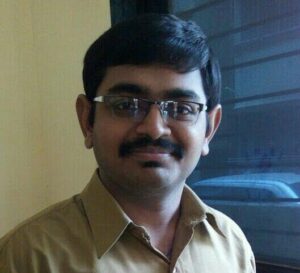 Dr. Soham Bhaduri (SB): MD MPH PGDLH (UK), is an eminent public health physician, independent researcher, and columnist. His works spanning healthcare to spirituality have appeared in prestigious peer-reviewed journals and national dailies such as The Lancet, BMJ, The Times of India, The Hindu, Hindustan Times, and others. He is a former Chief Editor of The Indian Practitioner. Dr. Bhaduri is also a philosopher of existential monism, Vedic astrologer and an inner change coach.
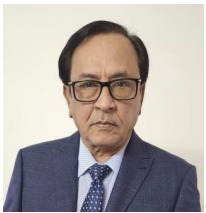 Dr. Atul Shah (AS): A renowned Indian plastic surgeon, is acknowledged for his work in burns care, leprosy reconstructive surgery, and medical education. Former head of plastic surgery at J J Hospital and consultant at Nanavati Hospital, he has pioneered hand, foot and facial disability surgeries. His humanitarian efforts, research, and surgical camps have earned him prestigious honors, including the International Gandhi Award and Lifetime Achievement Award from the Indian Association of Leprologists.
 Dr. Jayesh Seth (JS): PhD, is the Founder Member and Executive Chairman of the Foundation for Research in Genetics and Endocrinology (FRIGE) and the Institute of Human Genetics, as well as the Director of SPLEU (Shah Path Lab and Endocrine Unit). He previously served as Associate Professor and Head of the Endocrine Lab at Sheth V.S. Hospital and NHL Municipal Medical College. Dr. Sheth has also contributed as a member of the WHO Technical Committee on the Burden of Birth Defects and the ICMR National Task Forces on Lysosomal Storage Disorders (2015–2018) and Rare Disease Registry and Research (2020–2025).
- What are the main causes of mental stress in day-to-day practice related to a) Patients, b) Work environment and support, c) One’s own achievement goals?
SB: I believe that patient handling and goal achievement contribute, if anything, the smaller chunk to the overall stress levels for any truly passionate clinician, and my journey so far is replete with examples of clinicians untiringly putting in hours at end and emerging satisfied with the difference they’ve made in patients’ lives. I mean, isn’t that what being a medical practitioner is about? This of course is not remotely a justification for the inhumanly long hours some of our public sector colleagues put into work, and it is very well appreciated that an excess of point a) can definitely result in palpable stress, but I’m sure insalubrious and unsupportive work environments contribute the lion’s share in today’s increasingly stretched healthcare landscape. We had a bustling discourse on the mental health of healthcare workers during the pandemic period, on which I was also gratified to deliver a talk, but the interest seems to have dissipated as quickly as it appeared and to my knowledge, little public attention is going into this.
AS: After investing significant time and money in postgraduate studies, many consultants find themselves disheartened in private practice. Success often hinges on offering incentives to general practitioners to attract patients. Even within reputable hospitals, a competitive environment prevails, requiring doctors to consistently demonstrate their abilities and deliver positive outcomes, all while navigating the ever-present risk of adverse results and the threat of litigation.
JS: Patients related factors are the main cause of mental stress among doctors. This is mainly due to easy access to information on social media about various health related problems, and patients coming to doctors after advanced reading, often questioning doctors for their compatibility, capability and credentials. This keeps the doctors on constant guard to keep up with this pressure in this fast-growing medical world. Many a times doctors give an opinion out of patient empathy and personal experience. For example, a pregnant mother gets her prenatal non-invasive screen for triple or double marker study, that identifies the risk of Down syndrome. But considering the test sensitivity, doctors might say that your child is normal as his USG markers are normal. And unfortunately, at term the child turns out to have Down syndrome. In such situation, patients sue the doctors for crores of rupees. To protect oneself from such situation, often in current times, doctors prescribe a battery of tests to make sure no condition, even if rare, is missed. But then patients complain about the unnecessary tests being prescribed by the doctors, doubting his integrity and lab nexus, or doctor’s vested interest in prescribing so many investigations.
2. What in clinical practice can cause extreme stress that can lead to drastic decisions like quitting the profession or as bad as ending one’s life? Does financial loss, social media pressure/glare and reputation loss or facing a legal trial, act as potent triggers or any other important factor contributing to this extreme step?
SB: We need to appreciate that medical practice today is nothing like what it looked like three decades ago. Incentives and expectations haven’t gone hand in hand, and I believe that this summarily captures the reason behind some unfortunate steps taken by doctors. Technology progressing at a rate far greater than healthcare funding (many of which aren’t truly cost-reducing innovations), patient and payer expectations rising hand-in-hand, little real improvement in the incentive structure, perpetually stretched and short-staffed health systems, and changed power dynamics in medical administration and decision making are some of the factors which in my opinion are steadily chipping away at the appeal of the profession.
AS: In clinical settings where doctors are employed by hospitals on a fixed salary with commission for admissions or surgeries, stress tends to be manageable. However, solo practitioners face the risk of losing reputation and respect if sued by a patient. Perhaps most painful is the potential loss of respect within one’s own family. In such distressing circumstances, some may even feel overwhelmed by despair.
JS: Social media pressure is the main culprit and I have an experience that some patient walked in for consulting and went out without paying, and when someone chased him, he was annoyed and put a wrong review on Google! Sometimes innocent doctors are pressured to perform wrong procedures for money and when they are exposed, doctors are made a scapegoat instead of the hospital owner/corporates who pressured him to do so. Recently one known hospital was caught on performing unrequired cardiac procedure to claim money from the government and the doctor was in jail. Such incidences put tremendous pressure on doctors and sometimes they take unfortunately take the suicidal step. So better doctors work independently with freedom to practice in tune with their training, ethics, and experience.
3. Do you think patients’ views, demands and expectations from doctors have changed today as compared to the previous century or when you were studying medicine? What are the main changes contributing to doctors’ mental stress and why have these changes occurred?
SB: While I’ve answered much of this in the preceding question, let me underscore that rising patient expectations isn’t necessarily a bad trend per se. At the end of the day we only want a more aware and knowledgeable patient pool, but it is their unrealistic proportions on the one hand and our inability to cater to increasing expectations in a stretched and sluggish system on the other that causes trouble. Expectations go hand-in-hand with the emergence of technologies and medical capabilities but not the diffusion of those technologies into health systems, which is constrained by their limited capacities to assimilate new innovations or frank inertia. The same goes for curricular changes in medical training that can adequately prepare healthcare workers for the changed times and expectations. Physician behaviour doesn’t (and on some counts, cannot) change as swiftly as patient expectations and behavior does, and it won’t be amiss to implicate this as one of the major causes of friction.
AS: Previously, society viewed doctors as near infallible, believing they would never intentionally harm patients. This perception changed when the government reclassified patients as “consumers.” Around the same time, reports of malpractice and excessive charges began to emerge. The pharmaceutical industry, once seen as a valuable educational partner for practitioners, shifted its focus toward aggressive sales and profit, leading to growing public distrust and higher patient expectations for timely care.
JS: Patients’ demands and perceptions has changed to some extent. In my opinion majority of patients listen to us and respect our opinion. But sometimes patients do cheat the doctors, tapping or recording their conversation and then put them on social media to defame. I remember one case where a patient’s family was affected with Hemophilia and wanted the carrier study of other family members. Though ours is an NGO and charitable trust, we would have to incur additional cost for these tests, which they did not want to pay. So, on phone they started intimidating and abusing. In such cases, doctors have the tough task of being calm and composed.
4. What is the contribution of corporatization and commercialization of hospitals to the mental stress of doctors? Also, do you think healthcare policies like nursing home regulations, licenses, paperwork, inspections, indemnity, CPA and medico-legal liability, etc., add significantly to doctors’ stress as well?
SB: As I alluded to in one of my previous answers, we are living in an era quite distinct from when doctors would wield a lot of power and autonomy in the medical hierarchy. Over the decades, these have come to be increasingly challenged by the burgeoning management structures in our hospitals, and we haven’t necessarily been nimble enough to adapt to it. And it must be admitted that much of this shift was inevitable and even necessary in light of how health systems have come to be funded in view of resource shortages and increasing pressures for economic efficiency. It should be obvious that this, and things like CPA & medico-legal liability, are inexorably linked. The foremost goal of health systems is to improve the care we provide to patients, and these shifts are aimed at serving this purpose, but can we ultimately achieve this objective by rendering the system unfriendly to healthcare workers?
AS: The transition from trust-driven hospitals to corporate-run facilities demanded substantial investment in modern equipment and infrastructure. Instead of relying on donations or grants, the responsibility of cost recovery was passed on to doctors, creating considerable stress. The commercialisation of healthcare accelerated, with corporate entities founding new hospitals or acquiring established ones. This increased paperwork, regulatory oversight, and led to patients facing higher costs and frequently requesting fee reductions—something doctors often could not control. As a result, doctors were burdened with greater stress and scapegoated for systemic issues. Insurance became an essential tool for sustaining patient flow, with hospitals offering “cashless” and “fixed charge, fixed days” hospitalisation packages. Doctors were increasingly pressured to meet annual earning quotas, or risk losing their positions, adding another layer of stress to their daily work.
JS: Nursing home regulations have forced doctors to join corporate hospitals with high monetary expectations due to commercialization and return on investment pressure. Though we need big corporate hospitals as they cater to multiple specialities, and advanced treatment. But at the same time, they charge for the test and other investigations very heavily, sometimes double of other hospitals and labs. While doctors’ fee is not much but the total bill runs into lakhs of rupees in just 2 to 3 days post admission. In such cases, majority of the charges go to the hospital with little share to doctor, but to the patient the impression is, the doctor is fleecing them. A simple cataract operation with lens is now costing Rs. 1 lakh, and for coronary bypass it is Rs.3 to 4 lakhs while the actual cost of the lens is hardly in 10 to 15 thousand while the stent costs Rs. 40K. But patient cost is Rs.1.5 lakhs. All these have made medical costs exorbitant, and as a result insurance companies are charging high premium. Medico-legal liability, social pressure, target pressure from corporate hospital to generate revenue, all have contributed tremendously to the mental stress of doctors.
5. What are the coping mechanisms for doctors for mental stress like do doctors have support groups of colleagues, any groups/NGOs that cater specially to the mental-health of doctors or counsellors in hospitals for doctors, social media support groups, government helplines or doctors’ self-formed associations for mental health, where one can talk, discuss or seek help? Can patient-centric, AI-based systems ease the workload and stress of doctors?
SB: We did come across such mechanisms in the pandemic period, but bigger questions remain: how many actually use them? What are provider attitudes towards such solutions? How far have they helped? And if they’re underutilized, why so and how can they be made better? I’m personally not aware of how much research has gone into this area, but it would be hearty to see more attention going into this. The demands from a doctors’ mental health helpline would be different than one aimed to address such concerns for the laity, and despite the noblest of intentions, failing to take them into account would render them to be little more than token gestures.
AS: Initially, local medical associations advocated for doctors with hospital management. As litigation risks grew, these associations established indemnity insurance groups and medico-legal committees to support their members. Governments enacted laws to protect private practitioners from violence resulting from breakdowns in communication with patients. Ultimately, preventing adverse outcomes and maintaining honest communication with patients’ families about potential risks or complications is paramount. This transparency is essential for preserving trust and reducing misunderstandings that could escalate into conflict. AI-based systems help provide patients with detailed information that may not be conveyed during consultations. Googling symptoms has made some patients self-diagnose, which can frustrate doctors. AI has both advantages and disadvantages; for example, AI-assisted surgical equipment can improve outcomes and enhance doctors’ reputations. As AI continues to develop, it is expected to reduce physician stress, though clinical evaluation remains essential for good medical practice.
JS: Doctors’ self-formed associations and support groups of colleagues together with more socialization, meditation and prayers will help doctors to relieve stress. Government helpline is of no importance but at the time doctors are assaulted, there should be a strict law to prevent this and appropriate punishments need to be there. Especially in public hospitals, such assaults are very common for any death and delay in treatment. In fact, doctors are made responsible for any treatment failure or patient’s death and are often made a scapegoat even by the bureaucratic administration. This happens especially in the government hospitals in case of infant death where the actual cause may be congenital or genetic, which need to be investigated.
Some important media links:
- https://www.google.com/amp/s/medicaldialogues.in/amp/news/health/doctors/renowned-neurologist-dr-shirish-valsangkar-commits-suicide-146876
- https://www.google.com/amp/s/timesofindia.indiatimes.com/city/mumbai/jj-doc-jumps-off-atal-setu-missing-after-24-hr-search/amp_articleshow/122327293.cms
- https://www.google.com/amp/s/timesofindia.indiatimes.com/city/jaipur/facing-murdercharges-gynaechangs-self-hospson-strike-today/amp_articleshow/90528398.cms
- https://www.google.com/amp/s/www.tribuneindia.com/news/india/renowned-kerala-doctor-found-dead-in-farmhouse-suicide-note-recovered/amp
- https://www.google.com/amp/s/medicaldialogues.in/amp/news/health/doctors/2nd-year-pg-radiology-medico-commits-suicide-at-ruby-hall-clinic-hostel-149791
Talk by Dr Soham Bhaduri on mental health of Doctors: