










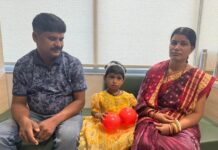











Early afternoon in a small village in Koppal district of Karnataka. A 60-year-old man walking through the village notices a screening van parked nearby, surrounded by a small gathering of men, women, and children. Many of the faces are familiar – villagers who show up almost every month for routine health check-ups. But today something seems different. The devices the team has brought appear new.
As people move through the queue, a volunteer calls him over and asks if he would like to get screened. He hesitates briefly before agreeing.
When his turn arrives, he is asked to cough into a small device connected to a tablet. Curious yet cooperative, he coughs a few times as instructed. The volunteer studies the screen, pauses for a moment, and then begins asking a few questions – whether he has been coughing frequently, whether he has visited a doctor recently. The exchange remains calm, but there is a subtle shift in attention.
He is advised to visit the nearest Community Health Centre or District Hospital for a confirmatory TB test.
Later, the diagnosis confirms it — he is positive for Tuberculosis.
This is not a constructed story. It is a real episode from a routine screening programme in one of the most underdeveloped villages in India. A man with tuberculosis but no clear symptoms – someone who would likely have gone undetected – was identified early. His treatment began in time. His life was saved, and potentially so were the lives of many others around him.
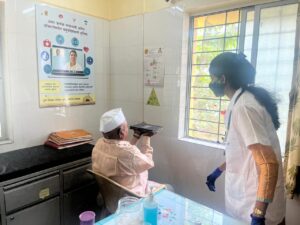
The tool used was Swaasa, an AI-based solutionthat analyses cough sounds captured simply by coughing into a mobile device. The system assesses the risk of respiratory conditions such as TB (Tuberculosis), COPD (Chronic Obstructive Pulmonary Disease), and asthma. The test is validated by the Central Drugs Standard Control Organisation (CDSCO), supported by extensive research published in leading scientific journals such as Nature. Most remarkably, it costs not hundreds of dollars but just INR 10 per test.
However, the screening programme in Koppal did not rely on this single solution alone. It was part of a larger ecosystem — the AffEx Healthcare Kit, developed by the Anjani Mashelkar Foundation, a foundation established by one of India’s foremost scientists and thought leaders, Dr. R. A. Mashelkar. The term ‘AffEx’ reflects Dr. Mashelkar’s philosophy of ‘Affordable Excellence’ — a vision that Indian healthcare urgently needs today.
The Challenge: Bridging the Gap Between Intent and Delivery
India’s public health system has evolved significantly over the decades. The country has built an extensive network of hospitals, primary health centres, and healthcare facilities designed to serve a population of immense scale and diversity.
Yet, despite this progress, the gap between design and delivery remains substantial.
Hundreds of millions of people continue to struggle with anaemia caused by haemoglobin deficiency due to nutritional issues. Chronic diseases such as diabetes are rising steadily. Cancer cases continue to grow. Preventable maternal deaths still occur.
While policies and programmes are well-intentioned, persistent challenges — infrastructure gaps, shortages of trained healthcare workers, limited funding, and inefficiencies in last-mile delivery — continue to restrict their full impact.
The question, therefore, is not only what needs to be done, but how quickly and effectively it can be done at scale.
Expanding hospitals, training more doctors, and increasing public health spending are essential strategies. However, these are inherently long-term solutions. Alongside them, there is an urgent need for approaches that can deliver immediate and scalable impact within existing constraints.
Inclusive Innovation: The Way Forward, Articulated in the book “More from Less for More” (MLM)
Transforming healthcare in a resource-constrained environment requires a fundamental shift in thinking.

Padma Vibhushan Dr. Raghunath Mashelkar articulated the powerful idea of ‘Inclusive Innovation’ — “More from Less for More” in his recently published book of the same title – creating greater value using fewer resources, for more people. This book redefines the purpose and objectives of innovation. The thrust of the book through its 16 chapters is that the fruits of innovation should not be only for the elites or well to do but it should also be accessible in terms of affordability right down to the poor.
Healthcare features prominently in this book with gripping examples of low-cost diagnostics, advanced imaging, and scalable health technologies that maintain clinical excellence while dramatically reducing costs.
The book ‘More from Less for More’ by Dr. R. A. Mashelkar and Sushil Borde, President of the Anjani Mashelkar Foundation, opens doors to a new way of thinking about transformation and growth.
In healthcare, this philosophy translates into deploying high technology not for exclusivity, but for accessibility, affordability, and population-scale impact.
While income inequality may take decades to address, access equality — ensuring that every individual can obtain basic healthcare services — can be achieved much faster through such innovative models.
This approach is not about incremental improvement. It is about reimagining systems that are faster, simpler, and capable of operating at scale.
AffEx: Bringing Affordable Excellence to Healthcare
The Anjani Mashelkar Foundation, founded in 2011 by Dr. R. A. Mashelkar, operates with a clear mission: to discover, develop, and deploy high-technology, ultra-affordable innovations for underserved populations.
Over more than a decade of identifying and validating such solutions, the Foundation has brought them together into an integrated screening ecosystem — the AffEx Healthcare Kit and platform.
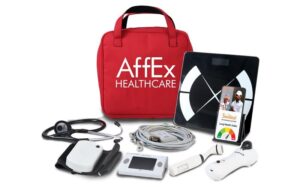
AffEx is a deep-tech, AI-based, non-invasive, medical-grade, point-of-care, fully digital screening system designed for scalable deployment. It enables the screening of over 20 health parameters across multiple conditions in under 10 minutes, at a cost of just INR 100–150 per comprehensive 20-parameter report per person.
What distinguishes AffEx is not merely the individual technologies it incorporates, but the way they are seamlessly integrated into a unified system.
The kit combines solutions for haemoglobin measurement, cardiac assessment, lung health screening, metabolic indicators, and more — all connected through a digital platform that captures and analyses data in real time. Most of these technologies are non-invasive, which significantly improves compliance, particularly in rural and community settings.
The system is designed to be used by minimally trained frontline workers such as ASHAs (Accredited Social Health Activists) and requires no manual data entry. Real-time dashboards provide visibility into both clinical and operational metrics, enabling informed decision-making at multiple levels.
Importantly, AffEx is not just a screening kit — it represents a programmatic approach to healthcare screening.
While several initiatives in India deploy point-of-care devices, AffEx goes a step further by offering a structured model that integrates screening with monitoring and outcome tracking across individual, site, and programme levels. In effect, AffEx transforms screening from a one-time activity into a continuous, data-driven health system.
From Innovation to Impact: Deployments at Scale
AffEx is no longer a concept or prototype. It has already screened thousands of individuals and is being implemented across several large-scale programmes in India, demonstrating its ability to move beyond pilots into real-world healthcare systems.
In partnership with Tata Power, community screening programmes are being conducted across multiple states, reaching tens of thousands of individuals. These initiatives are supported by digital dashboards that enable real-time monitoring across sites. It was within such a programme that the asymptomatic TB case in Karnataka was identified — highlighting the value of early detection in community settings.
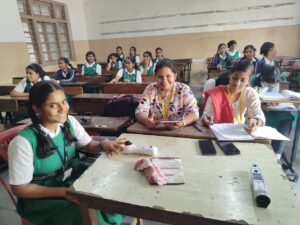
Another large-scale screening initiative in Pune, conducted in partnership with Swaroopwardhinee, is reaching thousands of students in semi-urban and rural schools. The programme includes school-based, non-invasive screenings, counselling, and follow-up care, while ensuring inclusion of children with disabilities. Notably, around 60% of children screened were found to have mild to severe anaemia, underscoring the urgent need for routine screening.
The model has also expanded to household-level interventions, with door-to-door screening of underprivileged families. This approach shifts the focus from individual diagnosis to family-level health monitoring, enabling early identification of risks and improving continuity of care.
AffEx is also being integrated into the Mobile 1000 initiative of the Wockhardt Foundation, which operates mobile medical units across multiple states. By equipping these units with comprehensive screening capabilities, preventive healthcare is being extended deeper into remote and underserved geographies.
Another significant initiative is the Integrated Village Development Programme in Maharashtra, which promotes holistic development of selected Gram Panchayats with a strong focus on health. Implemented jointly by government authorities, Tata Motors (CSR) and AffEx Healthcare, the programme has already trained hundreds of frontline healthcare workers. It highlights the role of large-scale screening, public-private partnerships, and technology integration in strengthening primary healthcare. Expansion of the programme is planned in Goa and Madhya Pradesh.
AffEx is also in advanced discussions with the World Health Organization to support screening programmes in Chhattisgarh and Assam under the global push for Universal Health Coverage, a development expected to further strengthen the credibility and scale of the model.
Across all these deployments, a fundamental shift in healthcare delivery is becoming visible.
AffEx enables a transition from reactive treatment to proactive screening, from episodic care to continuous monitoring, and from doctor-dependent systems to frontline-enabled models. By integrating technology, data, and community-level implementation into a unified system, it creates a healthcare model capable of functioning effectively even in low-resource settings.
Most importantly, it brings healthcare closer to the people, reducing both physical and economic barriers to access.
India does not lack innovation. What has often been missing is the ability to translate innovation into impact at scale.
AffEx offers a compelling example of how that translation can finally become a reality.