















India’s healthcare system faces several challenges, from inadequate infrastructure to rising treatment costs. While corporate hospitals offer advanced care, their affordability remains a concern, and government hospitals struggle with overburdened resources. To understand the current scenario, its implications, and possible solutions, The Indian Practitioner sought the views of leading doctors and healthcare professionals. The views of three doctors, Dr. Soham D. Bhaduri, Dr. Jayesh Sheth and Dr. Regi M. George are shared below.
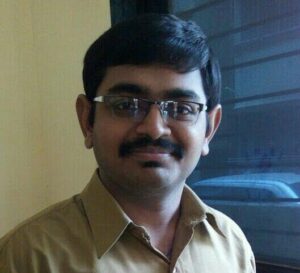 Dr. Soham D. Bhaduri (SB) is an eminent public health physician, independent researcher, and columnist. His works spanning healthcare to spirituality have appeared in prestigious peer-reviewed journals and national dailies such as The Lancet, BMJ, The Times of India, The Hindu, Hindustan Times, and others. He is a former Chief Editor of The Indian Practitioner. Bhaduri is also a philosopher of existential monism, Vedic astrologer, and an inner change coach.
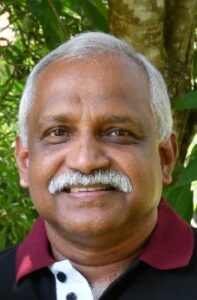 Dr. Regi M. George (RG) is an anesthesiologist committed to tribal health and rural development. Since 1993, he has been actively involved with the Tribal Health Initiative in Sittilingi, Tamil Nadu, and currently serves as a member of the Task Force for Health Planning under the Planning Commission of Tamil Nadu.
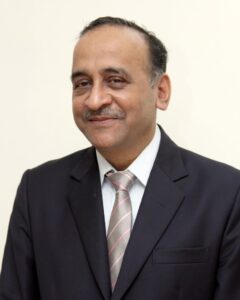 Dr. Jayesh Sheth (JS), Ph.D., FICMCH, Fellow – UICC, DCRMRB (Geneva), is the Founder Chairman of the Foundation for Research in Genetics and Endocrinology (FRIGE) – Institute of Human Genetics in Ahmedabad, Gujarat.
- Do you think India’s current healthcare model is effectively meeting the healthcare needs of our masses in terms of accessibility, affordability, availability of hospitals, diagnostic centers, and emergency care?
SB: Being a lower middle-income country with one of the largest population sizes on the planet, it is axiomatic that a country like ours will have significant challenges as regards healthcare access, availability, and affordability. Another given is that no quick panacea exists either for these challenges or for evolving a model of public healthcare that is substantially different from what we’ve inherited after independence. Healthcare systems are complex systems, particularly more so for India’s gargantuan dimensions straddling a vast unregulated sector, so any consequential reform therein is likely to be slow and lumbered. That said, there are some promising trends in the recent years, particularly in terms of improved government spending and augmenting the healthcare workforce. However, much like macroeconomic growth or recession, these are mere statistics when it comes to impacting the everyday life of the ordinary Indian unless major headways are achieved. And needless to say, a lot remains to be desired.
RG: No, certainly not.
JS: Considering the population of India, Govt spending on health is very negligible. We hardly spend 3.83 percent of GDP on health care. Still, 40 percent of expenditure is out of their own pocket by people in India. Though budget allocation has doubled for health care but it is still not sufficient considering the growing aging population, and rural population in the country where health facilities are mostly primary. This current healthcare model needs to be improved and specifically needs to initiate New Born screening program for common and affordable disorders like congenital hypothyroidism, congenital adrenal hyperplasia, and few of the common metabolic disorders.
2. How would you assess the overall condition of government hospitals in terms of infrastructure, staffing, and service quality? What reforms are needed to make government hospitals more efficient and patient-friendly?
SB: Again, there are statistical promises here that don’t really translate to significant tangible improvements for the lay citizen, at least no so early. For instance, the share of public hospitals in overall healthcare utilization have risen over recent years, and share of out-of-pocket expenditure has reduced, which is good news concerning the status of public healthcare. The Ayushman Bharat Pradhan Mantri Jan Arogya Yojana (AB-PMJAY) pays public hospitals on similar terms as their private counterparts and generates additional funds for fund-starved public hospitals. However, ask any ordinary citizen whether their choices with regards to accessing healthcare have significantly changed over the last decade, and most responses won’t be in the affirmative.
Before contemplating on potential reforms, I would like to check how the current policy winds are blowing. Is our public policy directed towards augmenting public healthcare? While I can say so, to a certain extent, for primary care and medical colleges, I’m not sure about public hospitals and secondary care. If, however, we were still to think of much needed reforms, escaping the top-down management structure of public hospitals, embracing the principles of new public management which accord them greater autonomy, expediting and promoting digital reforms that embrace value-based care principles and produce tangible improvement in health outcomes will count among the foremost.
RG: In the south there are more doctors and staff available, which i don’t see in the north – and the service quality in the remote PHCs in the south and nearly all PHCs in the north leave much to be desired.
JS: With the current healthcare facility Govt is providing ample funds but that is mainly used for capital expenditure to show in the record the available facilities. But very few Govt hospitals are equipped with modern facilities and even if they are, the instruments are not in use for want of manpower and expensive chemicals. So in the paper Govt hospitals will show all facilities but they are non-functional and even primary lab services or imaging services are outsourced in some places.
3. What impact have corporate hospital chains had on the quality and cost of healthcare in India? Do branded hospitals contribute to innovation in medical treatments, or are they primarily profit-driven? Is the increasing presence of corporate hospitals leading to better patient outcomes, or does it widen healthcare inequality
SB: The fact that India today makes for a top medical tourism destination has a lot to speak on these questions. It wouldn’t be possible unless we had sterling hospital chains delivering quality healthcare (at least when it comes to perceived healthcare quality) at prices that are globally reasonable, regardless of how locally accessible and affordable they are. The good thing is that quality improvements in the corporate sector have the potential to compel quality improvements elsewhere in the private sector and even the public sector, and same goes for prices of care. However, this can only work where there is any effective competition. In the current fragmented scene, private providers have every incentive to exploit market imperfections rather than competing to provide better quality and prices. Our national health insurance schemes, no matter how monumental they look on paper and in terms of sheer coverage, have a long way to go for being a significant player that can integrate the fragmented healthcare industry.
We must never see profit-making as antithetical to innovation. In fact, its just the opposite. Inadequate incentives are what stymie research and innovation in the public sector. The private sector has had a great track record of innovation, particularly frugal innovation. The challenge lies in the inequitable diffusion of these innovations where socio-economic dimensions come into play, and where we cannot do without public intervention. Similarly, corporate hospitals themselves don’t impact healthcare inequality directly. Instead, it is a domain of public policy. If you let corporate chains indiscriminately rampage through an unregulated healthcare landscape, not even the most developed nation would be spared of rising healthcare inequities. As far as India goes, while the general policy sense is to increasingly bring them into the public fold, we are evolving at a snail’s pace.
RG: It certainly has better patient outcomes since they have more modern equipment and the patients can afford the costly tests and medicines. but all of them are profit driven and most are unethical as well.
JS: Corporate hospitals are mainly serving the 10 percent of people with a huge cost and working as a business model instead of a service model. This has resulted in a relationship, between patients as customer and doctor relations without any respect or sympathy for each other. They hardly do any innovation except buy technology and implement it for huge benefits. I remember patients telling me that sir in a private set up the doctor used to charge Rs 1500 which has become Rs 15k in corporate hospitals. To meet the high pay, doctors are given targets to meet the expenditure cost.
4. Are there enough healthcare facilities in rural and semi-urban areas, or is there still a major urban-rural divide? Do you think there is a need for increased government investment in healthcare infrastructure? How do you see the role of government healthcare schemes like Ayushman Bharat in bridging healthcare gaps?
SB: The rural-urban divide remains more or less as stark as it was before, at least with regards to healthcare infrastructure if not aspects like reproductive health and nutritional outcomes, where we did record reasonable improvements over the last two decades. What is even more glaring, and which has been a strong area of focus over the past decade, is the public-private infrastructure divide within urban areas themselves. While rural healthcare has its own challenges, it is urban public healthcare that is particularly bedeviled by shortages and this has attracted a lot of policy attention lately. Given the current climate, it is the government primary and secondary care setup that pressingly calls for increased public investments. After nearly seven years of the promulgation of Ayushman Bharat, a lot remains to be done to ensure that our health and wellness centers do significantly more than refer cases for hospitalization under AB-PMJAY. As I’ve covered in my preceding answers as well as my columns elsewhere, the AB-PMJAY is ambitious, perhaps the most expedient route to universal healthcare today, but highly hyperbolized. Should it try to go anywhere close to delivering on its true promise, colossal demands and challenges are forecast.
RG: Secondary care is a big gap – from govt hospitals to Ayushman Bharat – this is never addressed. so most secondary care is done in private hospitals and it burns a hole in the pocket. Ayushman Bharat payments are not regular and so many of the private hospitals charge extra for medicines or appliances and this pushes up the cost.
JS: Now we do see better health care in semi-rural areas but not up to the mark and mostly provides primary care. In urban areas, there are facilities but mostly private hospitals, while Govt supported health care is restricted to a basic health care facility.
5. Does India’s healthcare model prioritize preventive care enough, or is it more treatment-focused?
SB: Again, here, there is more talk than action. We intend to spend 70 percent of our public resources on primary care, and data indicates positive trends with respect to the overall share of primary care spending, but then union budgets (which have traditionally focused more on the preventive dimension than state budgets) fail to honor the word. The general rule is that money flows with curative care. Private-sector predominant systems face perennial challenges in upholding preventive care, despite regulations. A case in point is the US with its arrangements such as Health Maintenance Organizations which were originally intended at fostering prevention. So, when we say that we want HMO like arrangements in mainstream Indian healthcare, we must remember the regulatory brawn it calls for, in addition to the fact that there is no universal preventive care without significant public provision. There is little real demand for preventive care in any society, so the public sector assumes the central responsibility. As far as public policy is concerned, we in India do recognize this fact and seem to be working in that direction, but as discussed before, major gaps remain. We are still only scratching the surface with our existing primary care initiatives. It would be interesting to see how things evolve as public primary care coverage is incrementally expanded in the future with possible participation from private players.
RG: No, the govt and the public are more keen on treatment driven care and preventive care takes a back seat.
JS: No, India’s healthcare model is not focusing on preventive but mostly focused on treatment base. A country like India needs to focus more on prevention rather than cure. For example, nearly 40 percent and 80 percent people in India have vitamin B12 and Vit D deficiency. This causes many health issues and needs to add them in addition to iron and folate supplements for which Govt spends 700 crores of rupees.