





















Researchers at BRIC-Rajiv Gandhi Centre for Biotechnology (BRIC-RGCB) have developed novel nanopore-based sensors that could enable early detection and monitoring of biomarkers linked to neurodegenerative diseases, including Parkinson’s disease and amyotrophic lateral sclerosis (ALS).
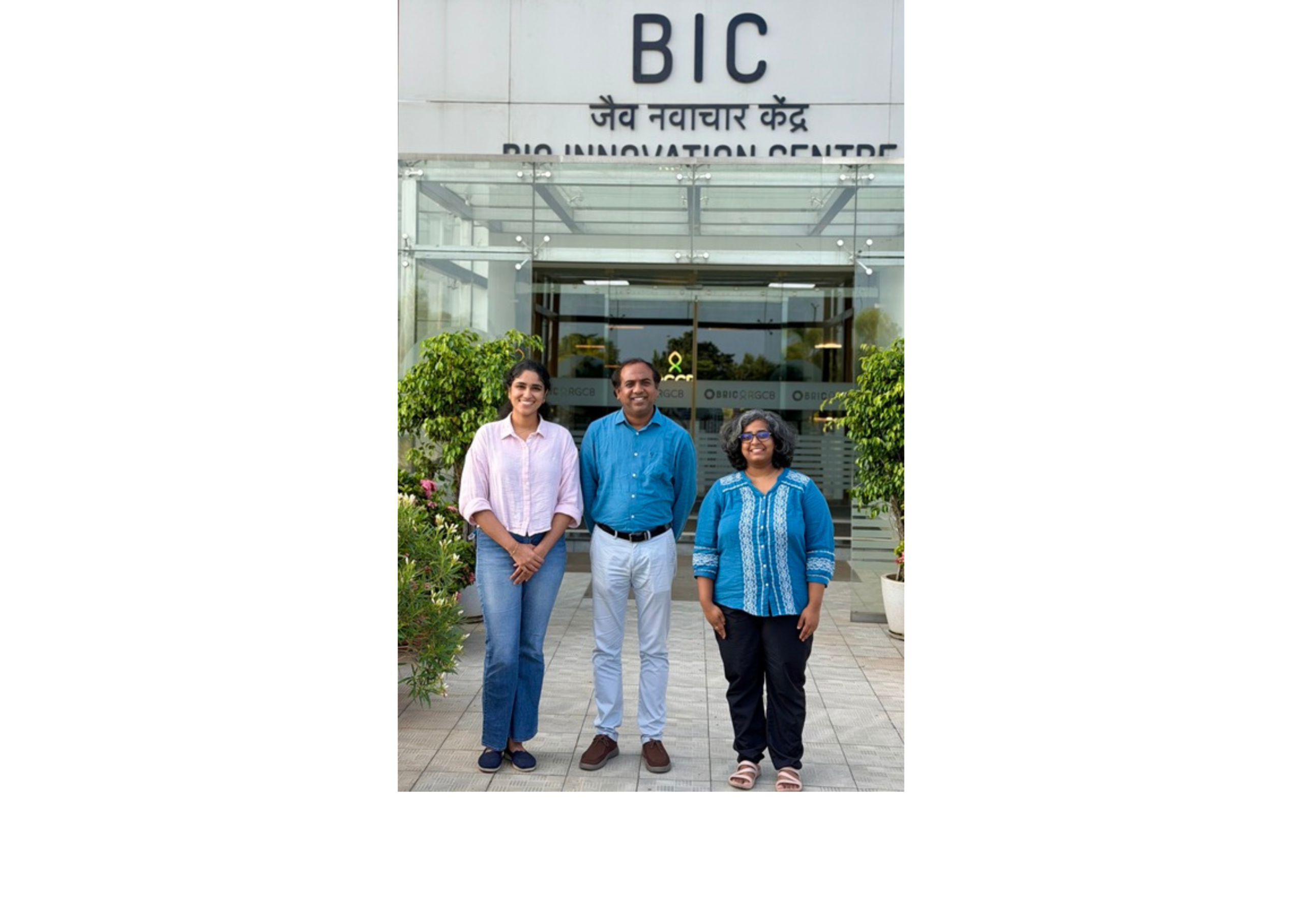
Led by Dr. Mahendran K. R., the team, including PhD student Varsha Shaji and postdoctoral researcher Dr. Neethu Puthumadathil, developed self-assembling “dual-diameter” nanopore sensors. These sensors can detect disease-associated biomarker forms at very low concentrations, even within complex protein mixtures.
Nature-Inspired Nanopore Technology
The researchers designed short peptides that self-assemble into pores of different sizes, allowing the sensors to detect biomolecules of varying shapes and dimensions. The technology also distinguishes disease-associated forms of biomarkers from non-disease-associated forms.
The study, published in Nature Nanotechnology, marks an advance in biomolecular sensing. As per the press release, the technology could eventually support point-of-care devices capable of detecting disease biomarkers directly from biological fluids such as blood.
Potential for Wider Disease Detection
The nanopore architecture draws inspiration from naturally occurring structures and differs from computational nanopore designs. Combining both approaches could further improve sensor sensitivity in the future.
BRIC-RGCB Director Dr. Beena Pillai said the technology demonstrates how nanotechnology and biotechnology can address the challenge of early and accurate detection of neurodegenerative diseases.
The researchers collaborated with teams from Constructor University, Germany, and CSIR-Indian Institute of Chemical Biology, Kolkata. The study received support from the Department of Biotechnology, Department of Science and Technology, ICMR and CSIR, Government of India.