






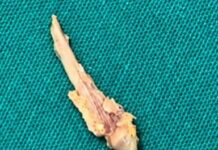















Doctors at Wockhardt Hospitals, Mumbai Central, successfully removed a gigantic uterine fibroid measuring 28 × 30 cm and weighing 3.1 kg—roughly the size of a seven-month pregnancy—from a 33-year-old woman. Remarkably, the surgery preserved her uterus, safeguarding her fertility in a rare and technically challenging procedure.
The patient had noticed gradual abdominal swelling, initially dismissing it as weight gain. Despite experiencing no pain, menstrual irregularities, or other warning signs, the mass continued to grow silently, eventually reaching up to her xiphisternum. Concerned about the unusual enlargement, she sought medical evaluation.
Complex Diagnosis and Surgical Planning
Comprehensive investigations confirmed the presence of a giant uterine fibroid, a rare condition at such an advanced size. Treating large fibroids in young, unmarried women is particularly complex, requiring careful planning to preserve fertility while achieving satisfactory cosmetic outcomes.
Innovative Fertility-Preserving Surgery
The surgery, led by Dr. Indrani Salunkhe, Consultant – Gynaecology and Obstetrics at Wockhardt Hospitals, opted for an open myomectomy with a strong focus on uterine conservation. “Fibroids of this magnitude are rare and surgically demanding. Our goal was not just to remove the tumour safely but to protect the patient’s uterus and her long-term reproductive and emotional well-being,” Dr. Salunkhe explained.
To minimize visible scarring, the team used a Pfannenstiel (bikini-line) incision, commonly employed in cesarean deliveries. In a pioneering adaptation, they employed a
vacuum-assisted technique, usually used during childbirth, to extract the 3.1-kg fibroid through the transverse incision—a method rarely applied for tumours of this size.
Smooth Recovery and Positive Outcomes
As per the press release, the patient required four units of blood transfusion during the procedure, but her surgery and recovery were otherwise uneventful. The uterus was fully preserved, wound healing progressed well, and the cosmetic outcome met the patient’s expectations.