






















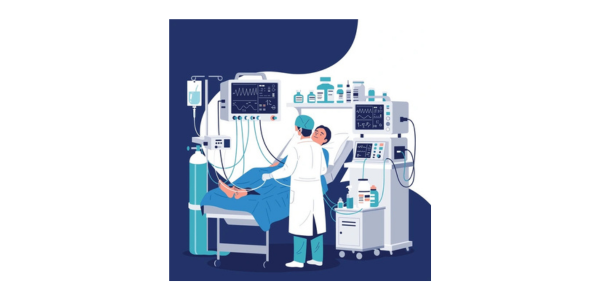
The Supreme Court has directed all states and Union Territories to conduct a nationwide audit of Intensive Care Unit (ICU) facilities within the next two months. Through this move, the court aims to identify gaps in infrastructure, manpower, and equipment across healthcare institutions and improve critical care services nationwide.
States Asked to Assess Infrastructure Gaps
The bench of Justice Ahsanuddin Amanullah and Justice R Mahadevan instructed states and UTs to complete a detailed gap assessment exercise within two months. Additionally, authorities must prepare plans to implement minimum ICU standards beginning with Level 1 ICUs. The court emphasized that healthcare systems must keep pace with India’s rapidly growing population.
Expert Panel Frames Uniform ICU Guidelines
The court issued the directions while examining a draft framework prepared by a 17-member expert committee comprising medical professionals from different specialties. The proposed guidelines define minimum ICU standards related to staffing, infrastructure, and treatment protocols.
The draft framework also categorizes ICUs into three levels based on the complexity of care required. Furthermore, the guidelines specify requirements related to ventilators, oxygen ports, trained medical staff, and emergency response systems.
Nursing Colleges Also Come Under Scrutiny
Along with ICU facilities, the Supreme Court ordered a nationwide audit of nursing colleges. The court directed the Indian Nursing Council to submit a detailed report on practical training facilities available in nearly 800 nursing institutions.
As per Hindustan Times, the court expressed concern that several nursing students graduate without adequate hands-on clinical exposure. The judges also questioned the existing rule that allows nursing colleges to operate up to 30 kilometres away from affiliated hospitals.
Court Suggests Better Emergency Coordination
The Supreme Court also highlighted the need for better emergency healthcare coordination across hospitals. Experts recommended a nationwide GPS mapping system that could help patients quickly identify nearby hospitals, available ICU beds, and specialty services.
Moreover, the bench suggested connecting hospitals through a centralized communication network to simplify patient transfers during emergencies. The court also advised states to explore standardized ambulance systems equipped with ventilators and trained personnel.
Case Originated From Medical Negligence Petition
The matter originated from a medical negligence case filed by Asit Baran Mondal, who sought compensation for the death of his wife at a Kolkata hospital in 2013. During the proceedings, the Union government informed the court about the Model ICU/CCU guidelines prepared by the Health Ministry in 2023, which later became the basis for broader reforms.