









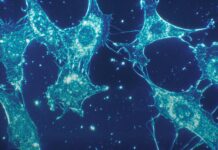













Researchers at the National Institute of Technology, Rourkela (NITR) have developed a novel bio-ink designed for advanced 3D bioprinting and tissue engineering applications. Bio-inks play a crucial role in fabricating tissue-like structures, yet their broader use has been limited due to challenges in achieving the right balance of mechanical strength, biological compatibility, and printability.
Addressing a Critical Gap in Bioprinting
To overcome these limitations, Associate Professor Devendra Verma, along with research scholars Shreya Chrungoo and Tanmay Bharadwaj from the Department of Biotechnology and Medical Engineering, engineered a high shape-fidelity protein–polysaccharide composite bio-ink. As reported by TOI, their work, published in the International Journal of Biological Macromolecules, specifically targets applications in bone and cartilage repair.
Simultaneously, the team secured a patent titled “A High Shape-Fidelity Protein-Polysaccharide Composite Bioink for 3D Bioprinting”, granted on March 18, 2026, marking a significant milestone in translational biomaterials research.
Innovative Composition Enhances Performance
To achieve optimal results, the researchers combined bovine serum albumin (BSA), sodium alginate, and polyelectrolyte complexes of gelatin and chitosan (PEC-GC). This strategic formulation created a bioactive system that not only maintained structural integrity during and after printing but also supported robust cellular activity.
As Verma explained, the team aimed to bridge the longstanding gap between printability and biological performance. By leveraging protein–polysaccharide interactions and nanofibrous complexes, they developed a system capable of high-precision printing while actively promoting tissue regeneration.
Promising Laboratory Outcomes
During lab-scale evaluations, the bio-ink demonstrated the ability to mimic the extracellular matrix of bone tissue. Consequently, it facilitated cell attachment, adhesion, and proliferation. In addition, the printed scaffolds exhibited strong mechanical properties, enabling them to retain their shape and function post-printing.
Notably, scaffolds containing 2% PEC-GC achieved over 90% cell viability. Furthermore, they showed significant potential for bone tissue formation and enhanced collagen synthesis, underscoring their regenerative capabilities.
Toward Personalized Regenerative Medicine
Importantly, the developed bio-ink offers a versatile platform for creating patient-specific scaffolds with precise geometry and biological functionality. Chrungoo highlighted that its ability to support high cell viability and tissue-like behavior makes it particularly promising for regenerative medicine applications.
Next Steps: From Bench to Bedside
Looking ahead, the research team plans to initiate animal studies to further evaluate safety and efficacy. Subsequently, they aim to conduct clinical trials to validate its real-world applicability.
Overall, this innovation represents a significant step toward personalized healthcare, as it opens new possibilities for fabricating customized, tissue-like structures for therapeutic use.