




















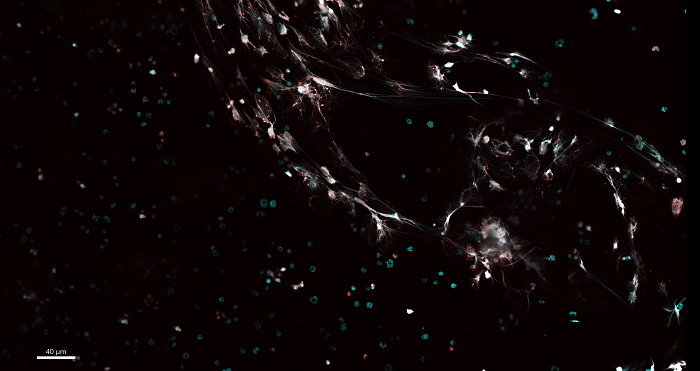
Researchers at the University of Turku in Finland discovered that neutrophils, a key type of white blood cell, are present and functionally active in multiple tissues during embryonic development. Published in Nature Communications, the study challenges the traditional understanding that these immune cells become fully functional only later in life. The findings suggest that embryonic neutrophils can perform several essential immune functions even before birth. Moreover, their presence in developing tissues indicates that they may contribute to tissue development and maintenance, in addition to protecting the body against infections.
Neutrophils Provide an Early Line of Immune Defence
Neutrophils form part of the innate immune system, the body’s first line of defence against harmful microbes. In adults, these white blood cells rapidly move from the bloodstream into affected tissues, where they help eliminate pathogens and control infections. However, scientists have known relatively little about the role of neutrophils during embryonic development. To investigate this gap, researchers at the University of Turku examined developing embryos and discovered substantial populations of neutrophils across several tissues. The discovery raised an important question: why does the developing embryo need these immune cells while it remains protected inside the uterus?
Embryonic Neutrophils Can Perform Adult-Like Immune Functions
To understand how these cells develop, the research team used single-cell RNA sequencing, a technique that examines gene activity in individual cells. The analysis revealed some differences in gene expression between embryonic and adult neutrophils. Nevertheless, both populations followed similar major developmental stages. More importantly, the researchers demonstrated that embryonic neutrophils could perform several functions typically associated with adult immune cells. These included:
Phagocytosis: Engulfing particles, including potentially harmful microbes.
Production of reactive oxygen species: Generating reactive oxygen compounds that help destroy pathogens.
Formation of extracellular traps: Releasing web-like structures that capture and help contain pathogens outside the cell.
These findings indicate that embryonic neutrophils are not simply immature cells waiting to become functional. Instead, they can carry out important immune activities during early development.
Immune Cells May Also Help Developing Tissues
Another significant finding concerned the location of neutrophils within the embryo. Researchers observed that many of these cells were situated outside blood vessels, placing them in direct contact with developing tissue cells. This positioning suggests that neutrophils may perform functions beyond immune defence. For example, they could help regulate tissue development, maintain the local cellular environment and support homeostasis, the process through which tissues maintain stable internal conditions. Doctoral Researcher Julian Hofmann from the University of Turku highlighted the potential importance of these observations. The findings suggest that embryonic neutrophils may be adapted to the specific needs of developing tissues rather than simply representing earlier versions of adult immune cells.
Researchers Reassess Immune System Development Before Birth
The study is reshaping scientists’ understanding of how the immune system develops alongside the body’s tissues. According to Docent Pia Rantakari, who leads an InFLAMES research flagship group at the University of Turku, the findings show that neutrophils play a more active role in developing tissues than previously recognised. The research was conducted jointly by Rantakari and Marko Salmi, another InFLAMES group leader at the University of Turku.
Potential Implications for Prenatal and Newborn Health
The findings could eventually help researchers better understand how the developing immune system responds to infections and inflammation before and shortly after birth. If scientists confirm that human embryonic tissues contain similarly active neutrophils, this knowledge could inform future research into prenatal and perinatal infections, as well as inflammatory conditions affecting fetuses and newborns. However, further studies are needed to establish the precise roles of embryonic neutrophils in human development and determine how these functions influence health and disease. As per University of Turku press release, the study provides new evidence that immune defence begins developing early and that neutrophils may contribute to both protection against pathogens and the development of healthy tissues before birth.