



















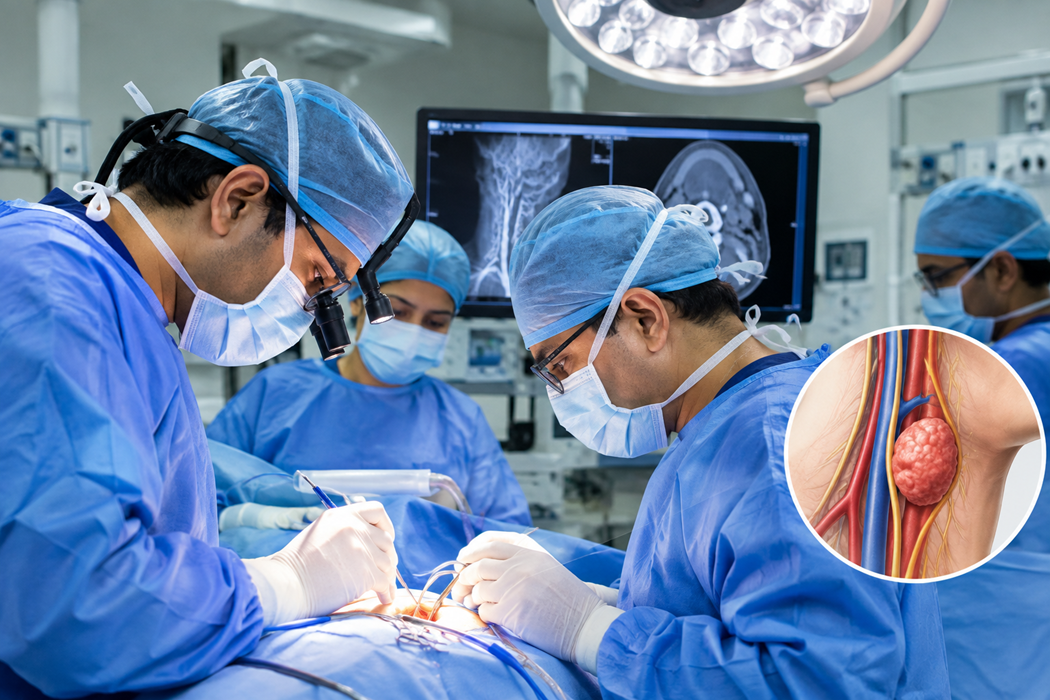
A multidisciplinary team at Wockhardt Hospitals, Mira Road, has successfully removed a rare, highly vascular carotid body tumour from a 60-year-old woman with significant heart disease and a history of angioplasty and coronary stent placement.
The patient had undergone angioplasty in 2016 following approximately 90% coronary artery blockage. Years later, she developed a tumour near the major blood vessels and critical nerves of the neck. Her cardiac history, antiplatelet therapy and the tumour’s high vascularity made the procedure particularly challenging.
Tumour Removed While Preserving Critical Structures
CT angiography identified a Shamblin Group II carotid body paraganglioma involving the left carotid sheath. The surgical team—Dr. Chandraveer Singh, Dr. Vinod Rambal and Dr. Sheetal Radia—carefully exposed and preserved the carotid arteries before removing the tumour.
The surgeons also successfully preserved the vagus and hypoglossal nerves and avoided carotid wall injury.
Smooth Postoperative Recovery
The patient remained stable after surgery, with no significant neck swelling, haematoma or neurological deficit. She also retained normal facial movement, voice, swallowing and shoulder elevation.
As per the hospital press release, the combination of the tumour’s vascularity, the patient’s previous angioplasty and stent, antiplatelet therapy, and successful preservation of major vessels and nerves makes the case exceptionally rare.
Dr. Chandraveer Singh, Consultant Head & Neck Cancer Surgeon, said:
“Our multidisciplinary approach allowed us to meticulously remove the tumour while preserving the carotid arteries and important cranial nerves. The patient’s smooth postoperative recovery without neurological or cranial nerve deficits is a highly encouraging outcome.”
The hospital noted that, in the absence of a reliable international registry, it cannot conclusively establish the case as the world’s first. However, it considers the combination of clinical factors and successful outcome exceptionally rare and clinically noteworthy.