



















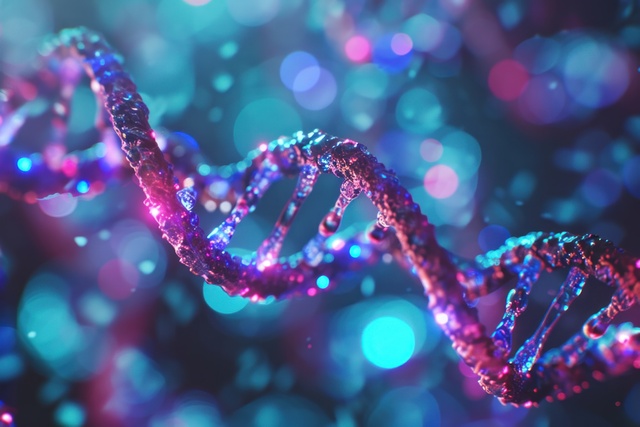
An international research team, including Dr Sushmita Basu, Assistant Professor at the Birla Institute of Technology and Science (BITS) Pilani, has developed DNAreader, an advanced artificial intelligence (AI)-based tool that predicts the specific regions of proteins that interact with DNA. The tool can identify DNA-binding residues in both structured and flexible (disordered) protein regions, potentially improving the understanding of protein-DNA interactions. Scientists from Virginia Commonwealth University, USA, and Xinyang Normal University, China, led the research in collaboration with Hebei University of Technology, China. The findings have been published in the journal Nucleic Acids Research.
Addressing Challenges in DNA-Protein Interaction Prediction
Protein-DNA interactions play a crucial role in several biological processes, including gene regulation, DNA replication and repair, and the organisation of genetic material. Therefore, identifying the precise amino acid residues responsible for these interactions is essential for understanding how proteins function. However, predicting these DNA-binding regions remains challenging, particularly in proteins containing intrinsically disordered regions that do not maintain a fixed three-dimensional structure. Furthermore, existing DNA-binding prediction tools can sometimes incorrectly classify protein residues that interact with other molecules, such as non-DNA ligands, as DNA-binding residues. This limitation can affect prediction accuracy.
DNAreader Combines Two AI-Based Approaches
To address these challenges, the research team developed DNAreader, a prediction tool designed to identify DNA-binding residues across both structured and disordered protein regions.
The tool incorporates two key innovations:
– Balanced batch-training strategy: The model uses balanced examples of DNA-binding, other-ligand-binding and non-binding residues across structured and disordered protein regions. This approach helps the AI distinguish between different types of molecular interactions.
– Contrastive learning approach: This technique improves the model’s ability to differentiate DNA-binding residues from residues that interact with other molecules or do not participate in binding.
As reported by biospectrumindia.com, by combining these approaches, DNAreader aims to improve the accuracy of DNA-binding residue prediction and address limitations associated with existing computational tools.