










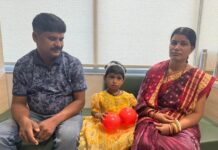












Doctors at Dr. Mehta’s Hospitals have successfully treated a 1.5-year-old child who developed a rare, life-threatening complication after surgery for congenital tracheoesophageal fistula (TEF). The complex reconstructive surgery was led by Dr. Raghul, Paediatric Surgeon, with support from Dr. Saravanan, Dr. Kartigeyan (Anaesthesiology) and Dr. Sasidaran (Paediatric Intensive Care Unit).
Complex Recurrent Fistula
The child, an NRI residing in the UK, was born with TEF, an abnormal connection between the food pipe and windpipe that can cause food and saliva to enter the lungs, leading to recurrent aspiration and pneumonia.
Although the child had undergone corrective surgery in the UK, the fistula recurred. Several subsequent surgical attempts elsewhere failed to close the defect. The family then travelled to Chennai, where Dr. Raghul recommended definitive open reconstruction following a detailed evaluation.
2.5 cm Defect Repaired
The surgery, performed in June 2026, was challenging because of extensive scar tissue from previous procedures. As per the press release, surgeons identified a large 2.5 cm opening between the trachea and oesophagus.
The team carefully separated the two structures and repaired the airway while maintaining uninterrupted oxygenation. They reinforced the tracheal repair with healthy pericardial tissue and successfully reconstructed the child’s native oesophagus, avoiding the need for oesophageal replacement using the stomach or intestine.
“Recurrent tracheoesophageal fistula following previous surgery is an uncommon but extremely challenging condition due to extensive scarring and distorted anatomy. Careful pre-operative planning, meticulous surgical technique and close multidisciplinary collaboration enabled us to restore the child’s normal anatomy while preserving the native food pipe,” said Dr. Raghul.
Successful Recovery
Following surgery, the child was gradually weaned off mechanical ventilation and resumed normal oral feeding. The child was discharged on the seventh post-operative day and has remained asymptomatic during follow-up.
Furthermore, the child has shown appropriate weight gain and can now eat a normal diet without difficulty. Follow-up imaging showed normal airway and oesophageal calibre, with no evidence of recurrent fistula or narrowing. The child has since returned to the UK with the family.
The successful procedure highlights the role of advanced paediatric reconstructive surgery and multidisciplinary care in managing rare and complex congenital conditions.