























Artificial Intelligence is believed to be hugely transformational in healthcare across all areas—diagnosis, treatment, surgery, health records, data management, and the tracking of patient feedback and compliance. To understand the scope and potential of this transformation and how it is benefiting healthcare, The Indian Practitioner quizzed doctors from various medical specialties for deeper insights. Their responses are reproduced here.
The doctors who participated in this Q&A are:
Dr. Samiran Nundy, Dr. Shikhar Tripathi, Dr. Soham Bhaduri, Dr. Reena Wani and Dr. Abhay Bhave
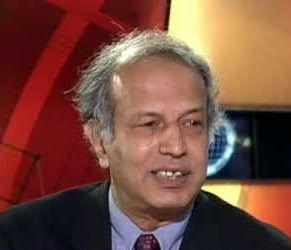 Dr. Samiran Nundy, Advisor and Emeritus Consultant, Institute of Surgical Gastroenterology, GI and HPB Oncosurgery and Liver Transplantation, Sir Ganga Ram Hospital, New Delhi. He has authored over 375 research papers and 60 books, and played a pivotal role in shaping Indian medical policy, including the Transplantation of Human Organs Act, 1995.
 Dr. Shikhar Tripathi, Fellow, Institute of Surgical Gastroenterology, GI and HPB Oncosurgery and Liver Transplantation, Sir Ganga Ram Hospital, New Delhi. He has a strong background in translational research, including peer-reviewed publications, global presentations, editorial work on The Manual of Clinical Surgery.
 Dr. Soham Bhaduri, Public health physician, independent researcher and columnist. His work spanning healthcare to spirituality have appeared in prestigious peer-reviewed journals and national dailies such as Lancet, BMJ, The Times of India, Hindustan Times and others. Former chief editor of The Indian practitioner.
 Dr. Reena Wani, Dept, Obstetrics and Gynecology, HBT Medical College and Dr. R N Cooper Municipal Hospital, ex-TN Medical College and B Y L Nair Ch Hospital, Mumbai. Section Editor the Indian Practitioner, Peer Reviewer, AMWI Mumbai Member, Managing Committee MOGS, UNESCO Bio-Ethics and AMC.
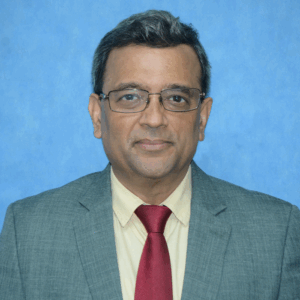 Dr. Abhay Bhave, Haematologist, Department of Haematology, Lilavati Hospital and Research Centre, Bandra West, Mumbai.
The Indian Practitioner (TIP): Experts suggest AI can significantly transform clinical practice and enable a shift from reactive to predictive and preventive healthcare. How realistic is this shift from your perspective and what could the key benefits be of AI-integrated healthcare?
Dr. Samiran Nundy (SN) & Dr. Shikhar Tripathi (ST): The transition from reactive to predictive and preventive healthcare through AI is not only realistic but already under way. In our experience as surgeons, early detection is often the defining factor between successful outcomes and challenging recoveries. AI’s ability to analyze massive datasets, including patient histories, genetic markers, and lifestyle factors, empowers us to anticipate illnesses well before clinical symptoms manifest. For instance, using AI-based predictive models, we can now stratify the risk of colorectal cancers, enabling timely colonoscopic interventions that dramatically improve survival outcomes. The key benefits include significantly improved patient prognosis, reduced healthcare costs due to fewer complications and hospitalizations, and a fundamental shift towards a healthcare system centered around prevention and early management rather than crisis-oriented responses.
Dr. Soham Bhaduri (SB): AI doesn’t necessarily translate into preventive care. Yes, there is no doubt that AI can significantly aid the transition from ‘reactive’ to ‘predictive’, which particularly at the population level would be significantly beneficial as far as disease prevention is concerned, but for AI to uphold a preventive healthcare orientation, market and public policy interests have to align with disease prevention, which is another way of saying that the economic incentive to disease prevention should stand out to the major healthcare players. With managed care and value-based care paradigms growing in Indian healthcare, there is indeed hope that AI will be put to good use.
Dr. Reena Wani (RW): Yes, AI can assist in analysis of patterns, help predict risk and suggest algorithms. However, the key is still the clinical input and interpretation of data contextual to the patient profile. As of now, I don’t think AI is capable of this! Integrated health-care still requires a a clinical perspective for proper interpretation of data.
Dr. Abhay Bhave (AB): AI can help give us a better diagnostic and treatment algorithms to enable more efficient and effective patient management and outcomes.
TIP: In terms of diagnosis, how do you see AI improving diagnostic accuracy and time, and reducing human error? What concerns do you have about relying on AI for diagnosis or treatment recommendations?
Dr. SN & ST: AI has extraordinary potential to elevate diagnostic accuracy and reduce human error significantly. We have witnessed firsthand AI-driven imaging tools like advanced CT AI systems detecting minute gastrointestinal manifestations or early malignancies that even highly trained eyes may overlook. Such technologies drastically reduce diagnostic time, from hours or days down to minutes or seconds. However, reliance on AI must be approached cautiously. Our primary concern lies in potential complacency among healthcare providers, overly trusting AI without adequate clinical oversight. Misinterpretations or algorithmic biases, especially in atypical presentations or rare diseases, could lead to harmful patient outcomes. The ideal balance, therefore, is a symbiotic integration of AI recommendations with experienced clinical judgment, ensuring both efficiency and safety.
Dr. SB: AI in my view is pivotal in two main areas: first, possibly minimizing human errors, which amounts to significant pecuniary and human losses every year, and second, promoting task shifting in a healthcare ecosystem that is perennially short-staffed. This can possibly be AI’s greatest contribution to the country’s public health, apart from helping predict and prevent public health catastrophes. So, it is crucial to be wary of the many challenges that AI aided diagnostic and therapeutic systems pose at least in their early stages like algorithms that fail to account for population-specific peculiarities and an untoward boost to self-medication. It is here that you understand that the human touch in medicine cannot be minimized. The doctor-patient relationship has underpinnings that are as emotional as they’re rational.
Dr. RW: Yes, AI may help to make diagnosis faster, perhaps more sensitive and specific as well, and less prone to errors due to fatigue/ subjectivity and bias. I believe technology progress is more about direction than speed, hence using AI would still be an adjunct, not a primary modality.
Dr. AB: AI can help give us a better diagnostic edge with more precision and less errors. However, all would depend on the algorithms fed to it.
TIP: AI promises to enable precision medicine tailored to individual genetic, lifestyle, and environmental data. How do you see this fitting into primary care? How can AI help personalize therapies in real time as patient responses evolve during treatment?
Dr. SN & ST: AI-powered precision medicine is destined to revolutionize primary care. By integrating genetic, lifestyle, and environmental data, primary healthcare providers can offer highly personalized preventive strategies. For instance, understanding genetic predispositions for gastrointestinal diseases such as inflammatory bowel disease or gastrointestinal cancers enables precise lifestyle modifications or tailored screening regimens. During treatments, AI algorithms continuously analyze patient responses to therapies, adapting and personalizing interventions in real-time. As surgeons, leveraging AI to tailor postoperative nutritional strategies or personalized chemotherapy regimens based on real-time biomarker feedback significantly enhances patient recovery and reduces complications, illustrating the profound benefits of precision medicine integration into daily clinical practice.
Dr. SB: Given the generally bifid nature of much of the Indian society, how soon primary care (that which caters to the basic healthcare needs of over 3/4ths of our population), will be able to embrace personalized medicine, is uncertain. There is little to no primary care as far as the urban affluent are concerned, so they will be quick to reap these benefits. But as far as mainstream primary care is concerned, AI’s bigger contribution is to make the simple things simpler, and much quicker and inexpensive than before, through things like task shifting to lower-level functionaries and better monitoring of preventable conditions. These gains can far exceed those from personalized medicine at this stage at least.
Dr. RW: All promises are not fulfilled in real-life situations and I have reservations about AI for primary healthcare.
Dr. AB: AI will be invaluable in primary healthcare if it can be fit to serve the challenges of diverse socio-cultural and educational settings, as well as balance access and economics.
TIP: Do you think the physician-patient relationship will change with increasing AI involvement? Would AI-integrated healthcare lead to more equitable and affordable healthcare for our masses?
Dr. SN & ST: The physician-patient relationship will undoubtedly evolve with increased AI integration—but positively so. Instead of distancing clinicians from patients, AI frees doctors from repetitive tasks, allowing more meaningful human interaction and empathetic communication. Rather than replacing clinical judgment, AI complements it, thereby enhancing trust as patients see the benefits of cutting-edge, data-driven decisions. Regarding equity, AI-integrated healthcare can profoundly democratize quality medical care. Rural and underserved communities, traditionally burdened by limited access to specialists, will benefit immensely from AI-powered telemedicine, diagnostic algorithms, and treatment support tools. This democratization can lead to improved healthcare affordability and universal accessibility, ultimately achieving greater health equity across the masses.
Dr. SB: As mentioned, AI won’t automatically lead to equitable healthcare unless there is active and adequate public policy focus on this aspect. The same goes for the doctor-patient relationship, which is an even more slippery slope where active attention is a must. The influx of AI only entails that both doctors and patients only grow more intelligent than before, including greater emotional intelligence. We must uphold the good work some non-government agencies have done in AI-aided primary care in rural settings, and I believe these must be suitably scaled.
Dr. RW: Change is inevitable in evolution and informed clinical perspective, and we have to move with the times or get left behind! AI will surely tilt the balance towards machines over men…but this need not be a step towards more affordable care.
Dr. AB: No, at least not yet. Face to face clinical care and patient management will still remain for another 5 -10 years.
TIP: Are you currently using any AI-enabled tools or platforms in your practice? What kind of training or support would help physicians feel more confident in using AI tools responsibly and effectively? Do you believe AI should be integrated into the medical education curriculum as a core competency for future physicians?
Dr. SN & ST: Currently, in our practice, we employ AI-powered pre-operative prediction of mortality and morbidity- rooted from a dataset of 20,000 and austere scientific methodology, this is something we have developed through rigorous research and are about to publish for the world to assess and utilize. For wider adoption among physicians, robust training and continual support systems are critical. We require structured training programs that include fundamental AI concepts, hands-on experience with AI platforms, and clear ethical guidelines. Physicians need to understand the capabilities and limitations of these technologies thoroughly, empowering them to use AI responsibly. Furthermore, we strongly advocate integrating AI into the medical education curriculum as a core competency. Training future generations of physicians in AI literacy, data interpretation, and ethical considerations ensures they can proficiently navigate the evolving technological landscape and harness AI effectively to enhance patient care.
Dr. SB: Adequate practical training of doctors and other functionaries alike is the make-or-break factor. We are all familiar with the many challenges that were faced while introducing and mainstreaming mobile healthcare technology in rural areas, and how mindful training, technology uptake and outcomes, help see vast improvement. We can only hope to achieve this through curricular changes right from the formative years, if AI should see large-scale mainstreaming, and there are some baby steps in this direction already.
Dr. RW: No, I am not yet using these but would like to know more before I do. Medical education will surely need to include these topics for the future.
Dr. AB: I am not yet using, but am open to the same when I understand it even better, have more information and access to research and insights from clinical experience of users.