



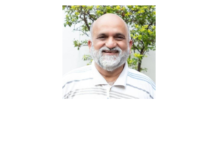













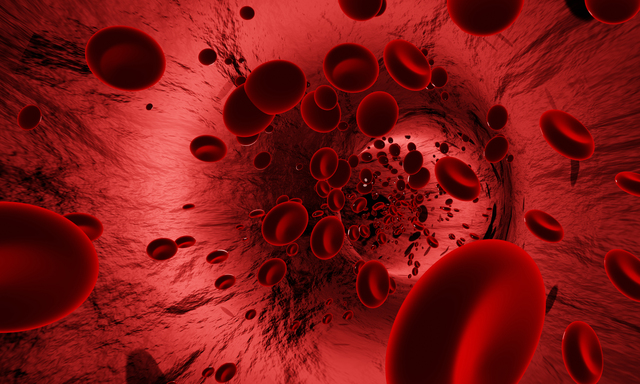
What happens when microplastics enter the human bloodstream? As scientists investigate their potential health implications, Suramrit Singh Kohli, a Grade 12 student at Jayshree Periwal International School, is exploring whether magnetic nanoparticles could help capture and separate these particles from blood. His research project, NanoClear, has earned recognition at national and international science competitions.
From Robotics to Biomedical Research
Suramrit’s interest in engineering began with robotics in 2018. Over time, he became increasingly interested in applying engineering principles to real-world challenges. With NanoClear, he has extended this interest into biomedical research, investigating whether specially designed magnetic nanoparticles can bind to microplastics and enable their separation using an external magnetic field.
The project took shape during Brown University’s Summer@Brown programme under the guidance of Dr Thomas Webster. Subsequently, in August 2025, Suramrit continued his research at ReeLABs Research Centre in Mumbai under Dr Abhijit Bhopadikar, dedicating approximately 20 hours a week to experiments involving human blood samples.
“Microplastics are a problem that we are still learning to understand, and I wanted to explore whether engineering could offer a way to address what happens once these particles enter the bloodstream. NanoClear is still at the research stage, but working on it has shown me that building a possible solution also means understanding its limitations and working out what to solve next,” said Suramrit Singh Kohli.
How NanoClear Uses Magnetic Nanoparticles
The NanoClear prototype explores a method of capturing microplastics through interactions between plastic particles and engineered magnetic nanoparticles. The research involved nanoparticles measuring approximately 91 nanometres, featuring a positively charged inner coating designed to attract negatively charged plastic particles. Building on this principle, Suramrit developed a magnetic separation system in which blood is intended to mix with the nanoparticles before passing through a magnet-lined coil. The system aims to capture the resulting particle clusters through magnetic separation before the blood returns to the circuit. However, the approach remains experimental and requires further testing to establish its safety, effectiveness and practical feasibility.
Early Laboratory Investigations Show Promising Results
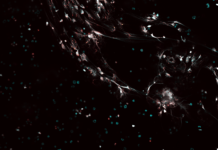
Initial experiments provided preliminary evidence that the nanoparticles could bind to plastic particles. Electron microscope images captured at Brown University by Dr Thomas Webster showed nanoparticles surrounding a fragment of polyvinyl chloride (PVC). In a separate experiment, researchers introduced microplastics into a human blood sample and passed it through the prototype. A turbidity sensor recorded a reduction in the sample’s cloudiness reading from 249.3 to zero after one pass through the system.
Although these observations offer an encouraging starting point, they do not independently establish the complete removal of microplastics or demonstrate that the process is safe for use in humans. Further experiments must validate the measurements, assess particle recovery and determine how the system affects blood components.
NanoClear Wins Recognition at National and International Science Fairs
The project has attracted attention beyond the laboratory. At the IRIS National Fair in January 2026, NanoClear won Gold and received the Yale Science and Engineering Association’s Award for Most Outstanding Exhibit in STEM, one of three such awards presented among approximately 120 finalists. The Gold award secured the project a place among roughly 20 projects representing India at the Regeneron International Science and Engineering Fair (ISEF) 2026 in Phoenix, Arizona. At ISEF, NanoClear received a Special Award from Zydus, carrying a prize of US$1,250. These achievements have helped bring Suramrit’s work to a wider scientific audience while highlighting the potential of student-led research at the intersection of nanotechnology, engineering and environmental health.
Research Publication and Patent Developments
In addition to competition recognition, NanoClear has progressed towards academic publication and intellectual property development. In August 2026, Springer Nature published Suramrit’s paper, presented at TIBS 2026, in its Lecture Notes in Networks and Systems (LNNS) series. The project also has an Indian design patent, a provisional patent filing and an ongoing United States patent filing. Together, these developments reflect the project’s progress from an initial research concept towards a more structured prototype and research programme.
Expanding Access to STEM Education
Beyond his research, Suramrit founded 7 STEM Labs, an initiative focused on improving access to practical STEM learning, mentorship and robotics education for students in underserved communities. Through this initiative, he aims to make hands-on science and engineering education more accessible. Meanwhile, he plans to pursue his research interests further at university, building on his experience in robotics, nanotechnology and biomedical engineering.
What Comes Next for NanoClear?
Despite its early progress, NanoClear remains a laboratory-stage prototype rather than an established medical treatment. It has not been tested on patients or approved for medical use. Before the approach could be considered for clinical applications, researchers would need to investigate nanoparticle toxicity, blood compatibility, potential clotting risks, removal of the nanoparticles themselves and the system’s performance under realistic operating conditions. Proposed next steps include toxicity studies, scaling the system to process five litres of blood and animal trials, subject to the necessary ethical approvals.
As per the press release, NanoClear represents an ongoing research effort to investigate a challenging scientific question: whether magnetic nanotechnology could provide a viable way to capture microplastics in blood. As Suramrit continues his work, the next phase will focus on addressing the remaining technical and biological challenges and determining whether the laboratory concept can progress towards a safe, practical application. For now, the project highlights how curiosity, engineering and experimental research can come together to explore emerging challenges in human health.