









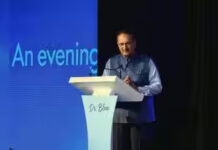












Indian Medical Association (IMA) national president Dr. Dilip Bhanushali, who visited Chandigarh on Saturday for a national conference, addressed several pressing issues affecting the medical fraternity and public health in India. He spoke extensively on the misconception of doctor shortage, the risks of ‘mixopathy’, and the challenges faced by allopathic practitioners.
‘Doctor Shortage Is a Myth,’ Says IMA Chief
Dr. Bhanushali firmly stated that India is not facing a shortage of doctors, contrary to popular belief.
“We have written to the health ministry that there is no such dearth, and we are ready to send doctors to rural areas. Every year, over 1.1 lakh doctors graduate, yet many remain unemployed or underemployed, earning as little as ₹40,000,” he said.
Call to Strengthen Existing Medical Colleges
He argued that instead of opening “medical colleges in every nook and corner,” which often compromises education quality, the government must focus on improving existing institutions.
He stressed that creating meaningful employment opportunities for new graduates should take priority over expanding infrastructure without adequate planning.
IMA Stands Firm Against ‘Mixopathy’
As reported by TOI, the IMA president reiterated the association’s strong opposition to the integration of traditional systems of medicine (such as Ayurveda and homoeopathy) with allopathy—a practice the organisation terms mixopathy.
“Systems like Ayurveda must be preserved in their original, pure form. Mixing two fundamentally different sciences introduces clinical risks, and we have clearly conveyed this to the government,” he said.
Concerns Over Unauthorised Practice and Patient Safety
Dr. Bhanushali highlighted the risks posed by non-allopathic practitioners prescribing modern medicines or attempting procedures without adequate training.
“Ninety-nine percent of Ayurveda practitioners prescribe modern medicines like third-generation antibiotics and steroids without understanding indications or adverse effects. These practices lead to serious complications when patients eventually reach allopathic care,” he warned.
Critique of Ayushman Bharat and Low Health Expenditure
Turning to government health policies, he criticised the Ayushman Bharat scheme and India’s low 1.5% of GDP health expenditure.
“Funds must be directed toward strengthening government hospitals rather than excessively depending on such schemes. Since 80% of healthcare is delivered by the private sector, overcrowded government hospitals push patients toward smaller nursing homes,” he noted.
Pending Payments and Forced Empanelment Under Ayushman
Dr. Bhanushali expressed concern over the government’s push to empanel all hospitals under Ayushman Bharat despite significant financial delays.
“Doctors are being forced to join the Ayushman panel even though hundreds of crores in payments remain pending for months. The government is keen on expanding the scheme without ensuring proper fund allocation,” he said.