






















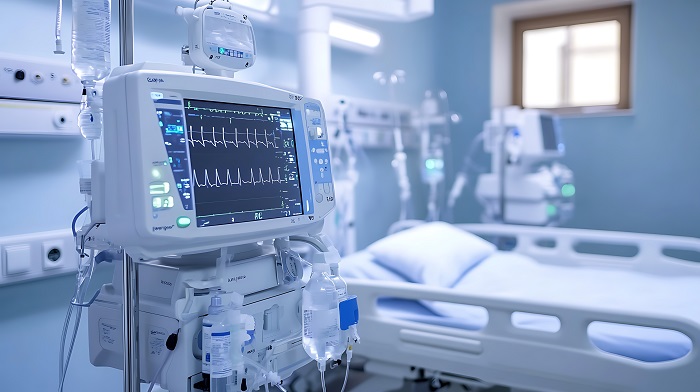
One of the largest studies of its kind in India has revealed alarmingly high rates of central line-associated bloodstream infections (CLABSIs) and rising antibiotic resistance in Intensive Care Units (ICUs).
What Makes Central Lines Risky
Unlike regular intravenous (IV) lines inserted into small veins, a central line is a long, thin tube placed in a large vein—typically in the neck, chest, or groin. Doctors use it to administer medications, fluids, or to draw blood for patients who need prolonged ICU care. However, its long-term use increases the risk of bloodstream infections.
Scope of the Study
Researchers collected data over seven years from nearly 200 adult, paediatric, and neonatal ICUs across 54 hospitals reporting to the Indian Hospital Acquired Infection (HAI) surveillance network. Between May 2017 and April 2024, they documented 8,629 laboratory-confirmed CLABSI cases during 977,052 central line days.
Infection Rates Across ICUs
As reported by Indian Express, the study recently published in The Lancet Global Health, found that ICUs in India reported an average of nine CLABSI cases for every 1,000 central line days.
- Adult ICUs recorded 8.7 cases per 1,000 days
- Paediatric ICUs reported 6.7 cases per 1,000 days
- Neonatal ICUs showed the highest rate at 13.9 cases per 1,000 days
These numbers underline the serious infection burden across critical care settings.
Addressing a Paucity of Data
According to researchers from AIIMS Delhi and partner institutions in Chandigarh, Mumbai, Chennai, Vellore, Kochi, and Srinagar, there is a significant lack of data on bloodstream infections in low- and middle-income countries (LMICs). This gap has limited the creation of effective, country-specific policies for infection prevention.
Largest Dataset on CLABSI in India
The study represents the largest dataset on CLABSI epidemiology in Indian ICUs to date. Findings show that pathogens such as Enterobacterales and Klebsiella pneumoniae are displaying increasing carbapenem resistance, especially in neonatal and paediatric ICUs. These trends pose serious challenges to treatment.
Why Antibiotic Stewardship Matters
Dr. Camilla Rodrigues, consultant microbiologist at P. D. Hinduja Hospital, Mumbai, praised Prof. Purva Mathur from AIIMS Delhi for mobilising a large public-private hospital network to monitor device-associated infections linked to central lines, ventilators, and urinary catheters. She described the initiative as “sterling.”
Meanwhile, Dr. Kapil Zirpe, Head of Neuro-Trauma ICU at Ruby Hall Clinic, Pune, stressed the urgent need for antimicrobial stewardship. He emphasised careful antibiotic use, infection prevention, adequate staffing, and large-scale regular training audits across ICUs, transplant units, and operating theatres.