






















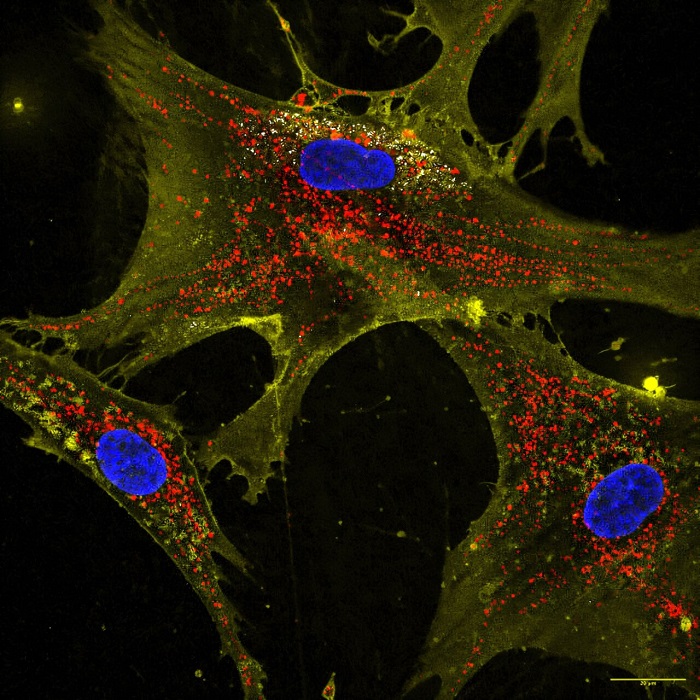
Biomedical researchers at Texas A&M University have identified a promising method to stop—or even reverse—the decline in cellular energy production. Led by Dr. Akhilesh K. Gaharwar and Ph.D. student John Soukar, the team developed a technique that supplies damaged cells with fresh mitochondria, restoring their energy output and improving overall cellular health.
Why Mitochondrial Decline Matters
As cells age or experience injury from conditions such as Alzheimer’s disease or exposure to chemotherapy, they gradually lose their ability to produce energy. This drop occurs because the number of mitochondria—tiny power-producing structures inside cells—decreases. Consequently, essential cells in the brain, heart, and muscles fail to function properly, contributing to aging, heart disease, and neurodegenerative disorders.
How Nanoflowers Boost Mitochondria Production
As reported by phys.org, the study, published in Proceedings of the National Academy of Sciences, used microscopic flower-shaped nanoparticles, known as nanoflowers, in combination with stem cells. In the presence of nanoflowers, stem cells generated twice the usual number of mitochondria. When these enhanced stem cells were placed near damaged or aging cells, they transferred their surplus mitochondria to the weakened cells.
As a result, previously impaired cells regained their energy production, restored function, and showed resistance to cell death—even after exposure to harmful agents. According to Gaharwar, “We have trained healthy cells to share their spare batteries with weaker ones.”
Advantages Over Existing Therapies
Current treatments that boost mitochondria often require frequent dosing because the molecules clear rapidly from cells. In contrast, nanoflowers—made of molybdenum disulfide—remain longer and continuously stimulate mitochondria production. Therefore, therapies based on this method may need only monthly administration.
Wide Potential for Future Medicine
Because the technique uses the body’s natural cell-to-cell mitochondria sharing, it could benefit multiple organs. Researchers believe it may one day help treat heart disease, muscular dystrophy, and age-related tissue decline. As Soukar noted, this approach opens the door to “a wide variety of new disease treatments.”