







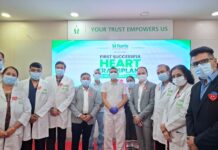














Preeti Unhale, now 51, completed 25 years with a donor heart on January 23, 2026, becoming India’s longest-living heart transplant survivor. Her milestone stands out in an era when heart transplants were rare in the country, donor awareness was minimal, and long-term survival remained highly uncertain.
A Desperate Search for Survival
Originally from Madhya Pradesh, Unhale arrived at AIIMS, New Delhi, in 2000 after exhausting all treatment options in her home state and in Mumbai. Doctors diagnosed her with dilated cardiomyopathy, a condition in which the heart muscle weakens and enlarges, severely impairing its ability to pump blood and ultimately leading to heart failure. Physicians told her that a heart transplant offered her only chance of survival.
A Turning Point at AIIMS
At AIIMS, Unhale met cardiothoracic surgeon Dr P. Venugopal and cardiologist Dr K. K. Talwar. “For the first time, I heard the words, ‘You will be fine,’” she recalled. She decided to stay in Delhi for treatment—and has lived there ever since.
Critically Ill, Yet Determined
Dr Talwar told The Times of India that Unhale reached AIIMS in an extremely critical condition. “She had married barely two-and-a-half years earlier and came to us with hope after being refused everywhere else,” he said. With limited clinical guidance available at the time, doctors conducted extensive evaluations before a suitable donor heart became available.
A Transplant Against the Odds
“For end-stage heart failure, transplantation is the definitive answer. Survival is around 85% at five years—she has completed 25,” Dr Talwar said. Surgeons performed the transplant in January 2001, using the heart of a brain-dead teenage donor, at a time when outcomes remained unpredictable.
“There was no guidance then. Success rates were low, and there were hardly any survivors to learn from. People discouraged us, saying transplants don’t last long. But there was no other option,” Unhale said.
‘If You Want Life, Take the Risk’
Reflecting on her decision, Unhale said, “If you want life—and a good quality of life—you take that risk.” Her husband, an Indian Forest Service officer, sought a transfer to Delhi so the family could remain close to AIIMS. “Family support was critical,” she added.
Life After Transplant: Discipline and Resilience
Life after the transplant demanded lifelong discipline. Unhale takes daily immunosuppressants and has faced several rejection episodes, including a major one in 2006–07, when doctors rushed her to AIIMS late at night.
Over the years, she also developed kidney problems, steroid-induced bone damage, vascular necrosis, and facial paralysis. Doctors managed each complication through sustained and coordinated medical care.
A Collective Triumph
“This survival isn’t mine alone,” Unhale said. “It belongs to doctors, nurses, technicians, and even sanitation staff. It takes an entire system to save one life.”
Giving Back and Spreading Hope
As reported by TOI, today, Unhale actively counsels heart transplant patients across India, helping bridge the information gap she once faced. Her message remains clear and unwavering: “If doctors advise a transplant, there is no other option. Donors are rare—if you get one, say yes immediately. Live fully, but with discipline. We have been given a second chance.”