























Abstract
Dog attributed bites and rabies have been very concerning and grievous issues in India, with our country contributing to the largest part of the global rabies burden. Lack of awareness, logistics and post-exposure timely management, along with a vast population of stray dogs and their low sterilization and vaccination coverage have been contributing factors to what is now a crisis. Recent rulings and steps show prospects of addressing these issues in a manner balancing human safety and health with the wellbeing of stray dogs, by providing shelters and protective practices for them. Here we review the enormity of the problem, the health impact, the control programmes, policies and actions taken, need gaps and challenges, as well as the recommended medical interventions post dog bites.
Keywords: Stray dogs, Dog bites, Rabies, National Rabies Control Program (NRCP), Post Exposure Prophylaxis (PEP), Rabies immunoglobulin (RIG), Anti Rabies Vaccine (ARV)
Introduction
World Rabies Day is celebrated annually on September 28th. It’s a global health observance aimed at raising awareness about rabies prevention and control and to commemorate Louis Pasteur, who developed the first rabies vaccine. The day also serves as a reminder of the ongoing efforts to eliminate rabies as a public health threat. Rabies is caused by a virus that is transmitted to humans through the infected saliva of a range of animals. Initial symptoms are often flu-like, such as fever, headache and fatigue but as the disease progresses, neurological symptoms like confusion, anxiety and the horrific hydrophobia (difficulty in swallowing water) develop. Ultimately, rabies can lead to paralysis, seizures and death. Most human deaths follow a bite by or exposure to an infected dog, with majority of human deaths caused by rabies are attributed to dog bites, accounting for over 99% of fatalities.1
The World Health Organization (WHO) and the Global Alliance for Rabies Control (GARC) have emphasized the importance of vaccination and sterilization of dogs, as the only proven and effective method of achieving zero-rabies deaths and controlling the stray dog population.2 The WHO and GARC, along with the World Organization for Animal Health and the Food and Agriculture Organization of the United Nations (FAO), have established a global goal for the elimination of dog-mediated human rabies deaths by 2030.3
Stray Dog Crisis in India
The recent ruling by the Supreme Court (SC) on the issue of stray dogs in Delhi seems to have touched a raw nerve as seen with social media posts and protest marches. A review of data and statistics as well as the clinical evidence would be apt at this stage. India’s stray dog crisis is a full-fledged public health and child safety emergency. India is home to more than 60 million stray dogs and every 10 seconds, a dog bite occurs, resulting in 3 million bites per year and around 5,000 deaths.4 The dog bite incidence is higher among children under 14 years and elderly aged above 60 years. Roughly 36% of the world’s rabies deaths occur in India each year, according to WHO. Between 30% and 60% of the victims of dog bites are children under the age of 15. The most impacted are the poor and uneducated, most of whom are children and young people in countries where rabies is endemic like India.5 This is a clearly emotive issue and also one that has an extreme social dichotomy as the poor suffer disproportionately from dog bites and rabies deaths.
At least two people are killed by rabies alone every three hours.6 For every child who lives with trauma, for every family that can’t access post-bite care, for every city caught between compassion and chaos: the time for half-measures has ended. A study from Rajasthan showed that 92% animal bite cases were categorized as category III exposure, with 61% of the victims being bitten on their lower limbs.7 Approximately 74% of dog bites were inflicted by stray dogs and 82% of these incidents were unprovoked.
Routine rabies vaccination is recommended but available in an unsystematic manner, only in limited cities and primarily driven by municipal authorities with limited funding resulting in a low vaccination coverage of only 15% against the desired vaccination coverage of 70% to achieve elimination of dog rabies.8
In recent times, thanks to the prevalence of CCTV cameras everywhere, dog attacks, especially on children have been recorded and documented. Stray dogs are not only responsible for dog bite cases and rabies but also for accidents and injuries (like bikers and cyclists skidding to avoid dogs chasing and biting them or children running and falling out of fear) as well as the psychological trauma of being followed, surrounded or attacked by dogs, resulting in fear of walking on streets and restricting human mobility.9 While compassion and kindness to all living beings is a part of humanity, self-preservation and its own protection is the first right and responsibility of every living species. Therefore, compassion and ‘dog love’ cannot override or ignore adverse impact on the mobility, safety, health and life risk of human beings as well as the national impact on healthcare, quality of life and economic burden.
Making Rabies Notifiable
Human rabies is neglected because it is a disease of the poor and cases are highly under-reported. Making it a notifiable disease can help it to be taken seriously rather than left as an issue for animal activists or those who have suffered dog-bites to worry about. So far, 20 states have declared Human Rabies as a Notifiable Disease (Figure 1). This means that all healthcare facilities, both public and private, are required to report any suspected or confirmed cases to the respective state health departments.10 Standard case definitions for rabies surveillance through the Integrated Disease Surveillance Programme (IDSP), have been formulated whereby animal bites are reported in the P-form on the IDSP portal. Standardized recording and reporting formats are finalized for streamlining reporting. However, rabies is yet to become a national notifiable disease whereby a central law is passed making reporting of any and all cases mandatory with penalizing of a doctor or hospital that fails to report cases.
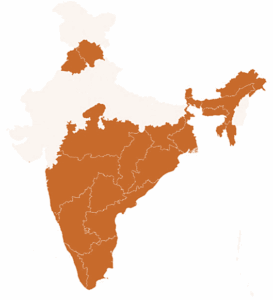
Figure 1 – India: Rabies Notifiable States
Rabies Control Programme
The National Rabies Control Programme (NRCP) was launched in 2013, under the National Health Mission (NHM) implemented as a Central Sector Scheme. The program aims to address rabies by training healthcare professionals, advocating for post-exposure prophylaxis, strengthening surveillance and raising public awareness.11 The Ministry of Health & Family Welfare through National Rabies Control Program (NRCP) is undertaking strengthening of surveillance of all animal bites in all States and Union Territories (UTs). Data on dog and other animal bite cases and related deaths are reported by all States/UTs, through Integrated Health Information Platform (IHIP).
Under the National Health Mission (NHM), States and UTs are supported through budgetary provisions for the implementation of the National Rabies Control Programme (NRCP). Funding includes capacity building of healthcare staff, procurement of rabies vaccines, printing of Information, Education and Communication (IEC) materials on rabies and dog-bite prevention, data entry support, review meetings, monitoring and surveillance and establishment of Model Anti-Rabies Clinics and wound-washing facilities. Life-saving drugs such as Anti-Rabies Vaccine (ARV) and Anti-Rabies Serum (ARS)/Rabies Immunoglobulin (RIG) are provided free of cost in the public health facilities under National Free Drug Initiative of NHM. These drugs are also included in both the National and State Essential Drug Lists.
Also under Central Sector component, National Centre for Disease Control implements rabies control activities through awareness, lab strengthening, guidelines and training materials, etc. The ‘One Health’ programme enhances animal rabies diagnosis through veterinary labs. Further, to strengthen involvement of veterinary sector under “National One Health Programme for Prevention and Control of Zoonosis” committees have been formed in all States and veterinary laboratories to strengthen diagnosis of animal Rabies.
Adhering to a One Health approach, the NRCP aligns with the National Action Plan for Rabies Elimination (NAPRE), launched in September 2021. The NAPRE encourages states to develop comprehensive action plans encompassing both human and animal health aspects. Funding for interventions related to human health is obtained through the National Health Mission while animal health components explore various funding options. Implementation of the NAPRE aims to reduce the risk of rabies through mass dog vaccinations, pre and post-exposure prophylaxis and public education, with the ultimate goal of achieving “Rabies-Zero by 2030.” Effective execution of the NRCP and NAPRE is crucial to successfully combat rabies and safeguard public health in India.
Gaps and Challenges
Rabies continues to be a raging problem in India and is mostly always fatal, with the death being horrific and excruciating. Annually, approximately 59,000 human deaths and a loss of 3.7 million DALYs (disability-adjusted life years) are associated with dog-mediated rabies. In Asia, India alone accounts for 60% of rabies deaths and 35% of global deaths, resulting in a substantial economic cost estimated to be more than $8.5 billion.12
With around 3.7 million dog bite cases reported in India in 2024 (10,000/day), it is needless to say that the situation in India deserves immediate attention from policymakers, courts and civil society.13 What is of severe concern is the lack of reporting of rabies cases and deaths due to no structured data collection system, tracking or a definite national notification law. In 2022, the Government reported only 21 rabies deaths, while the WHO through their system reported 305 the same year while the ICMR annual reports more than 5000 deaths annually.4 The WHO modelling estimates 18-20 thousand annual rabies deaths in India, showing how stark the huge gap between reality and reporting is in our country.
The annual incidence of dog bites in 2022-23 was around 5.6 per 1000 population as surveyed by ICMR. Among people bitten by a dog, 20.5% did not receive ARV and 66.2% received at least three doses. Nearly 50% of those who received one dose did not complete their full course of vaccination.4 The ICMR, along with other medical institutions, also conducted a survey across 60 districts of 15 Indian states.14 Of the 534 health facilities surveyed, ARV was available in 80% of public sector health facilities (60-93% in different geographic regions) while it was lowest at 59% (45-72%) in Urban Primary Healthcare Centres (UPHCs). The shortage of rabies immunoglobulin has also been a concern. RIG was available in only 20% (17–24%) in the public sector health facilities, with the highest availability in southern states (30.7%). This stark difference indicates a critical gap in the comprehensive management of animal bite cases and also highlights the dire importance of preventive and prophylactic measures.
In several Indian cities, public frustration is nearing a breaking point. In Pune, the municipal veterinary department claims a 42% decline in stray dog populations due to sterilization drives.15 Yet, bite cases jumped from 16,569 in 2022 to nearly 26,000 by 2024. Kerala recently witnessed a sharp spike in just four months between January and April 2025 with more than 100,000 bite cases registered, resulting in 16 fatalities, including some victims who had already been vaccinated. So, even when key interventions like sterilization and vaccination are implemented but have critical weaknesses in scale, coverage and system design, they fail to achieve desired results. The reason for this disconnect is not a lack of compassion as India has never been short on goodwill toward animals. The real problem lies in a systemic policy and governance failure.
The Animal Birth Control (ABC) Rules, first introduced in 2001 and updated in 2023, lay down a framework based on sterilization and vaccination while explicitly prohibiting culling or relocation.16 This humane model, endorsed by global health bodies including the World Health Organization (WHO), works only when implemented flawlessly.12 Medical experts agree that at least 70% of the stray dog population must be sterilized and vaccinated consistently over time to bring down their numbers. Yet most Indian cities fall far short of this threshold. There are model proofs that well-executed interventions can work. Chennai remains the gold standard. Their ABC–AR (Animal Birth Control–Anti Rabies) programme, launched by the Blue Cross of India in the mid-1990s, succeeded in eliminating human rabies deaths by 2007. This success did not result from aggressive culling or ad hoc measures but from sustained investment in sterilisation, vaccination and community engagement. The model has been emulated in other cities, though rarely with the same level of commitment.
The core issue is structural, as responsibilities are scattered and accountability is unclear. Local municipal bodies are tasked with population control. The Ministry of Animal Husbandry sets rules and distributes vaccines. The Health Ministry oversees rabies surveillance and bite care. Yet at the operational level, the catch–neuter–release mechanism falters due to outdated contracts, limited staffing, funding constraints and the absence of real-time data. Stray dog management requires coordination among government agencies, animal welfare organizations, veterinary professionals and community representatives. Policy decisions should incorporate scientific evidence, practices and local factors. Public-private partnerships and financing approaches may offer solutions.
Learning from other Countries
The Netherlands was the first nation in the world to completely eradicate stray dogs. Strong anti-abandonment regulations, a statewide catch-neuter-vaccinate-return (CNVR) program, high taxes on pure-bred purchases to promote adoption and a powerful cultural push were the main factors in its success which resulted in 90% of families adopting strays as pets.17 Turkey also started using CNVR to control strays, in spite of problems with finance, enforcement and animal advocacy organizational protests in 2024 when a new legislation was passed that required all strays to be sheltered, sterilized and vaccinated. Phuket, Thailand, used to be a popular destination for strays but the Soi Dog Foundation has neutered and vaccinated more than a million dogs nationwide, reducing Phuket’s stray population by 90% and guided the nation toward a rabies-free status.
Bhutan has all its stray dogs vaccinated and sterilized and has demonstrated that exceptional outcomes may be achieved with even low resources by including animal welfare into public health planning and engaging people in awareness campaigns. In China, since 2021, Beijing has eradicated human rabies incidents and increased vaccination rates to over 80% thanks to mandatory dog registration, mass vaccination campaigns, public reporting platforms and awareness campaigns. In Brazil, by combining sterilisation, immunization and adoption programmes, São Paulo has experienced a 60% decrease in stray dogs over the past five years. The drop has been maintained in part by public education on responsible ownership.
In Austin, USA animal shelters prioritize rehoming over euthanasia and have a no-kill policy. The city established an example for humane urban animal management by rehoming 30,000 dogs in a single year, which led to a 25% decrease in euthanasia rates. Countries like Australia, Germany, Spain and Japan keep their stray dog numbers low, through stringent pet ownership regulations, required microchipping, Trap-Neuter-Return (TNR) initiatives and public awareness campaigns, strong adoption cultures and severe penalties for abandonment.
Public health consequences have grown sharply with this surge of stray dogs. Government data shows that over 3.5 million dog bite cases were reported in 2022-23, up from 1.7 million in 2021, marking a double in just 1-2 years. These alarming figures come at a time of continued vaccine shortages and rising fatalities, especially among children. The reality is grim: an epidemic is unfolding in the shadows of underfunded policies and fragmented implementation.
Urgent Action Needed
- Data and Reporting: Stray dog control must no longer be treated as a municipal afterthought, but be recognized as a national public health priority. While the National Rabies Control Programme and the updated ABC Rules provide a starting framework, they need to be supported by a high-level task force empowered to track, audit and supervise the implementation of ABC–AR strategies. This means collecting real-time data: city-wise sterilization numbers, coverage ratios, vaccine availability by district, bite-to-death ratios and lapses in reporting that demand corrective action.
- Funding and Infrastructure: We must close the gap in funding and infrastructure. Municipalities should receive earmarked budgets for sterilization, deploy trained catch–neuter teams and expand access to mobile ABC units. The success of any infrastructure investment hinges on a consistent supply of medicines, staffing, logistical support and transparency in outcomes. Activists, NGOs and individuals voicing the cause of protecting stray dogs, can come forward to contribute through funds, time and assistance for appropriate dog shelters, sterilization and vaccination, along with adoption wherever feasible.
- Improving knowledge and awareness: Our surveillance systems for bites and vaccine delivery must be urgently improved. Some problems in India needing addressal are:19
- A study shows that only 30% know about washing the wounds after animal bites and of those who get bitten, only 60% receive a modern cell-culture-derived vaccine.
- The familiarity of Medical College interns with proper post-exposure prophylaxis was low because during training they see few cases of animal bite, which were managed in other speciality hospitals.
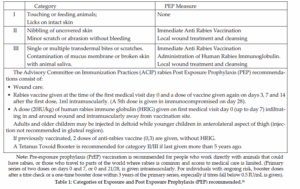
- It is crucial to administer anti-rabies immunoglobulin immediately after a bite categorized as severe (grade III) but erroneous wound categorization by health-care providers, especially in cases presenting late for treatment, greatly increases the chances that rabies will develop. (Table 1)
- Intradermal vaccination, recommended by the World Health Organization in low-resource settings, has been practiced recently in India because of its lower cost and high immunogenicity. However, it requires special training to reduce the risk of insufficient dosing.
- Sometimes patients are advised to watch the offending animal for abnormal behaviour for 10 days after a bite before seeking prophylactic treatment, but because animals can be asymptomatic carriers, such delay can be risky. It would be safer to administer the complete course of anti-rabies vaccination to anyone who gets bitten by a dog.
- In India, even in urban sectors, 70% of victims fail to complete their post-exposure prophylaxis. In rural areas, this drop-off is worse.
This calls for a coordinated task force involving virologists, public health departments and municipalities to tackle this emergency. Anti-rabies vaccination must not only be made free but be widely available and promoted through educational outreach, especially in remote districts.
- Public engagement: This must be a core strategy. Stray dogs are an integral part of both rural and urban ecosystems, feeding off garbage, defending territory and responding to human behaviours. Field studies show that their aggression and distribution are influenced by food availability and human interaction. The density of houses, bakeries and garbage piles were significant predictors of dog population size.20 This is why reforming waste management, regulating feeding practices and investing in public education are essential.
- Stray dog feeding: Cities must formally recognize community feeders and local volunteers. In Delhi, NGOs report that over 90% of dog-related conflicts are resolved by involving local feeders. Their role must be institutionalized, not ignored. As recommended by SC, dog feeding should not be on streets but only in designated areas indicated by a notice board, with a hefty fine and legal action imposed on any obstructing official or person. Such designated feeding areas can also reduce the incidents of aggression and attack by dogs on people in the streets, especially children and riders.
- Community dog norms: Individuals and organizations who love to or engage in care for stray dogs or want to keep ‘community dogs’ should ensure the dogs are collared and kept under a roof. While areas where dogs can be kept off a leash and be allowed to play must be created wherever possible, in public but safety of human beings should not be compromised in such places.
- Dog shelters: Due to the severe current shortage of dog shelters and till adequate and appropriate dog shelters may be built, the court has recommended that vaccinated and sterilized dogs may be released back to their streets of origin; however, these released dogs should be tagged and tracked. Dogs with suspected or confirmed rabies or of aggressive potential should be kept sheltered and not released back into the community. Also, shelters are not dumping grounds but should be well-regulated and cared for facilities.
- Recalibrating legal and enforcement frameworks: While the ABC Rules rightly prohibit mass culling, they do allow for the euthanasia of diagnosed rabid or dangerous animals. But such powers must be exercised under clear protocols with judicial oversight. While the Supreme Court (SC) seeks a national policy on stray dogs for all states/UTs, the directives on ABC implementation must transition from courtrooms to actual ground-level enforcement.
Conclusion
India must now act with clarity, empathy and scientific rigour. The cost of delay is measured in lives. The alternative is not only possible but long overdue. This is an emotive issue and people have extremely strong opinions on either side. Managing stray dogs is a complex challenge that needs a multi-pronged approach. A successful strategy must consider the many interconnected factors at play, including public health, animal welfare, legal policies and economic and logistical limitations. The core idea is to protect public health while ensuring animal welfare, respecting legal obligations, optimizing resource utilization and building community consensus.
References
- WHO [Internet]. Rabies Facts. Available from https://www.who.int/news-room/fact-sheets/detail/rabies#:~:text=Key%20facts,Dog%2Dmediated%20rabies
- Wallace RM, Undurraga EA, Blanton JD, Cleaton J, Franka R. Elimination of dog-mediated human rabies deaths by 2030: needs assessment and alternatives for progress based on dog vaccination. Front Vet Sci. 2017;4:9.
- WHO. Global framework to eliminate human rabies transmitted by dogs by 2030; 2016. [cited 2023 Dec 6]. Available from: https://www.who.int/news/item/16-03-2016-global-framework-to-eliminate-human-rabies-transmitted-by-dogs-by-2030.
- Thangaraj JWV, Krishna NS, Devika S, Egambaram S, Dhanapal SR, Khan SA, et al; Human Rabies Study Collaborators. Estimates of the burden of human rabies deaths and animal bites in India, 2022-23: a community-based cross-sectional survey and probability decision-tree modelling study. Lancet Infect Dis. 2025 Jan;25(1):126-134.
- Chatterjee P. India’s ongoing war against rabies. Bull World Health Organ. 2009 Dec;87(12):890-1.
- Jagran Josh [Internet]. What are the rules for Street Dogs Population Control in Different Countries. 2025. Available from https://www.jagranjosh.com/general-knowledge/sc-ruling-on-stray-dogs-what-are-the-rules-on-street-dog-population-control-1820001622-1
- Raj A, Singh S, Sharma D, Yadav R. Epidemiological profile of animal bite victims attending anti-rabies clinic in a tertiary care hospital in eastern Rajasthan: An observational study. MGM Journal of Medical Sciences. April-June 2024; 11(2):p 292-298.
- Gautam V, Bhardwaj P, Saxena D, Kumar N, Dileepan S. Multisectoral approach to achieve canine rabies controlled zone using Intervention Mapping: Preliminary results. PlosOne. Published: December 1, 2020. Available from https://doi.org/10.1371/journal.pone.0242937
- Mohanty CR, Radhakrishnan RV, Jain M, Sasmal PK, Hansda U, Vuppala SK, Doki SK. A Study of the Pattern of Injuries Sustained from Road Traffic Accidents Caused by Impact with Stray Animals. J Emerg Trauma Shock. 2021 Jan-Mar;14(1):23-27.
- Nale TN, Mishra D, Tiwari S, Shewale AD, Balasubramanian S. National Centre for Disease Control (NCDC). Marching towards Rabies free India: Challenges and way forward. Epi-Dis-Phere (Publication of Health Resilience). 2025; 1(1):50-55.
- Press Information Bureau PIB [Internet]. Ministry of Health and Family Welfare – Steps taken to strengthen Rabies Treatment 19th August 2025. Available from https://www.pib.gov.in/PressReleasePage.aspx?PRID=2157880
- World Health Organization, editor. WHO Expert Consultation on Rabies: third report. Geneva, Switzerland: World Health Organization; 2018. 183 p. (WHO Technical Report Series).
- The Economic Times [Internet]. 3700000 a year, 10000 a day: The startling scale of dog bites in India. Aug 13, 2025. Available from https://economictimes.indiatimes.com/news/india/3700000-a-year-10000-per-day-the-scaring-figures-of-doge-bite-in-india/articleshow/123275324.cms?from=mdr
- Krishna NS, Thangaraj JWV, Devika S, Sasi A, Egambaram S, Rani DS, et al. Availability of anti-rabies vaccine and rabies immunoglobulin in Indian health facilities: a nationwide cross-sectional health facility survey. The Lancet Regional Health – Southeast Asia. June 2025; 38, 100608.
- The News Minute [Internet] India’s stray dog crisis is a public health emergency. Aug 2, 2025. Available from https://www.thenewsminute.com/news/opinion-indias-stray-dog-crisis-is-a-public-health emergency#:~:text=In%20several%20Indian%20cities%2C%20public,to%20nearly%2026%2C000%20by%202024.
- PIB [Internet]. Animal Birth Control Rules, 2023 notified by Central Government. April 2023. Available from https://www.pib.gov.in/PressReleaseIframePage.aspx?PRID=1917510
- Jagran Josh [Internet]. What are the rules for Street Dogs Population Control in Different Countries. 2025. Available from https://www.jagranjosh.com/general-knowledge/sc-ruling-on-stray-dogs-what-are-the-rules-on-street-dog-population-control-1820001622-1
- CDC [Internet]. Patient Care for Preventing Rabies. Available from https://www.cdc.gov/rabies/hcp/clinical-care/index.html
- Kole AK, Roy R, Kole DC. Human rabies in India: a problem needing more attention. Bull World Health Organ. 2014 Apr 1;92(4):230.
- Bhalla SJ, Kemmers R, Vasques A, Vanak AT. ‘Stray appetites’: a socio-ecological analysis of free-ranging dogs living alongside human communities in Bangalore, India. Urban Ecosyst. 2021;24(6):1245-1258.