








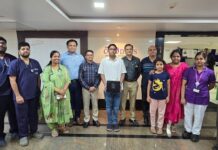













AstraZeneca Pharma India, the Indian subsidiary of British-Swedish pharmaceutical major AstraZeneca Plc, has signed a memorandum of understanding (MoU) with the Telangana government to introduce AI-powered lung cancer screening across 20 public healthcare facilities in the state.
Through this collaboration, the partners aim to enhance early detection of lung cancer among patients in both urban and rural areas, thereby improving treatment outcomes and reducing disease burden.
AI Technology to Support Clinicians
As part of the initiative, the programme will deploy Qure.ai’s artificial intelligence-enabled chest X-ray solution, developed by the Indian health-tech startup. This advanced technology will assist clinicians in identifying high-risk pulmonary nodules, which are considered a key early indicator of lung cancer.
In addition, the AI system will screen for 29 other lung conditions, thereby strengthening diagnostic capabilities in public healthcare settings.
Referral Pathway for High-Risk Patients
Once the system flags patients as high risk, healthcare providers will refer them for confirmatory diagnostic tests or further clinical evaluation. This structured referral pathway is expected to ensure timely diagnosis and appropriate treatment.
Consequently, the programme aims to reduce delays in identifying lung cancer, which often leads to late-stage diagnosis.
Rising Lung Cancer Burden in India
As reported by TOI, the initiative comes at a crucial time, as lung cancer cases in India continue to rise. The number of cases has increased from approximately 63,700 in 2015 to over 81,200 in 2025.
Furthermore, around 80–85% of patients are diagnosed at advanced stages, significantly limiting treatment options and contributing to nearly 60,000 deaths annually.
Growing Cancer Burden in Telangana
Telangana is also witnessing a growing cancer burden. According to projections, the state is expected to record 46,762 new adult cancer cases in 2026, with women likely to account for a higher proportion of cases than men.
Therefore, improving early detection and screening has become a priority for the state’s healthcare system.
Technology Integration in Public Healthcare
Commenting on the initiative, Telangana Health Commissioner Dr S. Sangeetha Satyanarayana said that the partnership would help address the challenge of late cancer diagnosis by integrating advanced technology into the public healthcare system.
Similarly, Praveen Rao Akkinepally, Country President of AstraZeneca India, emphasised that early detection plays a critical role in improving patient outcomes. He added that the programme will also include training for healthcare workers and infrastructure support, ensuring sustainable implementation and long-term impact.