






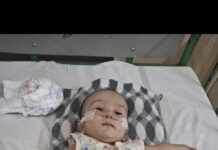











Mumbai: Doctors at Bai Jerbai Wadia Hospital for Children have successfully repaired a rare Type 3 laryngeal cleft in a six-month-old baby using advanced endoscopic keyhole surgery. The procedure, performed entirely through the mouth, helped the medical team avoid open neck surgery and tracheostomy, allowing the infant to resume oral feeding.
The surgery was led by Dr. Balagopal Kurup, Consultant ENT Surgeon, along with Dr. Parmarth Chandane and the Paediatric Pulmonology team, and Dr. Mukta Shikhare and the Paediatric Anaesthesia team.
Rare Birth Defect Caused Repeated Pneumonia and Feeding Difficulties
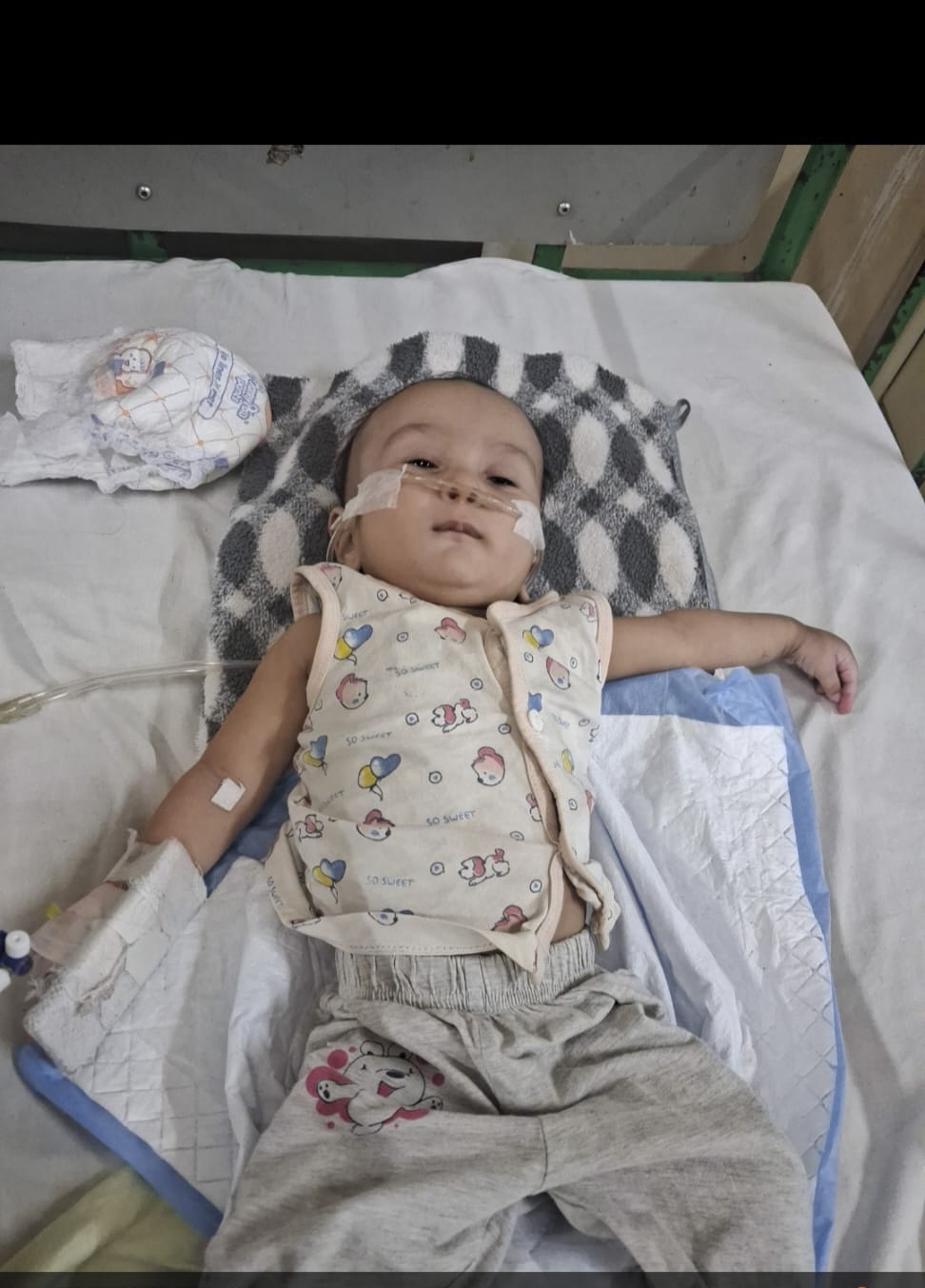
The infant, Aarav, was brought to the hospital at around four months of age after developing severe pneumonia and a noticeably hoarse cry. His parents, Sonkali and Anjani Tiwari, residents of Kalyan, sought specialised medical care after becoming concerned about his condition.
Following a detailed evaluation, the Paediatric Pulmonology team performed a bronchoscopy using a tiny camera to examine his airway. The investigation revealed a Type 3 laryngeal cleft, a rare congenital defect in which an abnormal opening develops between the food pipe and the voice box.
This abnormal gap allowed milk and other liquids to enter the windpipe during swallowing, increasing the risk of repeated lung infections, breathing difficulties, feeding problems and potential lung damage.
Laryngeal clefts are estimated to occur in approximately 1 in 10,000–20,000 births, while Type 3 cases are considerably rarer. Given the severity of the defect, the baby required surgical intervention. Before the procedure, the hospital’s paediatric swallowing therapy team provided feeding support through a thin tube inserted through the nose to ensure safe nutrition, support weight gain and prepare him for surgery.
Advanced Endoscopic Surgery Avoids Open Neck Operation
At six months of age, the baby underwent endoscopic keyhole surgery, during which doctors repaired the defect entirely through the mouth using a camera and specialised surgical instruments.
Traditionally, repairing severe laryngeal clefts may require an extensive operation through the neck. Such procedures can also involve a tracheostomy to support breathing and the use of cartilage taken from the chest wall to close the defect. However, the hospital’s team successfully avoided these interventions through the advanced endoscopic approach.
The procedure presented additional challenges because of the baby’s young age and the depth of the cleft. Moreover, the surgical team had to carefully coordinate with the paediatric anaesthesia team to maintain the baby’s breathing throughout the operation.
Baby Resumes Oral Feeding and Recovers Within a Week
Dr. Balagopal Kurup, Consultant ENT Surgeon at Bai Jerbai Wadia Hospital for Children, explained that Type 3 laryngeal clefts are particularly rare and that treatment depends on the depth and severity of the defect. He highlighted that the team successfully accessed and repaired the abnormal opening through the mouth, avoiding the need for conventional open surgery.
He further explained that the procedure, performed on October 10, 2026, required specialised anaesthesia management. The surgery was carried out on the windpipe while the baby continued to breathe without an endotracheal tube, requiring close coordination between the surgeon and paediatric anaesthetist.
Following the operation, the baby spent a day in the intensive care unit (ICU) before moving to the ward. He subsequently resumed feeding by mouth, recovered well and was discharged within a week.
Dr. Kurup also advised parents to seek evaluation by a paediatric pulmonologist or ENT specialist if their children experience repeated pneumonia, persistent coughing during feeds or unexplained breathing difficulties, as these symptoms may indicate an underlying airway abnormality.
Hospital Highlights Importance of Specialised Paediatric Care
Commenting on the successful procedure, Dr. Minnie Bodhanwala, CEO of Bai Jerbai Wadia Hospital for Children, emphasised the importance of specialised paediatric care and collaboration between medical teams in managing rare and complex conditions. She highlighted that the hospital prioritises patient safety, recovery and long-term well-being through coordinated, child-centred treatment.
The baby’s parents also expressed their gratitude to the medical team for the successful treatment. They shared that seeing their child feed without coughing and play happily again had brought immense relief and happiness to the family. As per the hospital’s press release, the successful procedure highlights the role of advanced endoscopic techniques and multidisciplinary paediatric care in treating rare and complex airway conditions in infants.