






















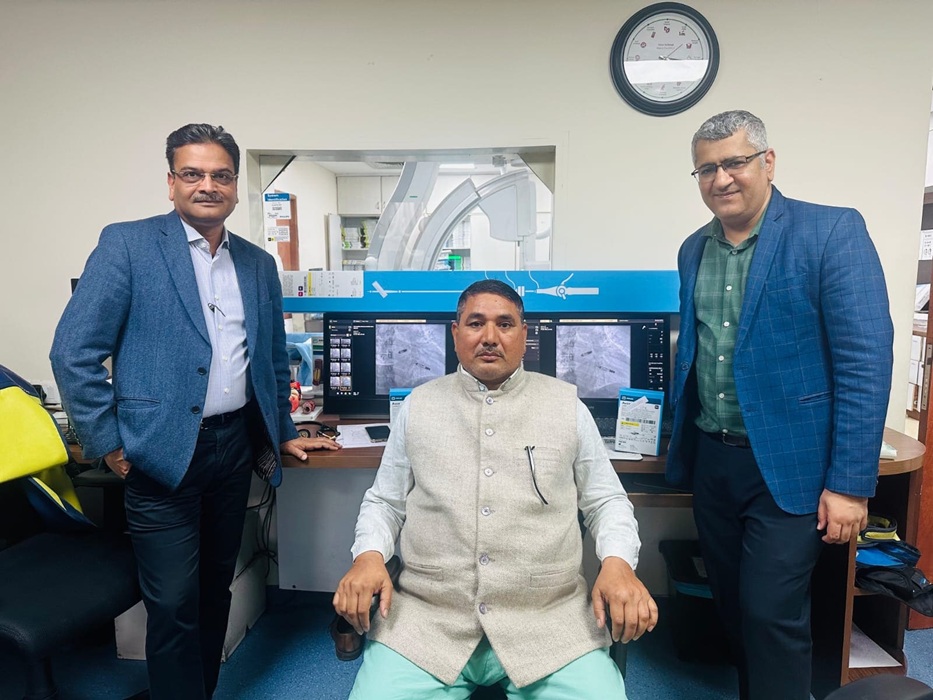
Doctors at Fortis Escorts Hospital, Faridabad, successfully treated a rare and potentially life-threatening pacemaker infection in a 58-year-old man by implanting a next-generation dual-chamber leadless pacemaker. The timely intervention prevented sepsis and ensured optimal long-term cardiac function.
Early Warning Signs After Pacemaker Implant
The patient had received a pacemaker six months earlier after experiencing repeated episodes of unexplained unconsciousness over several years. However, six months after implantation, he developed pus discharge at the pacemaker pocket site, signalling a serious infection.
Doctors immediately conducted detailed investigations, including a CT scan, ultrasound, pus culture, and blood culture. The reports confirmed a Cardiac Implantable Electronic Device (CIED) infection. Although pacemaker infections occur in approximately one out of every 50 implant cases, they typically appear within the first month and are commonly associated with pacing wires placed under the skin.
In this case, the infection was particularly unusual because the patient had a newer wire-free system, making such complications both rare and more complex to manage.
Advanced, Patient-Centric Treatment Approach
Traditionally, doctors manage such infections by completely removing the pacemaker, providing temporary pacing support for nearly two weeks, allowing the wound to heal, and then implanting a new wired pacemaker on the opposite side. This approach often leaves patients immobilized and vulnerable to recurrent infections.
However, the cardiology team at Fortis Escorts Hospital adopted a more advanced strategy. They safely removed the infected device and immediately implanted a dual-chamber leadless pacemaker. This next-generation device paces both chambers of the heart and closely mimics the heart’s natural rhythm.
The minimally invasive procedure lasted just 1 to 1.5 hours and was performed under local anaesthesia. Importantly, it eliminated the need for chest pockets and pacing wires, thereby significantly reducing the risk of future infections.
As per The Press Release, this intervention highlights the growing role of leadless pacing systems in managing complex cardiac infections more safely and effectively.
Clinical Insights from the Treating Team
Dr. Sanjay Kumar, Senior Director, Cardiology, Fortis Escorts Hospital, Faridabad, explained:
“Pacemaker infections can become devastating if we do not address them promptly. Earlier leadless pacemakers could pace only one chamber of the heart, which often led to long-term complications such as breathlessness and progressive heart weakness. The new dual-chamber system ensures near-normal cardiac function, preserves heart strength, and significantly improves quality of life.”
He further added that the patient recovered well after the procedure. Doctors discharged him in stable condition with preserved cardiac performance (LVEF 55–60%) and no recurrence of infection.
Preventing Sepsis Through Early Diagnosis
Dr. Amit Madaan, Senior Consultant, Cardiology, emphasized the importance of swift action:
“Although CIED infections are uncommon, they can rapidly escalate into serious systemic complications. In this case, early diagnosis, prompt device removal, and immediate implantation of advanced leadless pacing technology were critical in preventing sepsis and further cardiac compromise.”
He noted that the availability of dual-chamber leadless pacemakers has transformed the management of such high-risk scenarios.
Commitment to Advanced Cardiac Care
Dr. Abhishek Sharma, Facility Director, stated:
“This case reflects our commitment to delivering cutting-edge, patient-centric cardiac care. Successfully managing a rare and high-risk pacemaker infection using advanced dual-chamber leadless technology underscores the strength of our clinical expertise, infrastructure, and multidisciplinary teamwork.”
He further emphasized that the hospital focuses not only on treating complex medical conditions but also on restoring patients to safer, healthier, and more active lives.
A Life-Saving Innovation
This case demonstrates how next-generation dual-chamber leadless pacemaker technology can effectively treat rare cardiac device infections, prevent life-threatening sepsis, and reduce prolonged hospitalization—ultimately improving patient outcomes and quality of life.