









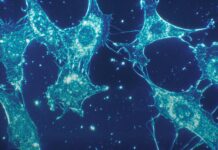













Marking a significant leap in neuroscience research, the Indian Institute of Technology Madras (IITM) is preparing to unveil a large-scale human adult brain mapping project in collaboration with leading scientific institutions in India and abroad. This initiative will enable medical practitioners and researchers to conduct deeper and more comprehensive analyses of the human brain than ever before.
Data to Be Released Within 18 Months
Announcing the development on the concluding day of the 43rd Annual Meeting of the Indian Academy of Neurosciences (IAN), held from October 29 to November 1 at Kovalam, Dr. Mohanasankar Sivaprakasam of IIT Madras said that the neuroscience-level data would be made public over the next one-and-a-half years. The conference was hosted by the Rajiv Gandhi Centre for Biotechnology (BRIC-RGCB).
Imaging the Brain at Cellular Resolution
Dr. Sivaprakasam explained that while previous research had focused on mouse and monkey brains, no one had ever conducted human brain mapping on such a large scale. Through their advanced imaging technology, IIT Madras has already developed the first set of brain maps for the second trimester (14–24 weeks) and is now progressing to imaging adult human brains at the Sudha Gopalakrishnan Brain Centre.
“The brain is extraordinarily complex, comprising over 100 billion cells and trillions of connections,” Dr. Sivaprakasam noted. “Today, magnetic resonance imaging (MRI) allows us to visualize the brain only at a millimeter level. Our work aims to capture the human brain at the resolution of every single cell.”
A Vision Inspired by Kris Gopalakrishnan
As per the press release, the brain mapping initiative began in 2017 when IT entrepreneur Kris Gopalakrishnan encouraged IIT Madras to undertake high-quality, large-scale human brain research at a globally competitive level. Facing the challenge of limited equipment, the institute launched its own R&D and technological innovations, formally starting the project in 2020.
“To truly understand the brain, it must be imaged across different life stages and disease conditions,” Dr. Sivaprakasam explained. “Since no suitable technology existed, we had to develop it ourselves.”
Transformative Potential for Medical Science
Insights from Other Sessions
Delivering the K.T. Shetty Memorial Oration, Dr. K.P. Mishra from DIPAS, New Delhi, discussed “High Altitude-Induced Alterations in the Gut-Immune-Brain Axis” and proposed collaboration with the Defence Research and Development Organisation (DRDO) to develop biosensors for soldiers deployed in high-altitude environments.
In another notable presentation, Dr. Tomomi Shimogori from the RIKEN Centre for Brain Science, Japan, shared insights on “Cell Type Census in the Cerebral Cortex Reveals Species-Specific Brain Function and Connectivity.”
A Global Platform for Neuroscience Collaboration
The four-day IAN conference brought together leading neuroscientists and domain experts from India and around the world, fostering cross-institutional collaborations and advancing dialogue in frontier brain research.