





















Artificial intelligence may soon enable doctors to “read” the brain before diseases become clinically visible. In a significant development, an Indian research team has introduced MANAS 1, a Brain Language Foundation Model built using 60,000 hours of brainwave recordings from more than 25,000 patients. The team aims to use this platform to enable earlier detection of neurological and psychiatric disorders.
Developed by Intellihealth with National AI Support
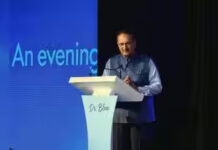
Intellihealth (NeuroDx) developed MANAS 1 under the leadership of neurologist Dr. Puneet Agarwal, former Professor at All India Institute of Medical Sciences. The team unveiled the model at an AI summit and released it as open source on Hugging Face to encourage collaborative innovation.
Additionally, the project received computational support under the Indian AI Mission of the Ministry of Electronics and Information Technology, strengthening its technological backbone.
Understanding the Brain’s Electrical Language
Unlike conventional AI systems that analyse images or text, MANAS 1 interprets electroencephalogram (EEG) signals—the electrical activity generated by the brain. Built with 400 million parameters, the model functions as a foundational AI platform on which disease-specific tools can be developed.
Dr. Agarwal explained that MANAS 1 is designed to “understand the basic language of the brain.” He compared it conceptually to OpenAI’s ChatGPT, noting that just as language models learn from vast text datasets, MANAS 1 learns patterns from large-scale EEG data. Consequently, it interprets brain signals that traditional imaging techniques such as MRI may not fully decode.
Through this approach, the platform lays the groundwork for developing AI tools targeting epilepsy, dementia, and other neurological conditions. At the same time, it allows researchers to explore aspects of brain function that remain poorly understood.
Bridging India’s Neurology Care Gap
Beyond technological innovation, the project addresses a pressing public health need. India continues to face a shortage of neurologists and psychiatrists, especially outside metropolitan areas. As a result, clinicians often diagnose brain disorders late, which increases disability and long-term healthcare costs.
Developers believe that tools built on MANAS 1 could assist doctors working at Ayushman Arogya Mandirs, community health centres, and district hospitals by enabling preliminary screening and timely referrals. However, they clarified that any disease-specific AI application derived from the platform must undergo regulatory approvals before clinical use.
Potential Impact on Early Diagnosis
If validated at scale, AI systems based on MANAS 1 could significantly reduce the gap between symptom onset and diagnosis. Early detection remains particularly critical in conditions such as epilepsy and dementia, where timely intervention can slow disease progression and improve quality of life.
Looking Ahead: MANAS 2 on the Horizon
The team has already announced plans for a next-generation version, MANAS 2, expected in the coming weeks. This upgraded model may further enhance accuracy, scalability, and research applications.
As artificial intelligence expands into neuroscience, MANAS 1 marks a pivotal shift—from analysing language on screens to interpreting the electrical language of the human brain. Ultimately, the platform could reshape research, diagnosis, and access to neurological care across India and beyond.