




















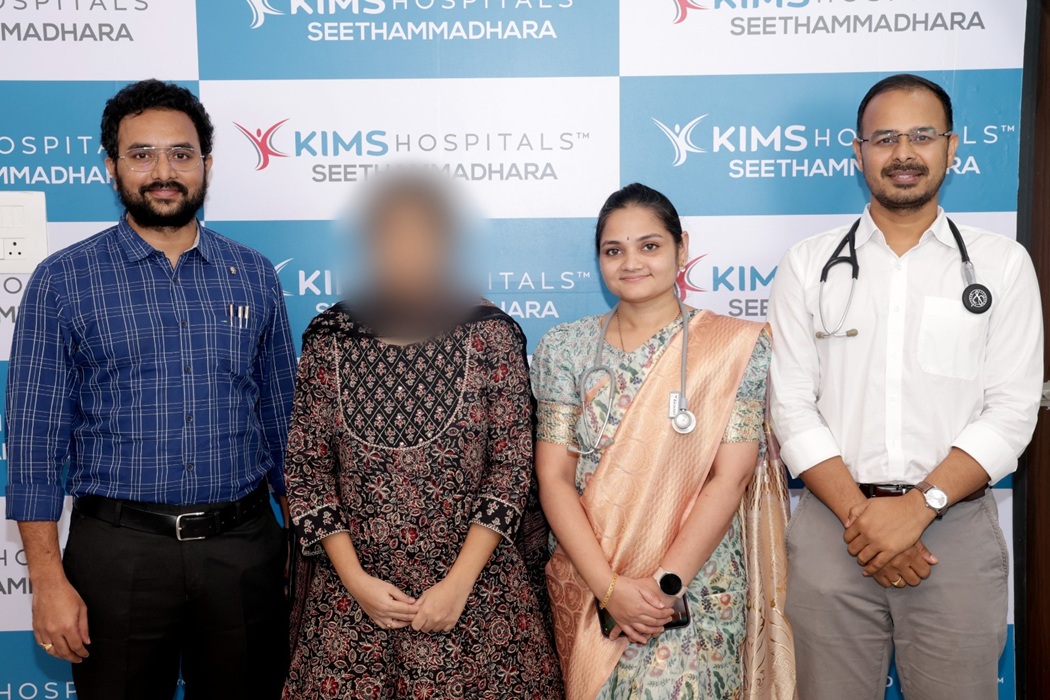
Doctors at KIMS Seethammadhara successfully treated a nine-month pregnant woman who suffered a life-threatening ischemic stroke, using an emergency mechanical thrombectomy. Following the procedure, doctors also facilitated the safe delivery of a healthy baby boy.
Emergency Stroke Treatment
The woman was brought to the hospital with sudden weakness on the right side of her body and loss of speech. Investigations revealed severe blockages in major blood vessels on the left side of her brain, requiring immediate intervention.
Because she was in the final stage of pregnancy, doctors had to restore blood flow quickly while closely monitoring both the mother and foetus. The team carefully managed medication, blood pressure, circulation and fetal health throughout the treatment.
Mechanical Thrombectomy Restores Blood Flow
As per the hospital’s press release, the Neuro and Vascular Intervention team, led by Dr. Venkatesh Pothula, performed an emergency mechanical thrombectomy to remove the clot. Doctors also took precautions to minimise radiation exposure to the foetus.
The procedure successfully restored complete blood flow to the affected area of the brain, achieving TICI-3 reperfusion. Subsequently, the patient’s neurological condition stabilised.
Healthy Baby Delivered
The obstetrics team, led by Dr. Pavani Manikya Palepu, continuously monitored the mother and baby. Once the patient’s condition stabilised, doctors performed a Caesarean section, resulting in the delivery of a healthy baby boy.
Dr. Venkatesh Pothula, Dr. Raja Kumar P. and Dr. Pavani Manikya Palepu highlighted the importance of rapid diagnosis and close coordination between neurology, neuro-intervention, anaesthesia and obstetrics teams.
The doctors also emphasised that pregnancy should not automatically prevent emergency stroke treatment. Instead, timely intervention and appropriate fetal monitoring can help manage such critical cases safely.