






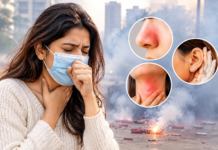












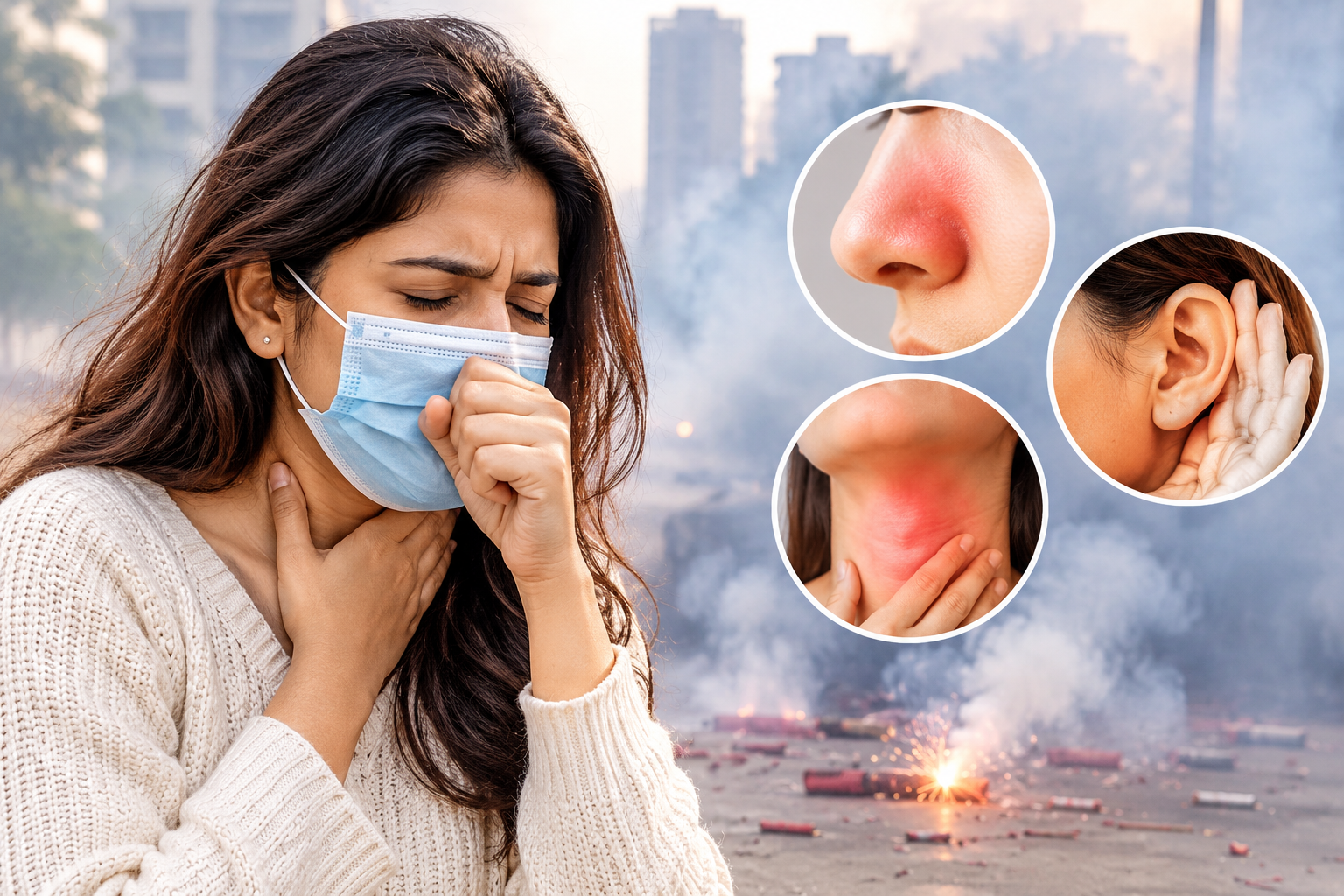
Post-Diwali pollution can affect hearing and respiratory health even after the celebrations end. Exposure to firecracker smoke, dust and excessive noise can continue to affect ear, nose and throat (ENT) health long after Diwali. According to ENT specialists at Apex Group of Hospitals, polluted air can irritate the nasal passages, throat and vocal cords, while loud firecracker bursts can cause temporary or permanent hearing damage.
Post-Diwali Air Pollution Raises ENT Health Concerns
Mumbai recorded an Air Quality Index (AQI) of 172 on November 9, 2026, with eight monitoring stations reporting poor air quality levels above 200. Bandra East recorded an AQI of 265. Additionally, pollution monitoring recorded PM2.5 levels reaching 483 in Andheri within hours of Diwali celebrations.
Noise pollution also remains a concern. A joint assessment by the Maharashtra Pollution Control Board (MPCB) and Awaaz Foundation recorded a peak noise level of 93.1 decibels during testing of a 10,000-shot firecracker this year. Such intense noise exposure can affect hearing, particularly among children, senior citizens and individuals with existing ear conditions.
Smoke and Noise Can Trigger Ear, Nose and Throat Problems
Dr. Bini H. Desai, Consultant ENT and Voice Surgeon at Apex Superspeciality Hospitals, Borivali West, part of Apex Group of Hospitals, explained that exposure to smoke, particulate matter and loud sounds can cause several post-Diwali health problems.
Common symptoms include throat irritation, nasal congestion, sneezing, dry cough, hoarseness and ear discomfort.
She emphasised that people do not need special detox treatments for their ears, nose or throat. Instead, simple preventive measures can help these organs recover from pollution exposure.
ENT Expert Shares Simple Tips to Protect Your Health
Dr. Desai recommends following these precautions to reduce the effects of post-Diwali pollution:
- Avoid smoke exposure: Stay away from polluted environments and areas with firecracker smoke.
- Stay hydrated: Drink adequate water to keep the throat moist and reduce irritation.
- Use saline nasal sprays: These can help keep nasal passages moist and ease discomfort.
- Gargle with salt water: Lukewarm salt-water gargles may help soothe throat irritation.
- Avoid self-medication: Do not use nasal decongestant sprays unnecessarily or without medical advice.
- Protect your ears: Avoid inserting cotton buds or oil into the ears and stay away from loud noise.
- Use hearing protection: Wear appropriate protection when exposure to loud sounds cannot be avoided.
When Should You Consult an ENT Specialist?
Although mild irritation may improve with time, certain symptoms require medical attention. Persistent ringing in the ears, reduced hearing, severe throat pain, breathing difficulties and prolonged hoarseness should not be ignored.
Dr. Desai advises people to seek timely medical evaluation if these symptoms continue, as early diagnosis can help prevent further complications.
She further highlighted that the ears, nose and throat remain constantly exposed to environmental pollutants. Therefore, preventive care, adequate hydration and timely medical attention are essential for maintaining ENT health. As per the hospital’s press release, people should prioritise preventive care and seek timely ENT consultation to address the effects of post-Diwali pollution on respiratory and hearing health.