






















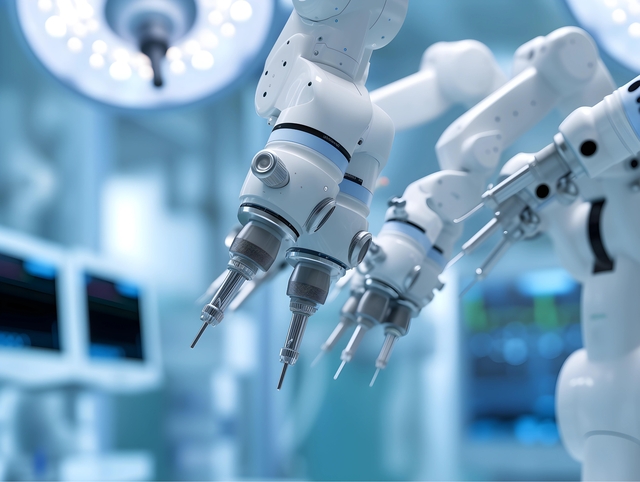
Robotic-assisted surgery is rapidly transforming modern healthcare by enabling surgeons to perform highly complex procedures with greater precision, improved control and enhanced patient safety. Once considered suitable only for select operations, robotic surgical systems are now being widely adopted across specialties, helping reduce complications, minimise trauma and accelerate recovery. Experts believe the technology is reshaping cancer treatment, minimally invasive surgery and even remote surgical care, while paving the way for the next generation of AI-powered healthcare.
Robotic Surgery Redefines Cancer Care
According to Dr. Ashish Pokharkar, Head of the Surgical Oncology Department at Noble Hospitals and Research Centre, robotic-assisted surgery has significantly expanded the possibilities of cancer treatment. “From procedures once considered too risky to operations that allow patients to return home within days, robotic surgery is transforming cancer care across Maharashtra,” he said.
Over the past decade, robotic platforms have enabled surgeons to perform highly complex cancer surgeries with superior precision, enhanced visualisation and greater dexterity. The technology is particularly beneficial when operating in confined anatomical spaces such as the pelvis, chest and deep abdominal cavity, where conventional surgical techniques often face limitations.
Improved Outcomes in Complex Pelvic Cancer Surgery
One of the most significant advances has been in the treatment of pelvic cancers, especially rectal cancer, where limited operating space makes surgery technically challenging. Dr. Pokharkar explained that robotic instruments equipped with wrist-like articulation allow surgeons to perform meticulous dissections with exceptional accuracy. As a result, surgeons can achieve more complete tumour removal while preserving critical urinary and sexual functions whenever clinically appropriate. The enhanced precision also reduces the risk of damage to surrounding tissues, contributing to improved long-term patient outcomes.
Technology Supports — Not Replaces — Surgical Expertise
While robotic systems provide advanced capabilities, surgeons emphasise that the technology complements rather than replaces clinical expertise. Dr. Neeraj Rayate, Consultant in Bariatric Surgery at Jupiter Hospital, noted that every movement of the robotic system remains entirely under the surgeon’s control. “The robot does not operate on its own; every movement is controlled by the surgeon,” he said.
According to Dr. Rayate, robotic platforms offer several key advantages, including tremor filtration, three-dimensional magnified visualisation and highly precise instrument control. These capabilities enable surgeons to preserve delicate nerves and blood vessels more effectively while performing complex procedures with greater confidence. Consequently, patients who once required large open incisions can now undergo minimally invasive surgeries and return to their normal daily activities much sooner.
Expanding Applications Across Surgical Specialties
Beyond oncology, robotic-assisted surgery is gaining momentum across multiple medical disciplines. Surgeons are increasingly using robotic systems for minimally invasive procedures involving the oesophagus, stomach and colorectal tract. Compared with conventional open surgery, robotic procedures typically result in smaller surgical incisions, reduced blood loss, less postoperative pain, lower risk of complications, shorter hospital stays and faster recovery. In addition, hospitals are adopting robotic technologies in orthopaedics, neurosurgery and urology to improve implant positioning, surgical accuracy and patient outcomes, particularly in joint replacement procedures.
Public Hospitals Embrace Robotic Technology
The adoption of robotic surgery is no longer limited to large private hospitals. Government healthcare institutions are also embracing the technology to improve surgical efficiency and patient care. Sassoon General Hospital (SGH) in Pune has emerged as a notable example of a public hospital integrating robotic-assisted surgery into clinical practice. According to Dr. Lata Bhoir, Head of the General Surgery Department at SGH, the greatest advantage of robotic surgery lies in its impact on patient recovery. “The real success of robotic surgery is not just that it is high-tech; it’s that patients recover faster and experience fewer complications,” she said. She added that quicker recoveries and earlier discharges also improve hospital efficiency by freeing beds for additional patients, making healthcare delivery more effective and patient-centric.
AI and Remote Surgery Shape the Future
Healthcare experts believe robotic-assisted surgery represents only the beginning of a broader technological transformation. Emerging innovations such as artificial intelligence (AI), image-guided surgery and advanced remote connectivity are expected to further improve surgical planning, intraoperative decision-making and patient safety. Meanwhile, the entry of Indian manufacturers into the robotic surgery market is expected to lower costs significantly, making advanced surgical technology accessible to a much larger patient population.
India Demonstrates Global Leadership in Robotic Surgery
India is also establishing itself as a global innovator in robotic-assisted healthcare. In a recent landmark achievement, an Indian surgical team facilitated a cross-border telesurgery demonstration in which surgeons based in France successfully performed gastric bypass and cardiac repair procedures on patients in Indore using an indigenous robotic surgical platform. The successful remote operations underscore India’s growing capabilities in medical robotics and telemedicine while highlighting the potential of next-generation digital healthcare technologies to overcome geographical barriers and expand access to specialised surgical care worldwide.
A New Era of Precision Surgery
As robotic systems continue to evolve alongside artificial intelligence and digital health technologies, they are redefining surgical practice across specialties. As reported by msn.com, by combining human expertise with advanced robotics, hospitals can deliver safer procedures, greater surgical precision, faster recovery and improved patient outcomes—marking the beginning of a new era in precision medicine and minimally invasive healthcare.