























We are proud of the yeoman service doctors provide for the healthcare of our masses!
National Doctors’ Day is observed in India every year on 1 July to honour the invaluable contributions of doctors to society. The Indian Medical Association (IMA) officially designated 1 July as National Doctors’ Day in 1991 to commemorate the birth anniversary of Dr. Bidhan Chandra Roy, one of India’s most distinguished physicians and statesmen. He served as the Chief Minister of West Bengal for 14 years, from January 1948 until his death on 1 July 1962. Notably, Dr. Roy was born on 1 July 1882 and passed away on the same date, making 1 July a fitting occasion to celebrate his legacy and honour the medical profession.
Doctors’ Thoughts and Comments on National Doctors’ Day
Dr. Reena Wani
Professor & Head, Department of Obstetrics & Gynecology, HBT Medical College & Dr. R. N. Cooper Municipal Hospital
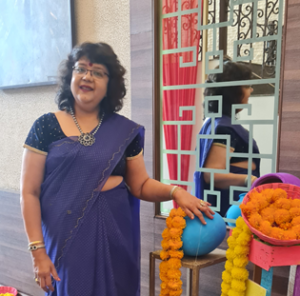
“Celebrating Doctors’ Day with activities that promote our own health is what we believe in! For over a decade, we have been focusing on Healing the Healers! Happy Doctors’ Day to all my seniors, friends and colleagues. We have to lead by example to inspire our patients!
‘With great power comes great responsibility,’ said Uncle Ben in Spider-Man.
We, as doctors, have been given the power to change the lives of people who come to us. Our decisions can be game changers and life-saving many times. Hence, we have to bear the weight of responsibility without developing a God complex or feeling discouraged when things don’t work out. Stay focused on the best interests of the patient and we can make the best of every given situation.
Cure sometimes, comfort often, care always!”
Dr. Akhila Bomma Reddy
Surgical Oncologist, TGH Onco-Life Cancer Center, Talegaon Dabhade
“Youthful doctors are now very much worried about the demanding nature of medical training. They are facing issues such as emotional burnout and mental health challenges and finding it difficult to cope with these issues. Sleep deprivation tends to affect attention, decision-making, memory, and psychomotor performance, increasing the risk of medical errors. Prolonged stress and excessive workloads can also lead to anxiety and depression. Concerns regarding poor work-life balance, inadequate mentorship, and limited institutional support have led some to reconsider their career paths or pursue alternative specialties and non-clinical careers. It is necessary to provide a favourable work environment for young doctors, who are the future of healthcare in India.
During my residency, there were nights when the sheer volume of patients meant I didn’t sit down for twelve hours straight. By the early morning, I found myself double-checking routine charts three times, terrified that exhaustion was blurring my judgment. It wasn’t just physical fatigue; it was the growing realization that the system expected me to perform at peak capacity while intentionally stripping away the basic conditions required to sustain that performance.”
Dr. Gajanan Gawande
Consultant Interventional Cardiologist, AIMS Hospital, Dombivli
“Behind every young doctor, there is a journey that involves dedication, sacrifice, and courage. Long shifts and the emotional responsibility of caring for critically ill patients can impact the well-being of doctors too. Many residents spend more time in hospitals than with their families, often missing important personal moments like birthdays, anniversaries, and their children’s milestones, while prioritising patients’ health.
Doctors are under immense pressure as they are required to make decisions concerning patients’ well-being and keep themselves updated with the latest technology. All these factors can take a toll on their mental well-being. Supporting young doctors is necessary during such tough times. Doctors should also look after themselves and lead healthy lives.”
Dr. Shraddha Bahirwani
Centre Head and Senior Consultant, Happiest Pearls
“The doctor-patient relationship has become more collaborative, with informed patients actively participating in treatment decisions. Strengthening this bond requires open communication, mutual respect, and trust. During a first consultation, creating a comfortable environment helps patients share their concerns honestly, enabling accurate diagnosis and care.
Doctors also expect patients to provide complete medical histories and communicate openly. Key challenges include limited consultation time, managing expectations shaped by online information, and addressing misconceptions. While patients are encouraged to research their health, online information should complement—not replace—professional medical advice, which is grounded in clinical expertise, experience, and personalised judgement.”
Dr. Amit Malik
Founder and CEO, Amaha
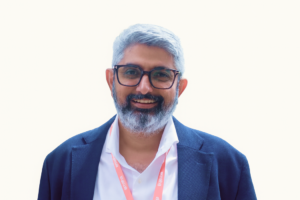
“Doctors’ Day is a moment to reflect on what this work actually asks of us.
In psychiatry, people rarely arrive in the early days of what they are carrying. By the time someone reaches a psychiatrist, they have usually been living with something for a long time, often in silence, and often with a family that has been quietly trying to hold things together around them. No diagnosis exists in isolation. Every person brings a story, a set of relationships, and circumstances that shape how illness is experienced and how recovery unfolds.
What medicine asks of us in those moments is not just clinical competence. It is the willingness to stay present with complexity that doesn’t resolve quickly, with recoveries that are non-linear, and with the reality that progress is often invisible before it becomes visible. This Doctors’ Day, I remain committed to building the conditions under which more people in India can access that quality of care—not as an exception, but as a baseline.”
Dr. Rajiv Gaur
MBBS, MD, Antarmanh Consulting
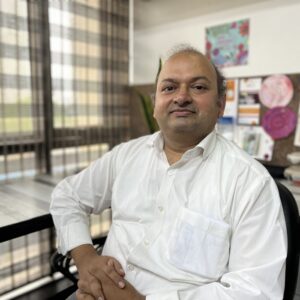
“Every day, doctors carry the weight of difficult decisions, long hours, and the emotional realities of caring for others. Behind the white coat is a human being who feels, reflects, and sometimes struggles too.
This Doctors’ Day, as we celebrate those who dedicate their lives to healing, it is equally important to ask: Who heals the healers? Supporting the well-being of doctors is not just an act of gratitude; it is a necessity. When healthcare professionals are given the space to rest, recharge, and seek support without stigma, they are better equipped to continue providing compassionate care to others.
Because behind every healer is a person who deserves care, understanding, and kindness too.”
Dr. Mohit Mathur
Chief Medical Officer, PB Healthcare Services Pvt. Ltd.
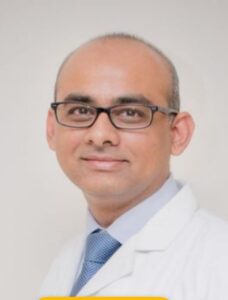
“India’s healthcare challenge has never been just about capacity—it is about delivering high-quality, equitable care at scale for all patients. Artificial intelligence presents an opportunity to fundamentally reimagine healthcare by enabling earlier risk detection, improving diagnostic accuracy, accelerating clinical decision-making, and making preventive care more personalised and accessible.
Over the next decade, the most successful health systems will be those that seamlessly integrate AI into every stage of the care journey while keeping clinicians at the centre of every decision. The future of healthcare will not be defined by technology alone, but by how intelligently we combine innovation with the experience and compassion of clinicians to deliver better outcomes for every patient.”