






















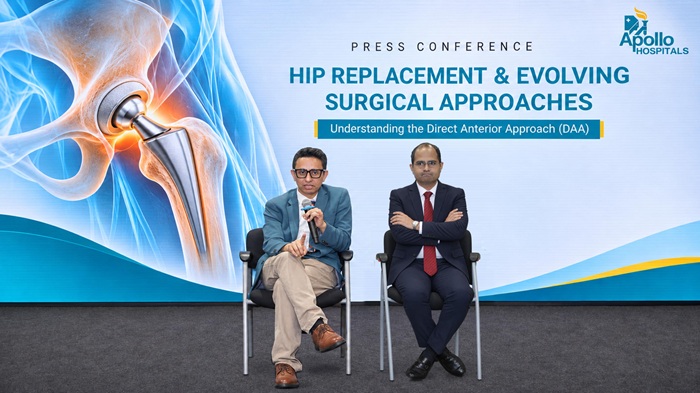
Apollo Hospitals Navi Mumbai is advancing hip replacement surgery through the exclusive use of the Direct Anterior Approach (DAA), a muscle-sparing surgical technique designed to minimise tissue damage and support faster recovery. The approach allows surgeons to access the hip joint from the front without cutting through major muscle groups, potentially helping patients regain mobility and return to everyday activities sooner.
Direct Anterior Approach Focuses on Muscle Preservation
Hip replacement surgery is commonly recommended for patients with severe arthritis, hip fractures and other conditions that damage the joint. Although advances in surgical techniques and implants have improved treatment outcomes, modern orthopaedic care increasingly focuses on reducing surgical trauma, managing postoperative pain and supporting early mobilisation.
Unlike conventional hip replacement approaches, which access the joint from the back or side and may involve cutting through major muscle groups, DAA allows surgeons to reach the hip joint through a natural interval between muscles. This muscle-sparing technique aims to preserve surrounding tissues and support functional recovery.
Technique Addresses Mobility Needs of Indian Patients
The approach is particularly relevant in India, where everyday activities often involve squatting, sitting cross-legged, using floor-level toilets and practising yoga. Consequently, patients expect hip replacement surgery to restore not just basic mobility but also their ability to resume familiar daily routines independently.
Furthermore, the technique may benefit elderly patients, particularly those in their eighties and nineties who require hip replacement following fractures of the neck of the femur. For these individuals, early mobilisation is an important part of recovery and rehabilitation.
Growing Global Adoption of Direct Anterior Approach
The Direct Anterior Approach has gained increasing attention among orthopaedic surgeons worldwide. According to data cited in the hospital’s press release, 53% of American surgeons in 2025 reported DAA as their most commonly used total hip arthroplasty approach.
Similarly, its adoption in the Netherlands increased from 0.2% of hip replacements in 2007 to 41% in 2020. Additionally, a prospective study published in 2026 found that 43% of patients expressed a preference for this surgical approach.
Orthopaedic Experts Highlight Benefits of Muscle-Sparing Surgery
Commenting on the technique, Dr. Deepak Gautam, Senior Orthopaedic and Joint Replacement Surgeon, Apollo Hospitals Navi Mumbai, said that the procedure does not involve cutting through major muscles. He highlighted that this approach may help reduce postoperative pain, lower the risk of dislocation, shorten hospital stays and support an earlier return to work.
Meanwhile, Dr. Kiran Shingote, CEO, Apollo Hospitals Navi Mumbai, explained that DAA does not require robotic systems or specialised operating infrastructure. However, surgeons need specific expertise and training to perform it safely. He emphasised the importance of structured training programmes, mentorship and cadaveric workshops to help surgeons overcome the technique’s learning curve.
The development highlights the growing focus on muscle-sparing techniques in joint replacement surgery, with an emphasis on preserving muscle function, improving mobility and supporting patient independence. As per the company press release, Apollo Hospitals Navi Mumbai aims to advance modern orthopaedic care through the Direct Anterior Approach, helping patients return to their everyday activities following hip replacement surgery.