









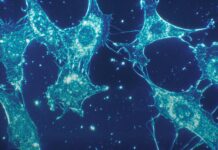













In a remarkable advancement for AI-driven scientific discovery, Google CEO Sundar Pichai announced that DeepMind’s AI model, Gemma, has helped uncover a new potential pathway for cancer therapy. Developed in collaboration with Yale University, the breakthrough demonstrates how artificial intelligence can accelerate progress in biomedical research and oncology.
Sharing the news on X (formerly Twitter), Pichai wrote, “An exciting milestone for AI in science: Our C2S-Scale 27B foundation model, built with Yale and based on Gemma, generated a novel hypothesis about cancer cellular behavior, which scientists experimentally validated in living cells.”
He added that with further preclinical and clinical testing, this discovery “may reveal a promising new pathway for developing therapies to fight cancer.”
AI Model Powers Cancer Research Collaboration
As reported by Hindustan Times, the research collaboration between DeepMind and Yale University led to the creation of a foundation model for single-cell analysis, known as Cell2Sentence-Scale 27B (C2S-Scale). This model, with 27 billion parameters, is specifically designed for cell and molecular biology applications — a major leap beyond traditional AI use cases in text or image generation.
According to DeepMind’s blog post, the AI model produced a novel hypothesis on cancer cellular behavior, which was later experimentally validated in living cells, confirming its scientific accuracy. The finding, researchers noted, opens the door to developing innovative cancer therapies based on this newly identified biological pathway.
Social Media Reactions: Optimism and Inspiration
Pichai’s announcement quickly went viral, garnering millions of views and enthusiastic responses from the scientific and tech communities alike.
A former Google engineer commented, “This is precisely where AI’s biggest societal impact lies — accelerating breakthroughs in fundamental science like oncology. Moving beyond entertainment to directly aid social good, as demonstrated by the C2S-Scale model and Yale collaboration, is incredibly motivating.”
Another user wrote, “It’s a huge step for AI in science — this model focuses on cell and molecular biology. 27B parameters is enormous in the scientific context.”
Others expressed hope and gratitude, with one person sharing, “This is so special. As my father is fighting cancer, I feel there’s a great need for AI to accelerate therapy development. Thank you, Google.”
A New Era for AI in Biomedical Science
This achievement underscores AI’s growing role in accelerating medical discoveries. Models like Gemma and C2S-Scale are transforming how researchers study diseases at the cellular level. They combine computational power with biological expertise to accelerate discovery.