






















A New Frontier in Affordable Diagnostics
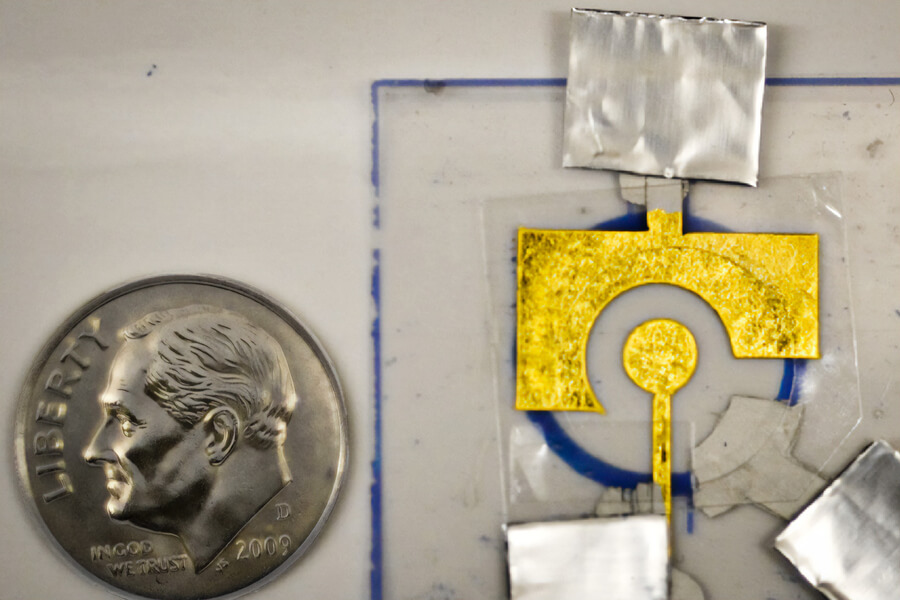
MIT researchers have designed a cost-effective, disposable diagnostic sensor using DNA-coated electrodes. This new technology, which costs just around 50 cents to produce, can potentially detect a range of diseases, including cancer and infectious illnesses such as influenza, HIV, and HPV. By integrating an enzyme from the CRISPR gene-editing toolkit, the sensors detect disease markers and convert the interaction into an electrical signal.
How the Sensor Works
As per the MIT Press release, the sensor uses electrochemical technology, similar to glucose meters. DNA strands, attached to an inexpensive gold-leaf electrode using a thiol molecule, act as detectors. When a target molecule (like a cancer gene) is present, a Cas12 enzyme—activated via a guide RNA—cleaves the electrode-bound DNA nonspecifically, thereby disrupting the electrical current. MIT’s Ariel Furst, Assistant Professor of Chemical Engineering, explains, “If Cas12 is on, it’s like a lawnmower cutting grass—it chops off the DNA, and your electrical signal disappears.”
Tackling the Shelf-Life Challenge
Earlier, these sensors had to be assembled just before use because the DNA degraded rapidly under normal conditions. However, in this new study, the team overcame this limitation by adding a protective polymer layer. They coated the DNA with polyvinyl alcohol (PVA)—a cost-effective material (less than 1 cent per sensor)—which acts like a tarp, shielding the DNA from reactive oxygen species and heat damage. Once dried, the coating preserves the DNA’s integrity on the electrode.
Extended Stability and Real-World Use
Thanks to this innovation, researchers extended the shelf-life of the sensors to at least two months, even at temperatures up to 150°F (65°C). After storing the sensors, they rinsed off the polymer coating and successfully used them to detect PCA3, a prostate cancer gene, in urine samples. These sensors can also analyze saliva and nasal swabs, making them ideal for point-of-care or at-home testing.
Bringing Diagnostics to Low-Resource Settings
“This is about creating diagnostics for people who have limited access,” says Furst. “You wouldn’t even need to be in a clinic—you could do this at home.” With a stable shelf-life and no need for refrigeration, these sensors are well-suited for deployment in remote or underserved areas.
Toward Commercialization and Broader Applications
MIT graduate student Xingcheng Zhou led the study, published in ACS Sensors, with contributions from undergraduates and graduate researchers. The team has now joined MIT’s delta v venture accelerator, aiming to commercialize the technology. Their next steps include shipping sensors for real-world trials and expanding the platform to detect other diseases, including emerging infections.
Looking Ahead
“Our limitation before was that we had to make the sensors on site,” says Furst. “Now, we can ship them without refrigeration, enabling use in rugged or resource-limited environments.” The project received support from the MIT Research Support Committee and a MathWorks Fellowship, propelling a breakthrough that could revolutionize affordable diagnostics globally.