




















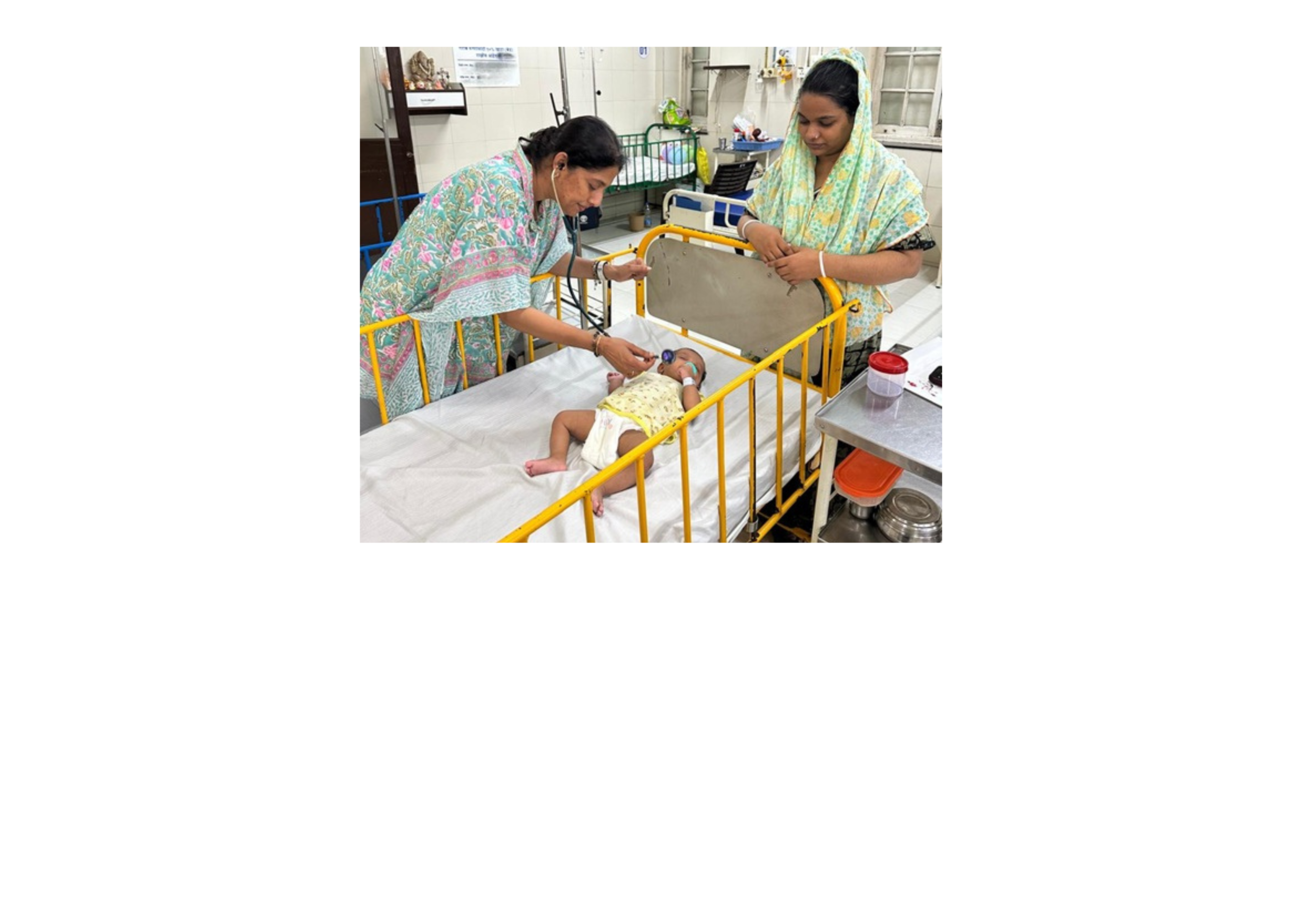
Doctors at Bai Jerbai Wadia Hospital for Children saved the life of a two-and-a-half-month-old baby girl after diagnosing and treating Familial Lipoprotein Lipase Deficiency (LPLD), an extremely rare inherited disorder that affects nearly 1 in 1 million people. Initially referred with suspected congenital heart disease, the infant was found to have dangerously high triglyceride levels that had begun affecting her heart, liver, blood vessels, and eyes.
Baby Rida Shaikh, the first child of Mohammad Shaikh and Saniya Shaikh after four years of marriage, was referred to the hospital on May 29 for evaluation of hypertrophic cardiomyopathy (HCM). During routine blood tests, doctors noticed that her blood appeared milky white instead of red, prompting further investigation.
Extremely High Triglyceride Levels
Dr. Sumitra Venkatesh, Paediatric Cardiologist, said the infant’s serum triglyceride level exceeded 42,000 mg/dL, compared to the normal level of below 100 mg/dL.
“The excessive fat had accumulated in several vital organs, including the heart, blood vessels, eyes and liver, severely affecting the baby’s overall health,” she said.
Multidisciplinary Team Led Treatment
The hospital immediately assembled a multidisciplinary team comprising specialists in paediatric cardiology, endocrinology, lipidology, critical care, hepatology, genetics, nutrition and radiology.
As per the hospital’s press release, the team withheld oral feeds for 16 days and provided fat-free intravenous nutrition under close monitoring to rapidly reduce the baby’s lipid levels. Doctors then introduced carefully formulated ultra-low-fat feeds once the triglyceride levels declined.
By the 19th day of hospitalisation, the baby’s triglyceride level had fallen to 242 mg/dL. Her blood returned to its normal colour, fat deposits in multiple organs began disappearing, and her heart function improved significantly. Genetic testing later confirmed Familial Lipoprotein Lipase Deficiency, while tests on both parents revealed mildly elevated triglyceride levels, supporting the inherited nature of the disorder. The baby was discharged on June 29, 2026, on a low-fat oral diet.
Lifelong Management Required
Professor Dr. Sudha Rao, Medical Director and Chief of Paediatric Endocrinology, said LPLD is an exceptionally rare genetic disorder.
“I have treated similar cases before, but never one with such life-threatening triglyceride levels. The child will require lifelong dietary fat restriction, regular monitoring of lipid levels and surveillance for complications such as pancreatitis. With proper management, the long-term outlook for growth and development is good,” she said.
Hospital Highlights Importance of Early Diagnosis
Dr. Minnie Bodhanwala, CEO of Bai Jerbai Wadia Hospital for Children, said the case demonstrated the importance of early diagnosis and coordinated multidisciplinary care in managing rare diseases.
“This case highlights how timely recognition, accurate diagnosis and seamless collaboration across specialties can transform the outcome of a life-threatening rare disorder. Our team was able to provide comprehensive treatment under one roof,” she said.
Parents Express Gratitude
The baby’s parents thanked the medical team for saving their daughter’s life.
“Our daughter is our first child, and watching her battle such a rare condition was the most difficult phase of our lives. We are deeply grateful to the entire team at Bai Jerbai Wadia Hospital for Children for their timely diagnosis, constant support and dedicated care. Seeing her smile again is the greatest blessing for our family,” they said.