






















Regular Follow-up and Lifestyle Changes Key to Better Outcomes
Advances in surgery, radiation therapy and medicines have significantly improved survival in head and neck cancer. However, experts at SSO Hospital cautioned that treatment does not always mark the end of a patient’s journey, with nearly 10–15% of treated patients experiencing recurrence. They stressed that regular follow-up, early detection of recurrence, and lifestyle modification are essential for improving long-term outcomes.
Ahead of World Head and Neck Cancer Day, Dr. Amit Chakraborty, Head and Neck Cancer Surgeon, SSO Hospital, Ghatkopar, highlighted that recurrence can occur at the original site, in the neck lymph nodes, or spread to organs such as the lungs, bones or liver. He emphasised that timely intervention can help many patients continue to lead healthy, cancer-free lives.
Head and Neck Cancers on the Rise
Head and neck cancers affect the mouth, tongue, throat, voice box, nose, sinuses, salivary glands and other tissues involved in speaking, swallowing and breathing.
Speaking at the press conference, Dr. Chakraborty said the disease is increasingly affecting people aged 30–75 years, largely because of tobacco and areca nut (gutkha) use, rising alcohol consumption, and an increase in Human Papillomavirus (HPV) related throat cancers among younger people. Greater awareness and screening have also improved detection rates.
Oral Cancer Accounts for Most Cases
As per the press conference, oral cancers form the largest share of head and neck cancers treated at SSO Hospital. The department performs 2–3 head and neck cancer surgeries daily, amounting to nearly 700–800 surgeries every year. Around 40% involve cancers of the buccal mucosa and lower alveolus, followed by thyroid (20%), tongue (15%), palate (10%), laryngeal (8%), other oral cavity (5%) and parotid cancers (2%).
“The predominance of oral cancers highlights the harmful effects of tobacco and areca nut use and the importance of early diagnosis,” Dr. Chakraborty said.
Recurrence Remains a Major Challenge
Dr. Chakraborty noted that while 10–15% of treated patients experience recurrence, nearly 20–40% of head and neck cancer patients may develop recurrent disease within the first two to three years, making regular follow-up during this period crucial. The risk is higher in patients diagnosed at an advanced stage, those with cancer cells at the surgical margins, spread beyond lymph nodes, or those who continue tobacco or alcohol use.
He explained that oral cancers recur more frequently in India because prolonged tobacco and areca nut use damages the entire lining of the mouth, increasing the risk of both recurrence and new cancers.
SSO Hospital also reported that 12–15% of its head and neck cancer surgeries are performed for recurrent disease, with nearly 20% of these patients having received their initial treatment at the hospital.
Survivors Stress Early Detection
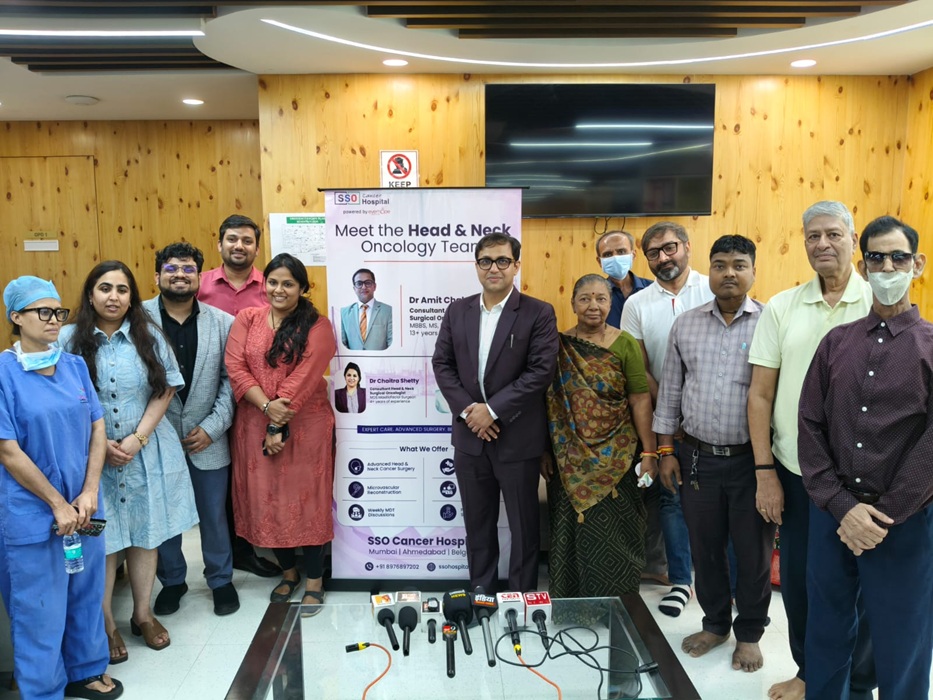
Two oral cancer survivors shared how timely treatment changed their lives.
Mihir Jobanputra (43) said he ignored a mouth ulcer for nearly three months before a biopsy confirmed oral cancer. After undergoing surgery at SSO Hospital, he recovered without requiring chemotherapy or radiation.
Dinkar Nivrutti Adhav (70), a long-time smoker, sought treatment after a persistent white patch in his mouth failed to heal. Following surgery in January 2026, he became cancer-free and urged people to quit tobacco and seek medical attention for persistent oral ulcers.
Offering hope, Dr. Chakraborty said recurrence is not the end of the road. With repeat surgery, radiation therapy or medicines, many patients can achieve long-term disease control if recurrence is detected early.
He also announced that SSO Hospital will soon launch a dedicated Head and Neck Cancer Centre of Excellence, bringing advanced screening, diagnosis, surgery, reconstructive care, medical and radiation oncology, rehabilitation and long-term follow-up under one roof to provide comprehensive, personalised care.