






















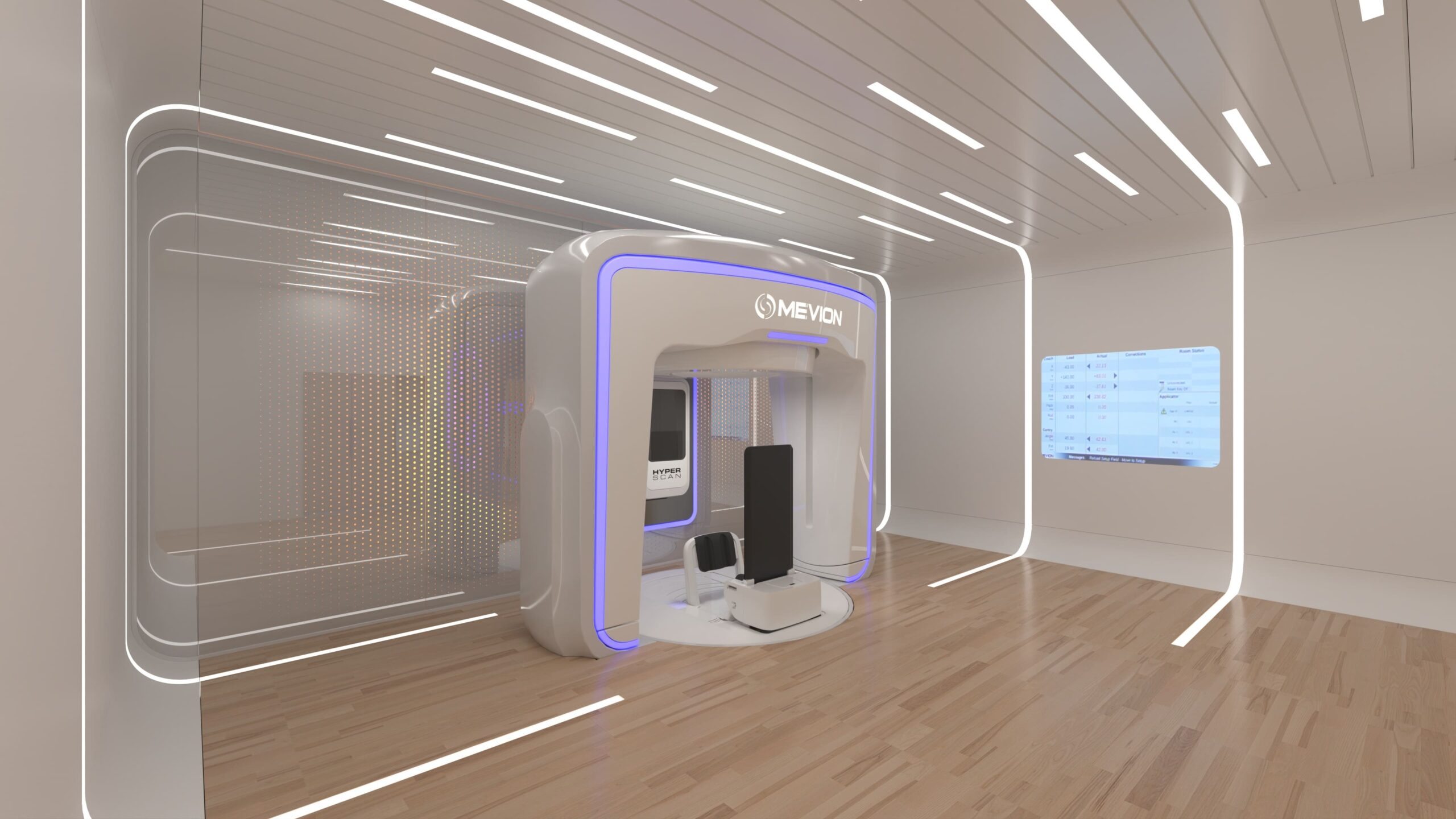
Fortis Healthcare, part of the IHH Healthcare group, has announced plans to install the MEVION S250-FIT™ Proton Therapy System™ at Fortis Memorial Research Institute (FMRI), Gurugram. The planned installation will introduce a new approach to precision cancer treatment in India and further strengthen FMRI’s advanced oncology capabilities. The system, developed by Mevion Medical Systems, will feature Marie® upright patient positioning and imaging technology from Leo Cancer Care, along with RayStation® treatment planning software from RaySearch Laboratories. Subject to regulatory approvals and completion of site preparations, Fortis will become the first healthcare provider in India planning to introduce upright proton therapy. The project will also mark the first installation of a Leo Cancer Care system in the country.
Advancing Precision Cancer Treatment
Proton therapy is an advanced form of radiation treatment that can deliver radiation doses more precisely to selected tumours while limiting exposure to surrounding healthy tissues. Unlike conventional X-ray radiation, which continues to deposit radiation as it travels through the body, proton therapy can be planned to concentrate the prescribed dose within the tumour while reducing radiation beyond the target. This capability can be particularly valuable when treating selected paediatric cancers and tumours located close to sensitive organs and structures, including the brain, spinal cord, heart and lungs.
Introducing Upright Proton Therapy
The planned system combines a compact proton accelerator and fixed-beam delivery architecture with a 360-degree upright patient-positioning platform and integrated CT imaging. Instead of positioning patients on a table while a large treatment gantry rotates around them, the system allows patients to remain seated in an upright position in front of a fixed proton beam. This approach could provide additional comfort for patients who have difficulty lying flat because of pain, breathing problems, limited mobility or anxiety. Furthermore, the open configuration may reduce feelings of confinement and enable patients to remain more connected with the clinical team during positioning and treatment.
Integrated Imaging for Accurate Treatment
The system incorporates upright CT imaging at the treatment position, allowing clinicians to image, position and treat patients in the same orientation. As a result, the workflow can support consistent patient positioning, accurate anatomical alignment and advanced image-guided proton therapy. The treatment planning process will be supported by RayStation, which incorporates advanced planning technologies for proton therapy. RaySearch has continued to invest in particle therapy research and development to support the evolving requirements of proton therapy centres worldwide.
Compact Design Reduces Infrastructure Barriers
One of the key advantages of the planned MEVION S250-FIT system is its compact architecture. Traditional proton therapy facilities can require extensive space, construction and supporting infrastructure. In contrast, the compact system is designed for installation within an existing building at FMRI. This could significantly reduce the infrastructure requirements normally associated with installing a conventional gantry-based proton therapy system. Consequently, the technology offers a potential pathway for established cancer centres to introduce proton therapy without undertaking the extensive construction that conventional systems may require.
Strengthening FMRI’s Cancer Care Capabilities
FMRI is home to the Fortis Cancer Institute, which brings together medical, surgical and radiation oncology, precision diagnostics and multidisciplinary clinical expertise. The planned proton therapy installation will complement these capabilities and further strengthen the hospital’s focus on advanced and personalised cancer care. The addition of upright proton therapy could also expand the range of precision radiation treatment options available to selected adult and paediatric cancer patients.
Fortis Focuses on Patient-Centric Oncology
Dr Ashutosh Raghuvanshi, Managing Director & CEO, Fortis Healthcare, said that India’s growing cancer burden requires greater treatment precision and broader access to advanced oncology technologies. According to him, the planned installation reflects Fortis Healthcare’s aim to combine globally advanced technology with clinical expertise while addressing infrastructure limitations. He added that introducing India’s first upright proton therapy system would represent an important step towards strengthening precision oncology and creating a more patient-centric and future-ready cancer-care ecosystem.
Leo Cancer Care Sees Landmark Opportunity
Stephen Towe, Chief Executive Officer, Leo Cancer Care, described the project as a significant milestone for both the company and upright radiotherapy in India. He noted that the partnership with Fortis and IHH Healthcare will introduce Leo Cancer Care’s technology to a new market. He also highlighted the potential of upright radiotherapy to overcome infrastructure limitations that can restrict the installation of conventional proton therapy systems. By eliminating the requirement for a large rotating gantry, the MEVION S250-FIT system can potentially enable proton therapy installation in existing healthcare facilities where conventional systems may not be practical.
A Potential New Chapter for Proton Therapy in India
The planned installation at FMRI represents an important development in India’s precision oncology landscape. While proton therapy requires careful patient selection and specialised clinical expertise, its ability to precisely target certain tumours makes it an important treatment option for selected cancer cases. Moreover, the combination of a compact proton therapy system, upright positioning, integrated imaging and advanced treatment planning could help address some of the infrastructure and patient-comfort challenges associated with conventional proton therapy. As per the press release, subject to regulatory approvals and successful implementation, the FMRI project could establish a foundation for the broader adoption of upright proton therapy in India and the region, potentially expanding access to advanced radiation treatment for appropriately selected patients.