


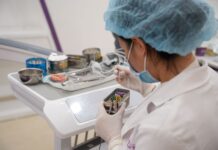












How can medical professionals gain hands-on experience in complex surgical procedures without relying on overseas training programmes? Mumbai’s KEM Hospital is developing an advanced wet bioskills laboratory to provide practical surgical training to medical students, doctors, consultants, paramedics and nursing staff.
The laboratory will allow healthcare professionals to practise procedures such as endoscopy, laparoscopy, ophthalmic, orthopaedic, renal and gynaecological surgeries, knee replacements and robotic surgery using cadavers.
Fresh Cadavers to Enhance Surgical Training
The proposed bioskills laboratory will form part of KEM Hospital’s virtual autopsy centre, which is also under development. Unlike dry laboratories, where trainees practise using artificial models, wet laboratories provide hands-on training using cadavers.
KEM Hospital plans to use fresh frozen cadavers rather than traditionally embalmed frozen bodies. According to Dr Harish Pathak, Dean of KEM Hospital and Head of its Forensic Science Department, traditional frozen cadavers can become dark and hard, with their natural contours altered. This can affect the surgical training experience.
Fresh frozen cadavers, therefore, are expected to provide a more realistic learning environment and help doctors develop practical surgical skills.
₹17-Crore Facility to Support Medical Education
The bioskills laboratory is part of the redevelopment and upgradation of KEM Hospital’s post-mortem centre. The existing facility will be replaced by a five-storey prefabricated building spread across 20,000 sq. ft.
The hospital has floated tenders for the ₹17-crore project, which is expected to be completed within the next 11 months.
Currently, medical students learn through cadaver-based training, but the hospital does not have a dedicated facility for this purpose. The proposed laboratory will provide a specialised space equipped for practical surgical education.
The hospital is also considering developing the bioskills laboratory under a Public-Private Partnership (PPP) model. However, it has yet to finalise the structure and extent of private-sector participation.
Bringing Advanced Surgical Training to India
Many private hospitals currently send doctors to countries such as Singapore, Thailand and Dubai for mid-career surgical training. KEM Hospital aims to provide similar training opportunities in India at more affordable costs.
Dr Pathak highlighted that a PPP model could help make the facility sustainable while allowing private hospitals to recommend doctors for specialised training programmes.
The proposed building will also have storage capacity for approximately 40 cadavers at a time. Mumbai receives around 1,000 cadavers annually, primarily from unclaimed bodies, which are used for medical education or subsequently buried or cremated.
Virtual Autopsy Centre to Support Research
Alongside the bioskills laboratory, KEM Hospital is developing a virtual autopsy facility that will use advanced imaging and 3D body scans.
The technology will allow doctors to preserve anatomical evidence for future reference, research and training. These digital records could also support medical education by providing valuable data for studying human anatomy and forensic cases.
As reported by Hindustan Times, the proposed facility aims to strengthen practical medical education and expand access to advanced surgical training in India. The initiative could help reduce dependence on overseas training programmes while creating new opportunities for medical professionals to enhance their surgical skills using advanced training facilities.