





















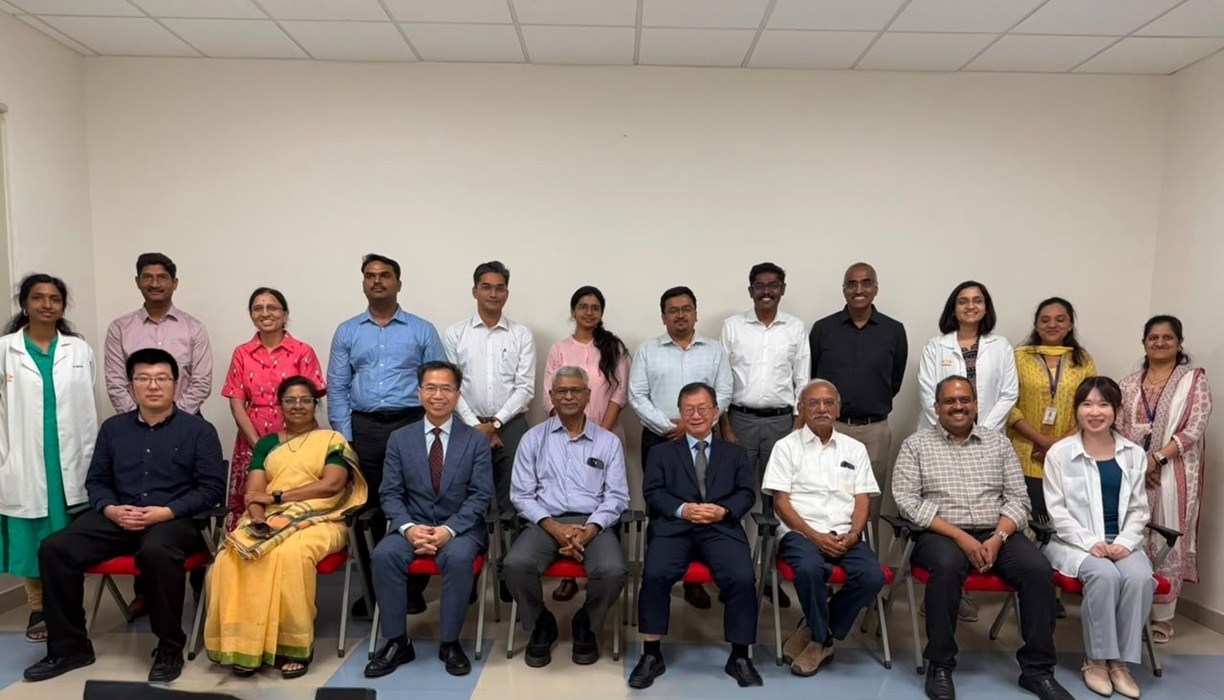
Sankara Eye Hospital, India, and The Chinese University of Hong Kong (CUHK) have signed a landmark Memorandum of Understanding (MoU) to transform paediatric eye care and myopia treatment. This strategic partnership marks a significant step forward in clinical collaboration, research, and education, as researchers from India and Hong Kong join forces to reduce childhood blindness and improve visual health outcomes for children worldwide.
Strengthening Global Collaboration in Ophthalmology
Dr. Kaushik Murali, President – Medical Administration, Quality & Training, Sankara Eye Hospital, Bengaluru, signed the MoU with the Department of Ophthalmology and Visual Sciences at CUHK. Through this historic international alliance, both institutions will develop innovative technological solutions to delay the progression and prevent the onset of refractive errors, particularly myopia. In addition, they will address complex ophthalmic challenges such as retinopathy of prematurity (ROP) and ocular tumours.
Shared Vision for Research and Innovation
Highlighting the significance of the collaboration, Prof. Clement Tham, Chairman, Department of Ophthalmology and Visual Sciences, CUHK, said, “This MOU between CUHK Department of Ophthalmology and Visual Sciences and Sankara Eye Hospital reflects our shared commitment to advancing world-class ophthalmic research and education. We believe this international collaboration will foster innovation and deliver meaningful benefits to patients and communities globally.”
Echoing this vision, Prof. T.R. Raju, Director of Research, Sankara Eye Hospitals, stated, “By harnessing the complementary expertise of both institutions, we aim to generate pioneering knowledge that will drive transformative advances in eye care. Together, we aspire to create innovations that will not only elevate clinical practice but also bring lasting benefit to humanity.”
Focus Areas: Myopia, ROP and Ocular Tumours
The collaboration will primarily focus on developing new approaches to prevent and manage refractive errors, especially myopia. Furthermore, it will strengthen efforts to tackle retinopathy of prematurity and ocular tumours through advanced research and clinical applications.
As per the joint press release, Prof. Pang and Prof. Jason Yam from the Department of Ophthalmology and Visual Sciences at CUHK emphasized that the partnership will combine the institutions’ complementary strengths to generate groundbreaking knowledge, enhance clinical practice, and create lasting benefits for patients across the globe.
Emerging Technologies Reshaping Paediatric Eye Care
Speaking about recent advancements in the field, Dr. Divya Caculo, Consultant Pediatric Ophthalmologist, Sankara Eye Hospital, Bengaluru, said, “Fortunately, recent ophthalmic developments are transforming care. Evidence-based myopia frameworks, such as low-dose atropine therapy and specialized optical designs, are actively slowing near-sightedness in children. Genetic testing facilitates precise profiling of inherited retinal disorders, while wide-field retinal imaging paired with advanced anti-VEGF therapies has revolutionized ROP treatment for premature infants.”
She further added, “AI-enabled screening tools represent a foundational paradigm shift, allowing clinicians to detect disorders much earlier and bridge accessibility gaps in underserved communities.”
Driving Technology-Led Clinical Applications and Education
Beyond research, the alliance aims to accelerate technology-driven clinical applications and foster educational exchanges between the two institutions. Consequently, these efforts are expected to significantly improve the diagnosis, treatment, and long-term management of childhood eye disorders while enhancing the overall well-being of children worldwide.
Addressing the Growing Burden of Myopia
Dr. Namratha Hegde, PhD, Optometry Faculty and Lead – Institutional Research, Sankara Eye Hospital, highlighted the importance of early intervention. She said, “Integrating routine, school-based vision screenings into school health ecosystems enables timely clinical referrals and significantly reduces the burden of avoidable blindness.”
She further noted that myopia rates continue to rise globally among children and adolescents due to prolonged near-work activities, increased digital screen exposure, and reduced time spent outdoors. Therefore, addressing this growing challenge requires coordinated action from healthcare professionals, educators, policymakers, and families.
Concluding her remarks, Dr. Hegde emphasized that only a collective and systemic approach can overcome these inequities and ensure a brighter, clearer future for children everywhere.