









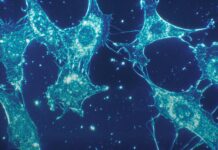













Russia has begun the clinical use of a pioneering cell-based technology to repair damaged eardrums, marking the world’s first clinical application of a cell-based medicinal product (CBMP) for tympanic membrane regeneration. Developed at the Clinical Centre of IM Sechenov First Moscow State Medical University (Sechenov University), the innovation represents a major breakthrough in regenerative medicine and ear surgery.
World-First Clinical Use of Cell-Based Eardrum Graft
Sechenov University’s Clinical Centre has started performing eardrum repair using tissue equivalents created from patients’ own cells. According to the university, this is the first time globally that clinicians have used a CBMP in routine clinical practice specifically to regenerate the tympanic membrane.
Highlighting the achievement, Rector Petr Glybochko stated that Sechenov University is the only medical university in Russia to complete the full translational pathway—from fundamental research and certified cell-product manufacturing to direct clinical application—within a single institution, supported by state science and education programmes.
How the Regenerative Technique Works
As reported by indiamedtoday, the procedure begins with the extraction of cells from a patient’s adipose (fat) tissue. Researchers then cultivate these cells into tiny three-dimensional clusters known as cell spheroids. Surgeons implant the spheroids at the site of the perforated eardrum along with a resorbable membrane scaffold.
Gradually, the scaffold dissolves and the patient’s own regenerated tissue replaces it, closely replicating the structure and function of a natural tympanic membrane. Clinical data indicate that the procedure takes approximately 40 minutes, making it significantly shorter than conventional tympanoplasty.
Shorter Surgery and Encouraging Early Outcomes
Early clinical results have been encouraging. The first patients have shown favourable post-operative recovery, and clinicians have reported no complications to date. Moreover, surgeons believe the technique may improve the consistency and durability of repairs compared with traditional methods, which can fail in 10–20% of cases.
Currently, tympanoplasty often relies on grafts made from fascia or cartilage. However, these materials do not always integrate predictably or fully restore hearing, sometimes leading to residual hearing loss or reperforation. In contrast, the new cell-based approach aims to regenerate living tissue that closely resembles the original eardrum.
Targeting a Common Yet Overlooked Condition
Tympanic membrane perforation affects an estimated four to five people per 1,000 and commonly results from chronic ear infections, trauma, or sudden pressure changes. If left untreated, it can cause hearing loss, recurrent infections, and reduced quality of life.
By simplifying the procedure, shortening operative time, and potentially improving graft stability, the research team hopes to expand access to effective treatment while lowering complication rates.
Opening the Door to Broader Regenerative Therapies
Researchers at Sechenov University emphasized that the project spans the entire innovation cycle—from cell isolation and processing to clinical application—signalling a shift from experimental research to real-world medical practice in cell therapies.
Looking ahead, they believe the platform could be adapted to regenerate other organs and tissues, thereby extending the impact of cell-based treatments beyond otology and into broader areas of regenerative medicine.