





















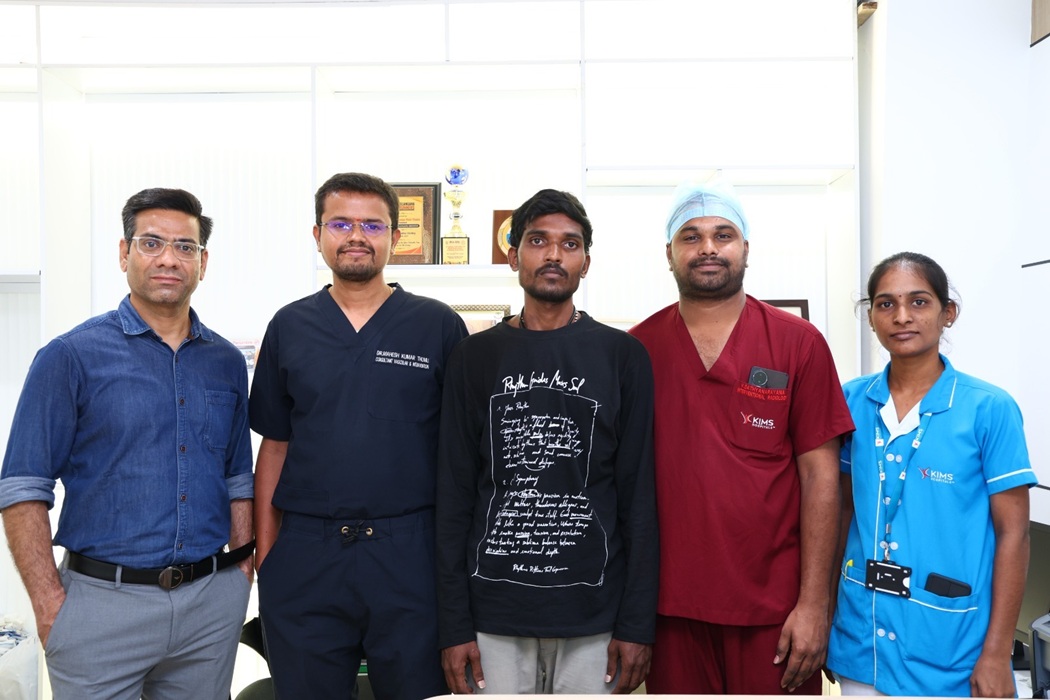
A 30-year-old man from Visakhapatnam, who had suffered from recurrent abdominal fluid accumulation for nearly a year, avoided a liver transplant after doctors at KIMS Hospitals, Kondapur, identified and treated the underlying cause.
Initially suspected to have advanced alcohol-related liver disease, the patient sought a second opinion at KIMS. A multidisciplinary team of interventional radiologists and medical gastroenterologists conducted advanced vascular imaging, which revealed chronic Budd-Chiari syndrome, a rare condition caused by narrowing or blockage of the veins that drain blood from the liver.
Hepatic Blood Flow Restored
The evaluation showed severe narrowing and complete blockage of the major hepatic veins, resulting in impaired blood drainage and recurrent ascites. A clot was also found in an accessory left hepatic vein that was providing an alternative drainage route.
Considering the patient’s young age and the treatable vascular cause, doctors opted to restore hepatic blood flow instead of proceeding directly to transplantation.
As per the press release, the interventional radiology team accessed the partially open accessory hepatic vein through a minimally invasive approach. They performed balloon venoplasty to widen the narrowed segment and placed a metallic stent to maintain blood flow.
Ascites Resolves After Treatment
The procedure successfully restored venous drainage without major surgery. The patient recovered well and was discharged on medication. At the one-month follow-up, his recurrent ascites had completely resolved, while his liver function tests showed significant improvement.
Dr. Mahesh Kumar Thummu, Interventional Radiologist, KIMS Hospitals, Kondapur, said that Budd-Chiari syndrome can be difficult to diagnose because its symptoms may resemble common forms of liver cirrhosis. He stressed that recurrent or unexplained ascites in younger patients should prompt evaluation of the hepatic venous outflow tract.
Early Diagnosis Can Prevent Transplantation
Budd-Chiari syndrome occurs when the hepatic veins or major venous pathways draining the liver become narrowed or blocked. This can increase pressure within the liver and portal venous system, leading to ascites and progressive liver dysfunction.
Although severe cases may require liver transplantation, selected patients can benefit from procedures such as angioplasty and venous stenting to restore blood flow.
Doctors advised considering Budd-Chiari syndrome in younger patients with unexplained recurrent ascites or liver-related symptoms that do not respond to conventional treatment. Early vascular imaging can help identify patients who may be suitable for minimally invasive treatment.