






















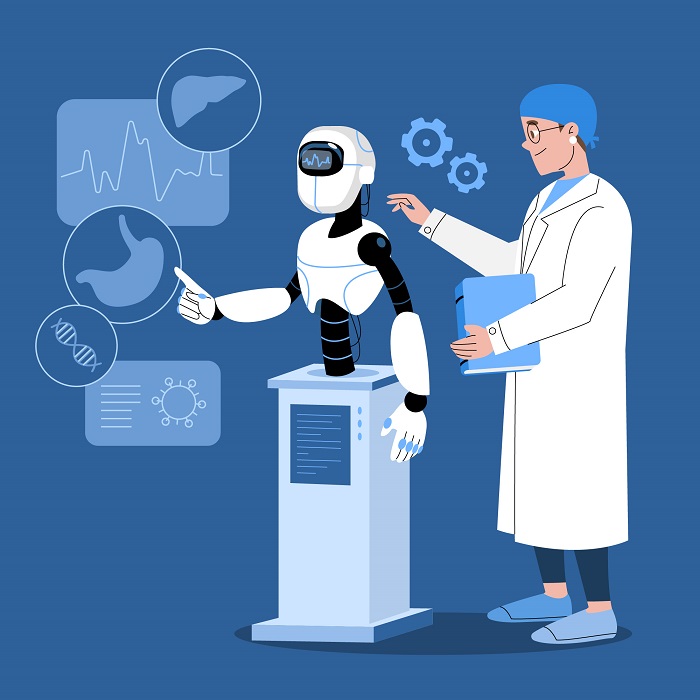
Artificial intelligence is opening new possibilities in protein engineering by helping scientists design enzymes that can evolve beyond the limits of their natural counterparts. A new study published in Nature shows that AI-designed enzymes can become more stable, evolve faster, and develop improved functions compared to enzymes found in nature.
AI Gives Protein Evolution a Head Start
Enzymes are proteins that drive essential chemical reactions in living organisms. While scientists have long used directed evolution to improve these proteins, the process often requires multiple rounds of mutation and testing.
In the new study, researchers used the AI model ProteinMPNN to redesign enzyme sequences before subjecting them to laboratory evolution. As a result, the redesigned enzymes maintained their activity while gaining greater stability, allowing them to tolerate additional mutations and evolve more effectively.
Study Demonstrates Better Performance
The researchers tested both natural and AI-redesigned versions of botulinum neurotoxin proteases. According to the study, the AI-designed enzymes consistently evolved into more efficient variants than those developed from natural proteins. They also reached functional protein sequences that conventional evolution could not access.
Furthermore, the team successfully engineered an enzyme that selectively targets ataxin-2, a protein associated with several neurodegenerative diseases. The redesigned enzyme showed improved stability, higher catalytic efficiency, and greater target specificity.
As reported by News-Medical.net, the findings suggest that AI can complement laboratory-directed evolution by creating stronger starting points for protein engineering, enabling scientists to develop enzymes with enhanced capabilities.
Potential Applications
The study highlights the potential of combining AI with experimental biology to accelerate the development of enzymes for medicine, biotechnology, and industrial manufacturing. More efficient enzymes could support the creation of targeted therapies, improve pharmaceutical production, and make industrial processes more sustainable.
Overall, the Nature study demonstrates that AI-assisted protein design can expand the possibilities of enzyme engineering, offering researchers a powerful new approach to developing proteins with functions that extend beyond nature’s evolutionary limits.